Salzburg in winter: a 3-day December and January itinerary
Salzburg: City & Christmas Markets Tour with Mulled Wine
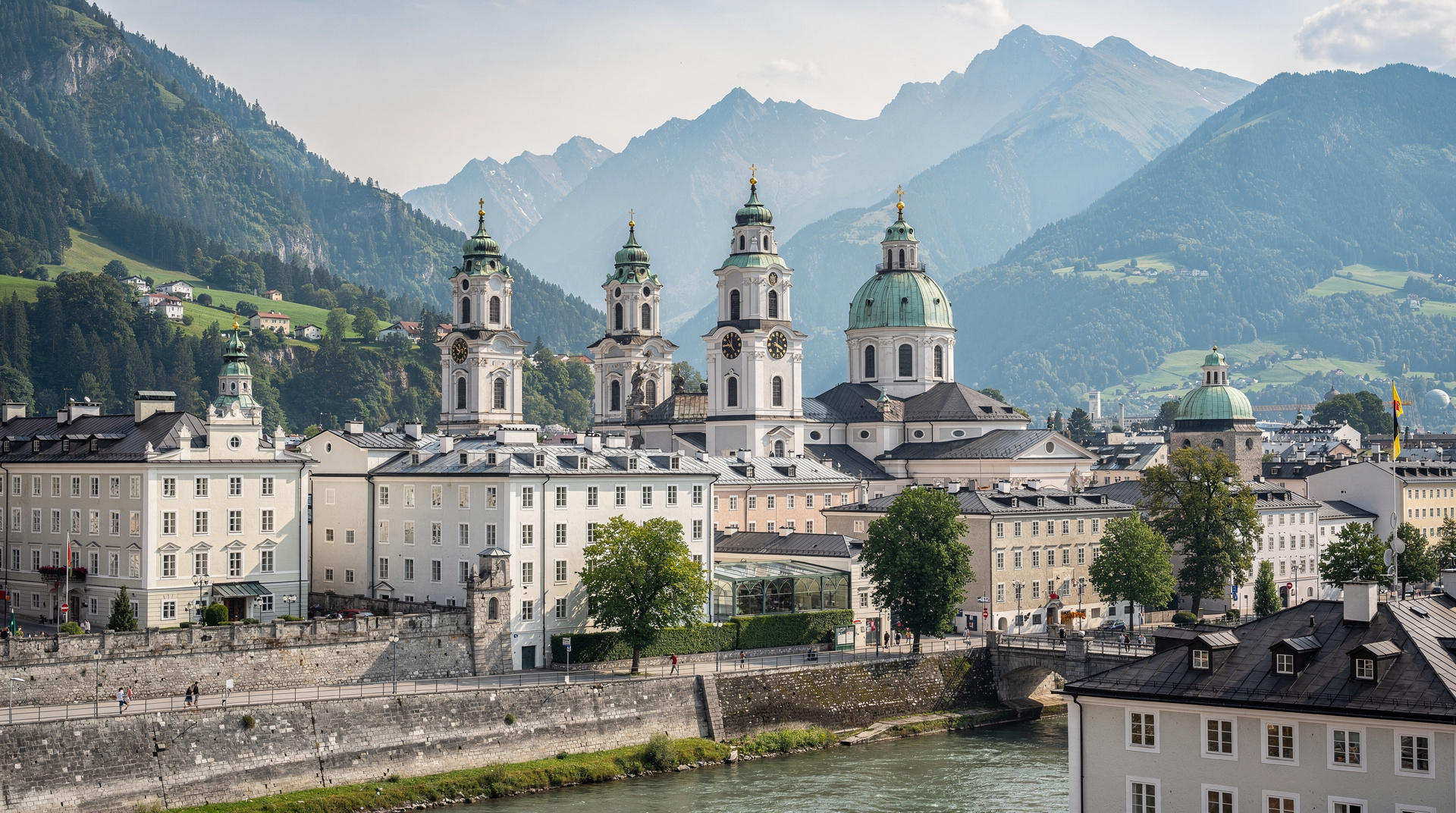
Salzburg in winter is genuinely excellent — not a consolation prize for visitors who could not come in summer. The Christkindlmarkt in front of the cathedral is among the oldest and most beautiful in Europe. The fortress in snow is more atmospheric than in the crowded summer heat. The city’s baroque architecture, designed for grey skies and candlelight, looks exactly right in December. Hotel prices are 30–50% lower than July–August, restaurants are less rushed, and the Altstadt crowds are thin enough to walk comfortably.
The important constraints: Eagle’s Nest is closed (November to mid-May), the Grossglockner road is closed (November to April), and the Eisriesenwelt ice cave at Werfen is closed (November to April). What opens are the Christmas markets (late November to 24 December), the Advent concert season, Hohenwerfen Castle (year-round), and a quieter version of the city that many visitors prefer to the summer version.
This itinerary covers December primarily (the peak Advent season) but applies equally to January–March with the Christmas markets replaced by a ski day or a slower city programme.
| Best for | Christmas market fans, couples, low-crowd city visits |
| Cost (excl. accommodation) | around 242–267 € per person for 3 days |
| Time needed | 3 full days, or 2 tightly packed |
| Getting there | Salzburg Airport (10 min to centre) or ÖBB train; a car is optional, not required |
| Best time | Mid-week in early December for markets; January–February for quiet snow |
| Booking | Reserve the Advent concert and dinner restaurants ahead in December |
Day-by-day at a glance
| Day | Focus | Key stops |
|---|---|---|
| 1 | Advent city at night | Hohensalzburg Fortress, Getreidegasse, Christkindlmarkt |
| 2 | Hellbrunn and a concert | Hellbrunn Advent market, Mozart Wohnhaus, Mirabell Palace, fortress concert |
| 3 | Day trip choice | Hohenwerfen Castle or Hallstatt, farewell Altstadt walk |
What winter means for Salzburg logistics
What is open in winter
Everything in the city: Hohensalzburg Fortress (reduced hours November–March, typically 09:00–17:00), all Mozart museums, DomQuartier, Hellbrunn Palace, the Marionette Theater, and all year-round concert venues. Transport within the city runs normally.
Outside the city: Hohenwerfen Castle at Werfen is open year-round (though the falconry display may be reduced in winter); it is particularly dramatic in snow. Hallstatt is open year-round and actually quieter and more photogenic in winter — the lake and the snow-covered houses are exactly as the tourist photographs promise, with a fraction of the summer crowds.
Ski day trips: Salzburg sits within 1–1.5 hours of major Austrian ski areas — Ski amadé (Flachau, Wagrain, Filzmoos, 1 hour), Kitzsteinhorn glacier at Kaprun (year-round skiing, 1h15), and Zell am See (1h15). A car is needed; day ski passes typically 45–60 € per person.
What is closed in winter
- Eagle’s Nest (Kehlstein bus closed November to mid-May)
- Grossglockner High Alpine Road (closed November to April)
- Eisriesenwelt ice cave at Werfen (closed November to April)
- Most Schafberg railway services (closed November to April)
- Some lake boat services (reduced or suspended)
Hohenwerfen Castle is the Werfen substitute in winter — different from the ice cave but genuinely worthwhile. See our Hohenwerfen Castle guide.
Day 1: The Advent city at night
Afternoon (14:00–18:00): Altstadt orientation and fortress
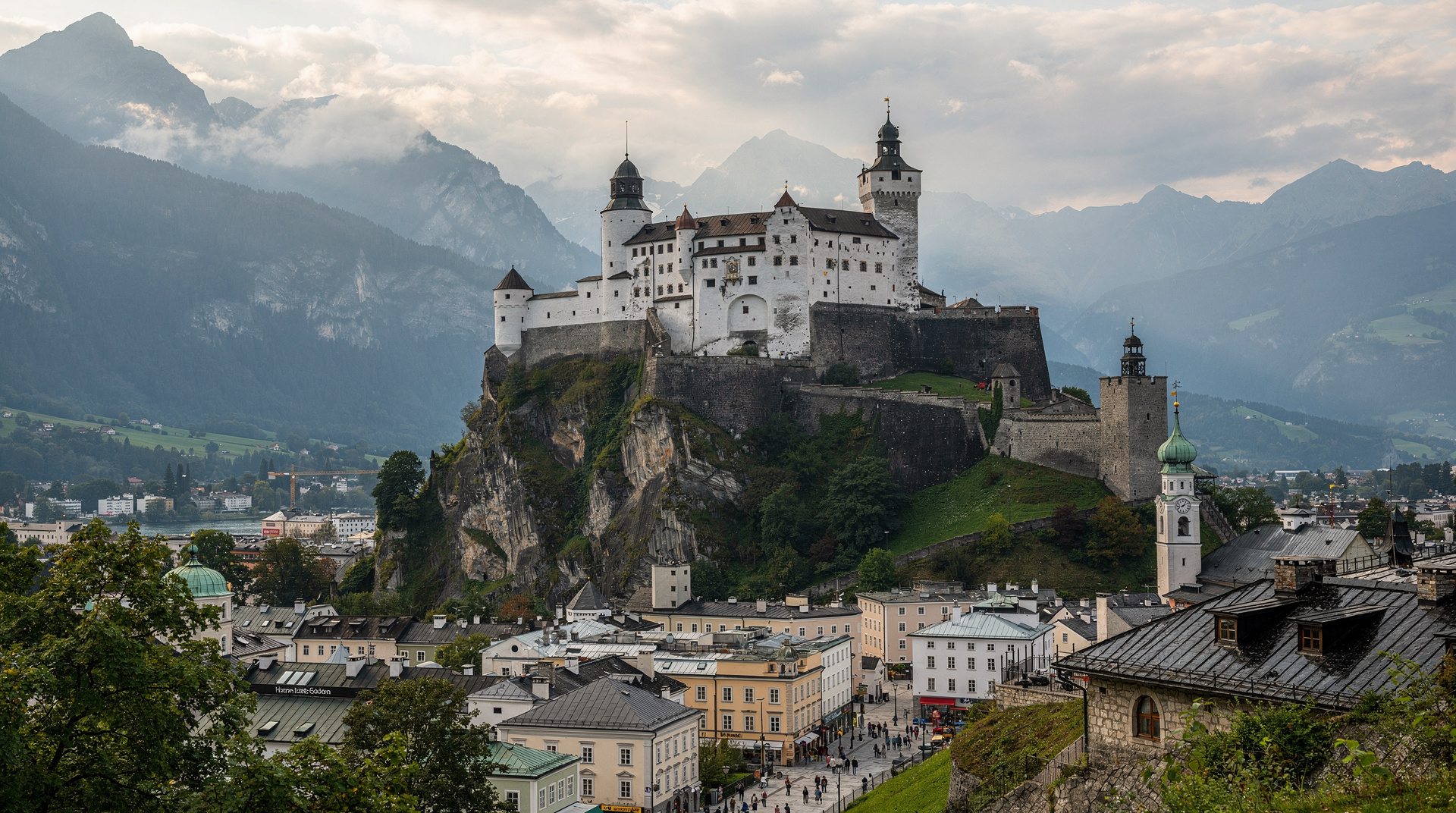
Arrive and begin with Hohensalzburg Fortress — the view from the ramparts in winter, over a potentially snow-dusted city, is among Salzburg’s finest visual moments. The Hohensalzburg Fortress admission ticket covers the funicular and interior sections. Winter hours are typically 09:00–17:00; arrive by 14:30 to allow 90 minutes.
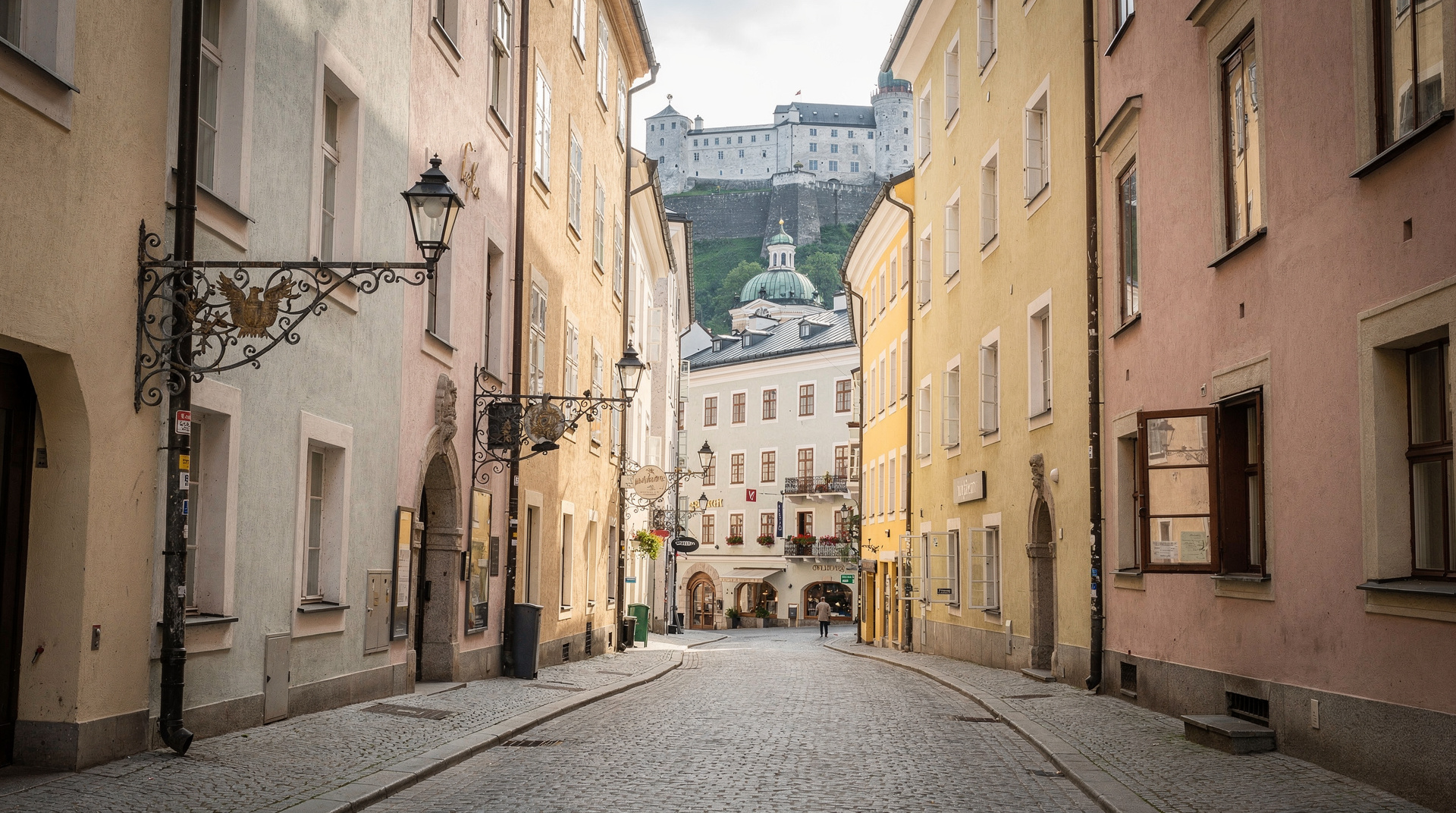
Walk down through the Altstadt as dusk arrives: Getreidegasse in December evening light, the illuminated guild signs, the Christmas decorations on the shops and cafés. The Altstadt in Advent is genuinely transformed — the illuminations are tasteful rather than overdone, the shop windows have seasonal displays, and the smell of roasting chestnuts appears around Alter Markt from mid-November.
Evening (17:30–21:30): Christkindlmarkt at Domplatz and Residenzplatz
The Salzburg Christkindlmarkt is among Austria’s most beautiful Christmas markets. It runs across two connected squares: Domplatz (cathedral square) and Residenzplatz, from late November to 24 December. See our Christkindlmarkt cathedral square guide for what the market sells and the dates.
What is worth buying:
- Handcrafted wooden decorations (from regional artisans, not the imported mass-produced variety)
- Salzburger Schlehdorn (sloe schnapps) — a local speciality not found in every market
- Lebkuchen (gingerbread) from the stalls at the back of the market (the ones at the front near the tourist entry tend to be more generic)
- Glasierte Nüsse (glazed nuts) — the smell alone is worth standing in the cold for
Punsch: The Salzburg version of mulled wine uses red wine, spices, and sometimes a schnapps float. At 3–4 € per cup (with a small deposit on the ceramic cup you keep), it is good value. The market runs until 21:00–22:00 and is most beautiful in the evening.
Market honest note: The Salzburg markets are genuine in character but also popular — arrive on a weekday evening rather than a Saturday afternoon for the most pleasant experience. See our Salzburg Christmas markets guide for the full picture including the smaller Mirabell market.
The Salzburg Christmas Markets tour with mulled wine is an evening guided option that covers the main markets with a local guide — worth it for context on the history and traditions.
Dinner after the market: Stiftskeller St. Peter (the medieval monastery restaurant) serves Advent dinners in a stone-vaulted cellar that could not be more seasonally appropriate. Book ahead.
Day 2: Hellbrunn Advent market and an evening concert
Morning (09:30–12:30): Hellbrunn Palace Advent market
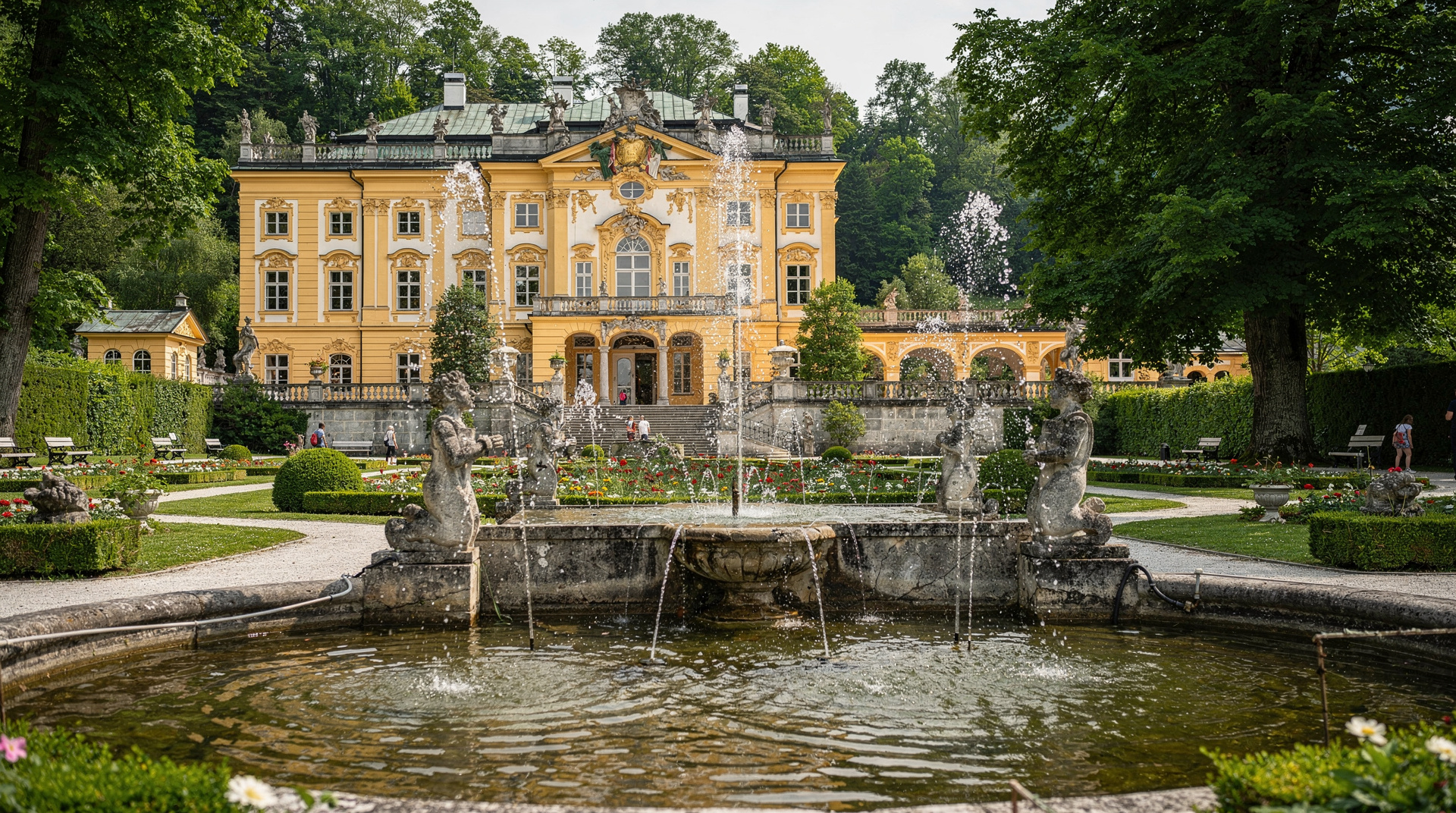
Take bus 25 (15 minutes south of the city centre) to Hellbrunn Palace for the Hellbrunn Advent Market — in our view, the best Christmas market in the Salzburg region. While the city markets focus on crafts and food stalls, the Hellbrunn market is held in the grounds of the palace and extends across the baroque garden paths with themed scenes, craft workshops, and live music.
The distinction: it feels more regional and less touristed than Residenzplatz. You will find woodcarvers demonstrating their work, glass-blowers, and bakers making Kletzenbrot (spiced fruit bread). The market runs from late November through mid-January. See our Hellbrunn Advent guide for opening dates and times.
The trick fountains are not running in winter (water turned off to prevent frost damage), but the palace and grounds are open for exploration alongside the market. Allow 2–3 hours.
Afternoon (13:00–17:30): Mozart Wohnhaus and Mirabell Palace
Return to the city and visit Mozart’s Wohnhaus (residence, approx. 12 €) on Makartplatz. The museum covering Mozart’s later Salzburg years — his growing frustration with Archbishop Colloredo, the major late works composed here before his departure to Vienna — is at its least crowded in winter. The temporary exhibition space often has themed winter/winter-festival programming.
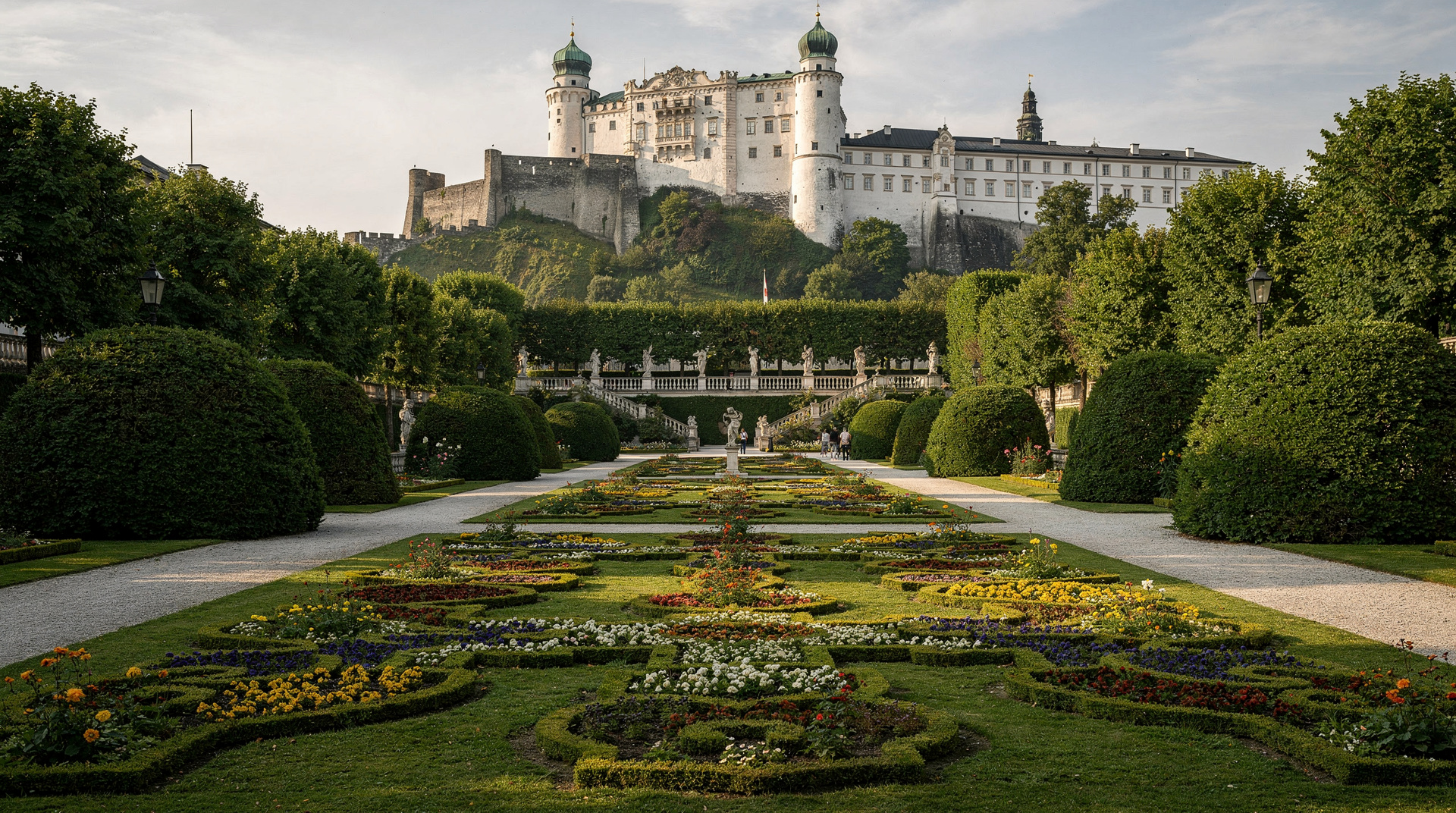
Walk to Mirabell Palace and Gardens for the Mirabell Advent market (smaller than the main city market but lovely in the palace forecourt setting) and the gardens in winter. The formal hedgerows and baroque layout are striking when stripped of leaves; the fountain is typically switched off to prevent freezing.
Evening (19:00–22:00): Advent concert at Hohensalzburg
The Salzburg Christmas/Advent Concert at Hohensalzburg Fortress is one of the most atmospheric seasonal programmes anywhere in Europe: a 90-minute Advent and Christmas music concert in the fortress halls, with the city visible below in winter darkness. The programme typically includes Austrian and Bavarian Advent choral music, classical works, and some traditional Christmas folk music.
Tickets approx. 35–55 €; book ahead — the Advent concert series sells out weeks in advance in December.
The Christmas Market and City Highlights Evening Tour is an alternative for those who prefer a guided evening walk across the markets rather than a seated concert.
Day 3: Hohenwerfen Castle or Hallstatt in winter
Two options depending on your energy and the weather forecast.
Option A: Hohenwerfen Castle and the Salzach Valley
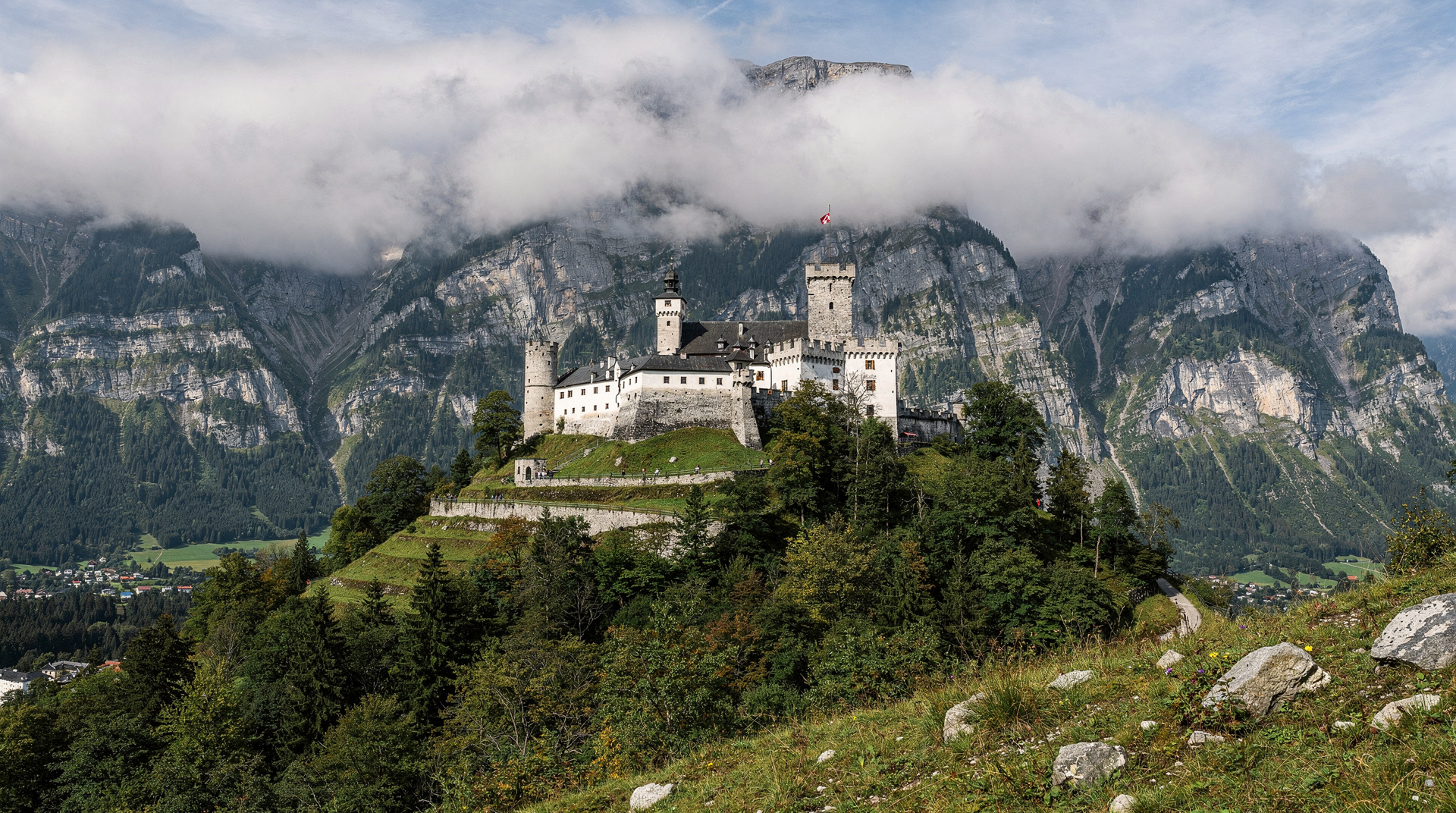
Werfen is 45 minutes south of Salzburg by car or approximately 50 minutes by ÖBB train. Hohenwerfen Castle sits on a cliff above the valley and is open year-round — in winter, the combination of snow on the ramparts, the medieval interior, and the Salzach valley below is genuinely dramatic.
The castle interior includes medieval kitchens, armour collections, and a falconry centre. Falconry flight demonstrations run year-round (check for winter schedules: typically 1–2 shows per day). The castle is accessed by a short path from the village below; crampons are sometimes needed on icy days.
Werfen village itself has a good small-town Austrian character in winter: few tourists, local Gasthöfe serving Gulasch and Tafelspitz. Lunch in Werfen before the drive back.
Eisriesenwelt note: The ice cave at Werfen is closed in winter (November to April). If someone in your group expected this, Hohenwerfen Castle is the substitute — different but worthwhile. See our guide for context on Eisriesenwelt ice cave.
Option B: Hallstatt in winter
Hallstatt in winter is a different experience from the summer overcrowded version. The boat service is reduced (check current schedules); the salt mine is closed; but the village itself — snow on the steep rooftops, ice on the lake edges, the houses lit from within on a grey December afternoon — is one of the most photogenic places in Austria.
Winter Hallstatt is genuinely quiet. You can walk the main street without navigating crowds and the bone chapel (open year-round) is less rushed. The lake may have partial ice forming in January–February, which is visually striking. The drive from Salzburg takes 1 hour via the A10 and B145.
What is closed: the salt mine (closed November–April), the Skywalk funicular (check seasonal hours — sometimes runs but reduced), the lake boat (reduced frequency). Allow 3 hours for a comfortable winter visit without the mine.
Hallstatt half-day tour from SalzburgFor the fuller comparison of this option against staying closer to the city, see our Salzburg to Hallstatt guide.
Final afternoon: Altstadt farewell
Return to Salzburg by 15:30 for a final walk through the Altstadt. If it is December, the market is likely still running — a last Punsch at Residenzplatz. Coffee at Café Tomaselli. A look at the fortress from the bridges in the failing afternoon light.
Buy your Mozartkugeln: Fürst confectionery (Alter Markt 13) for the original hand-made variety in silver-and-blue wrapping. This is not available online or in airport shops. See our real Mozartkugel guide.
Winter practical tips
Clothing: Salzburg winters average -2°C to +4°C in December–January, with occasional -10°C spells. The fortress and Hohenwerfen are exposed to wind. Waterproof outer layer, warm mid-layer, good boots (the cobblestones get icy). The Altstadt shopping streets are narrow and sheltered; the open squares (Domplatz, Residenzplatz) are colder.
Daylight: Sunrise around 08:00, sunset around 16:00 in December. The markets and evening programme are timed for post-dark enjoyment; schedule heavy walking for the morning hours.
Opening hours: Check ahead. Winter hours (November–March) are reduced for many attractions — the fortress typically closes at 17:00 (versus 20:00 in summer), and Hellbrunn Palace has seasonal variation. The Christmas markets are December-only; the Hellbrunn Advent market may run into January.
Transport: The Salzburg public bus network runs normally in winter. For day trips to Werfen, the ÖBB train (direct, 50 minutes) works well without a car. For Hallstatt in winter, the train connection is the same but reduced ferry service may complicate the final leg — check the current timetable.
Getting there and getting around in winter
Salzburg Airport is 10 minutes from the Altstadt by taxi or bus 2, and handles seasonal winter flights from several European hubs plus connections via Munich or Vienna. The ÖBB train from Munich takes about 1h30 and from Vienna about 2h30 — both comfortable options that avoid winter driving. If your plan includes Werfen or Hallstatt on Day 3, a car gives more flexibility around reduced winter timetables, but the ÖBB train to Werfen (50 minutes, direct) and the train-plus-bus combination to Hallstatt both run reliably in snow. See our Salzburg airport to city guide and with or without a car guide before booking transport.
Within the city, the bus network runs on normal schedules through winter, and the Altstadt is compact enough to walk between the fortress, Mirabell, and the markets in 15–20 minutes. Icy cobblestones are the main hazard — see the clothing notes below.
Photographing the winter city: The best light for the fortress and rooftops is in the hour after sunrise or the hour before sunset, since the low winter sun sits close to the horizon for most of the day. For the Christkindlmarkt itself, blue hour — the 20–30 minutes after sunset before full darkness — gives the most balanced exposure between the market lights and the sky. The Mönchsberg viewpoint and the Kapuzinerberg side of the river both give a clean view back over the illuminated Altstadt; our best Salzburg viewpoints piece has the full list, including which ones stay accessible when paths are icy.
Where to stay for a winter visit
The Altstadt itself is the most atmospheric base for this itinerary: walking distance to the Christkindlmarkt, the fortress funicular, and the Advent concert, with the added charm of the illuminated old town after dark. Expect to pay a premium during the market peak (19–24 December) and considerably less in early December or January–March. The Neustadt side, near Mirabell Palace, is a close second choice — a short walk over the river and generally a little cheaper. Our where to stay in Salzburg guide breaks down neighbourhoods by budget and season, which is worth reading before comparing listing prices, since winter rates swing more than in summer.
Budget in winter
Salzburg hotels in December (outside the Christmas market peak of 19–24 December) are 30–50% cheaper than summer. The Advent market peak (last 2 weekends before Christmas) sees prices spike; mid-week in early December is the best value.
Attractions are the same price year-round; the Christmas market is free to enter (purchases extra). Concerts and the fortress dinner are available at the same price as summer.
Estimated cost per person for 3 winter days (excl. accommodation):
- Fortress: 16 €
- Mozart Wohnhaus: 12 €
- Hellbrunn Advent market: free (food/drink 15–20 €)
- Hohenwerfen Castle: approx. 14 €
- Evening concert: 35–55 €
- Meals (3 days × 50 €): 150 €
- Total: 242–267 €
Frequently asked questions about Salzburg in winter
Is Salzburg worth visiting in winter?
Yes, strongly. The Christkindlmarkt, the quieter Altstadt, the atmospheric concert season, and the fortress in snow are all genuinely excellent. It is the most underrated season for the city precisely because summer crowds set an unfair comparison point. See our Salzburg in winter guide for the full picture.
When do the Christmas markets run?
The main Domplatz/Residenzplatz market runs from approximately 17 November to 26 December. Hellbrunn Advent market typically runs late November through early January. Smaller markets appear in the Mirabellplatz and at St. Peter’s monastery. Dates vary slightly by year; see our Christmas market dates guide.
Is Hallstatt open in winter?
The village is open year-round. The salt mine, the Skywalk funicular, and some restaurants close for the season. The boat service runs reduced hours. Winter Hallstatt — quieter, potentially snow-covered — is beautiful and recommended if you want to see it without the summer crowds. See our Hallstatt overcrowding guide.
Can I ski near Salzburg?
Yes. Ski amadé (Flachau, Wagrain, Filzmoos) is 1 hour by car and has 750 km of piste. Kitzsteinhorn glacier at Kaprun is 1h15 and offers year-round skiing. Day passes typically 45–60 €. You need a car; the transfer buses exist but are infrequent. See our best time to visit Salzburg guide for seasonal comparisons.
Is it cold at the fortress in winter?
The ramparts are exposed to wind and can be genuinely cold, especially in January–February. Bring a proper warm coat. The interior fortress sections are heated. The funicular is enclosed and warm. On clear winter days, the mountain panorama from the ramparts is extraordinary; on overcast days the fortress interior is the main attraction.
Do I need a car for this winter itinerary?
No. Every stop in this 3-day plan — the fortress, the Christkindlmarkt, Hellbrunn, Mirabell, and both Day 3 options (Werfen by train, Hallstatt by train-and-bus or a guided tour) — is reachable by public transport or organised tour. A car only adds value if you want to combine a ski day with the city programme.
Is 3 days enough for a winter visit?
Yes, comfortably, if you follow this pacing — 3 days covers the Christkindlmarkt, the fortress, one Advent event, and one day trip without rushing. Visitors with only 2 days should read our how many days in Salzburg guide for what to cut.
January to March: Salzburg after the Advent season
Once the Christmas markets close on 24–26 December, Salzburg enters its quietest period of the year. January through March is genuinely off-peak: hotels drop to their lowest annual rates, restaurants are unhurried, and the Altstadt can be walked entirely without other tourists in front of a morning coffee.
What is different in January–March:
- No Christmas markets (closed after 24–26 December)
- Hellbrunn Palace gardens open but no Advent market
- All city museums and concerts running normally
- Fortress accessible (reduced winter hours 09:00–17:00)
- Snow possible in the city; cobblestone streets can be icy
What to add for a January–March visit:
Ski day trip: This is the most obvious January–March addition. Salzburg sits within 1 hour of Ski amadé (Flachau, Wagrain, Filzmoos — 750 km of piste combined, Austria’s largest ski area by piste length). Day passes typically 50–60 €; equipment rental available in resort. A car is needed. The Kitzsteinhorn glacier at Kaprun (1h15) offers year-round skiing and is one of the few Austrian glaciers still reliable for beginner lessons.
Hallstatt in deep winter: January–February Hallstatt with snow on the rooftops and ice forming on the lake edges is extraordinarily photogenic. The winter lake sometimes partially freezes in cold years, creating a scene that photographs unlike anything in summer. The village is near-empty; the boat service may run reduced hours; the salt mine is closed. Allow half a day from Salzburg (1 hour by car).
Zell am See in winter: Beyond skiing, Zell am See in winter has horse-drawn sleigh rides on the frozen lake (when conditions allow), ice skating, and the combination of alpine village and snow-covered mountains that constitutes one of the classic Austrian winter experiences. See our Salzburg to Zell am See guide.
The Christmas market timing in detail
The Salzburg markets close on 24 December (some continue to 26 December for the Orthodox Christmas market). The Hellbrunn Advent market typically runs until early January. If your visit overlaps with the very end of the Advent season, the markets are still running but with reduced stall hours and a sense of winding down. See our Christmas market dates guide for the exact year-by-year schedule.
Top experiences
Bookable activities with verified prices and instant confirmation on GetYourGuide.