Salzburg classical music weekend: concerts, Mozart, and the Festival
Salzburg: Best of Mozart Fortress Concert
Salzburg is the most concentrated classical music city on earth relative to its population. In a city of 155,000, there are year-round concert venues including a fortress, a baroque palace marble hall, a medieval monastery cellar, a marionette theater, and the purpose-built Grosses Festspielhaus — one of the largest opera stages in the world. Every July and August, the Salzburg Festival brings the Vienna Philharmoniker, the world’s leading conductors, and the most sought-after opera productions to this small city.
Understanding what is genuine, what is tourist-grade, and what is worth the money requires some navigation. This weekend guide separates the options clearly: what to buy, when to book, and what to expect from each venue.
At a glance
| Structure | Day 1: Mozart museums + fortress dinner concert. Day 2: Mirabell concert + Marionette Theater |
| Cost per person | 314–429 € (no Festival) / +150–350 € for a Festival ticket |
| Best months | Year-round for the standard circuit; late July–August for the Festival |
| Book ahead | Fortress concert 1 week ahead; Festival tickets 6–8 months ahead |
The music landscape: what to know before booking
Salzburg’s classical music offering divides into four categories:
The Salzburg Festival (Salzburger Festspiele): opera and concert programming of the highest international standard, running late July through August. Productions are often staged once and never repeated; the Vienna Philharmoniker plays here exclusively during the Festival. Tickets range from 50 € (standing, smaller halls) to 450 €+ (main stage opera). Sellout rate is extremely high; major productions sell 6–10 months ahead. See our Salzburg Festival guide for ticket strategy.
Fortress concerts (Hohensalzburg): year-round commercial concerts in the fortress, playing Mozart, Haydn, and Strauss. Professional ensembles, excellent setting. These are not the Vienna Philharmoniker and do not pretend to be. Honest value: atmospheric and well-performed, 40–90 € per person. The best year-round option for most visitors.
Mirabell Palace concerts: smaller chamber recitals in the Marble Hall, year-round. Mozart, Haydn, and Strauss. Intimate setting, 30–45 minutes walk from the Altstadt, 35–45 €. Consistently underrated — the hall acoustics are very good and the programme is typically tighter than the fortress concerts.
Marionette Theater: not a traditional concert venue but a unique Salzburg institution, performing full operatic productions (Magic Flute, Sound of Music, The Marriage of Figaro) with exceptional puppets to recorded classical soundtracks. 35–60 €.
Residenz DomQuartier concerts: the afternoon Mozart concerts in the Residenz halls are a DomQuartier programme — 1 hour, held in the original state rooms, daytime. Approx. 25–35 €. See our Residenz afternoon Mozart concerts information.
Our where to hear Mozart in Salzburg guide gives the full matrix of every concert option with honest assessments.
Day 1: Mozart immersion and an evening fortress concert
Morning (09:00–13:00): Mozart’s two museums
Start at Mozart’s Geburtshaus (Getreidegasse 9, approx. 12 €). This is the apartment where Wolfgang Amadeus Mozart was born on 27 January 1756 and spent his childhood. The exhibit includes his childhood violin, a viola, keyboard instruments he played, his father Leopold’s notebooks on Wolfgang’s early compositions, and a growing archive of correspondence. The narrative is biographical and coherent — you understand the family dynamics (the overbearing father, the brilliant child, the provincial city that could not contain him) as clearly as anywhere.
Allow 60–75 minutes. In summer, the queue can build after 10:00; arrive at 09:00 for immediate entry.
At 10:30, walk 5 minutes to Mozart’s Wohnhaus (Mozart Residence, Makartplatz 8, approx. 12 €). This is where the Mozart family lived from 1773 until Wolfgang left for Vienna permanently in 1781. The museum covers the later Salzburg period — the adult Mozart’s frustrations with Archbishop Colloredo, his increasingly restless productivity, and the genesis of the major Salzburg works. More relevant to advanced Mozart interest than the Geburtshaus; covers the adult creative story. Allow 45–60 minutes.
Combined ticket: Both museums are run by the Mozarteum Foundation; a combined ticket (approx. 18 €) is available and saves money if you are doing both. See our Mozart birthplace vs. residence comparison for which to prioritise if doing only one.
By 12:30, walk toward the DomQuartier for the afternoon’s programme.
Afternoon (13:30–17:30): DomQuartier and Residenz concert
Lunch: Café Tomaselli on Alter Markt (established 1700, the oldest café in Austria) for a proper Mittagessen or pastry. Alternatively, the restaurant at Stiftskeller St. Peter serves Austrian food in the vaulted cellars of a Benedictine monastery dating to the 8th century — the atmosphere is unmatched for a long lunch, and the dinner concert programme later is relevant to be aware of.
DomQuartier (approx. 16 €): the Residenz state rooms, cathedral walkway, and Cathedral Museum. Allow 90 minutes. The Residenz was the residence of the Salzburg prince-archbishops who were Mozart’s employers and patrons, and the context of that relationship — the tension between artistic ambition and aristocratic patronage — is useful for the evening’s concert framing.
Residenz afternoon Mozart concert (approx. 25–35 €): the DomQuartier afternoon Mozart concerts at the Residenz run on select days and feature a 60-minute programme in the original Residenz halls where Mozart performed. These are among the most historically authentic concert settings in Salzburg — the same rooms, similar programming. Check dates in advance.
Salzburg Cathedral (free, 20 minutes): walk through the cathedral where Mozart was baptised and where he worked as court organist. The organ on which he played is in the north gallery; the baptismal font is in the north transept.
Evening (19:00–22:30): fortress concert dinner
Tonight is the dinner-and-concert experience at the fortress.
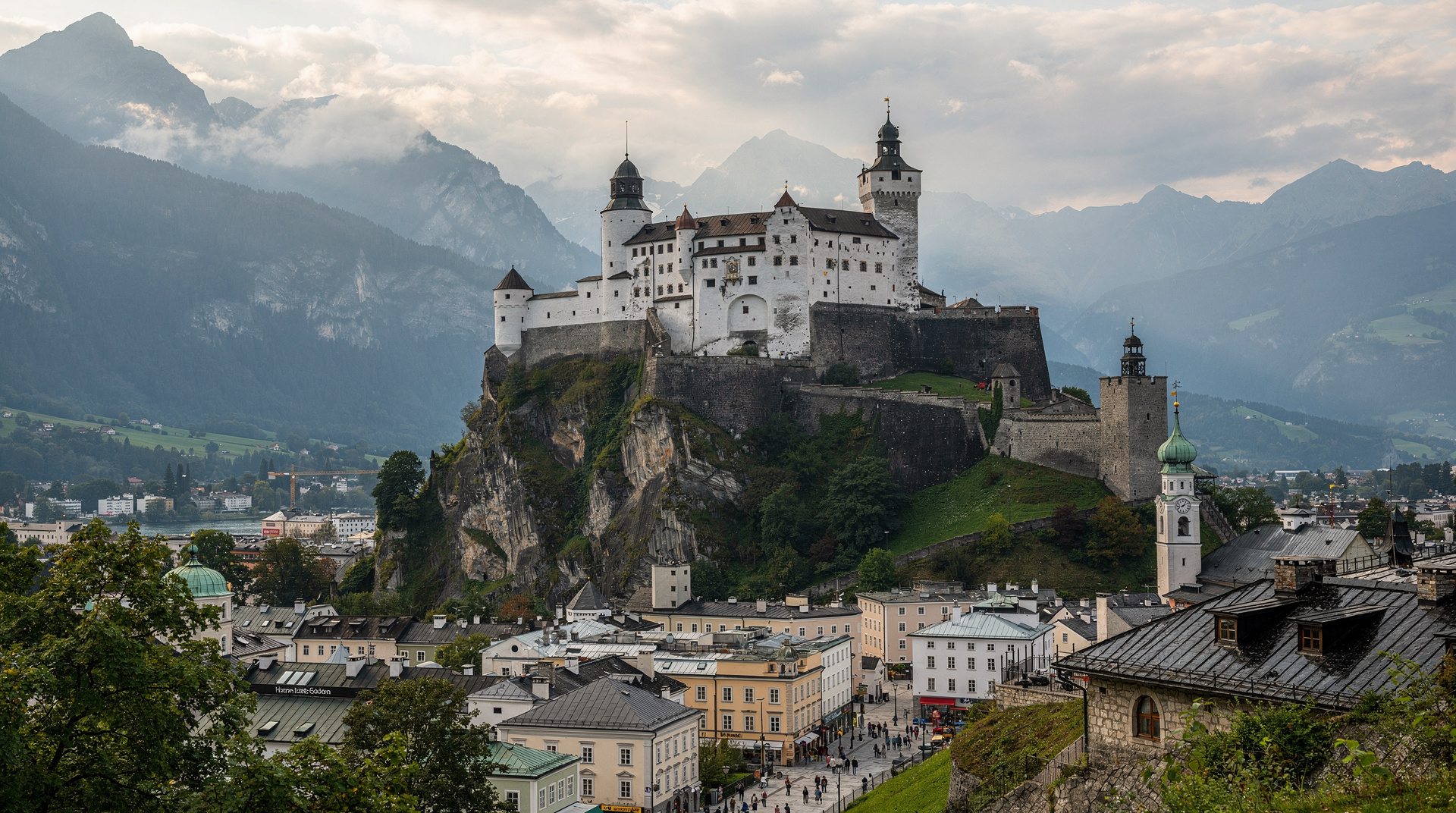
The Salzburg Best of Mozart Fortress Concert and Dinner combines a 3-course dinner in the fortress restaurant with a 90-minute concert programme of Mozart and Haydn. The fortress at night — lit below the Mönchsberg cliff, city lights visible from the rampart windows — is the most atmospheric concert setting in Salzburg. The programme typically includes the Symphony No. 40 in G minor, the Piano Concerto No. 21, and a selection of chamber works.
Honest assessment: The ensemble is a professional chamber orchestra, not the Vienna Philharmoniker. The playing standard is high; the programme is selected for accessibility rather than scholarly depth. For the setting and the experience, this is the best evening in Salzburg for anyone not attending the Festival. For serious concert-goers, read our fortress dinner concert guide before booking.
Dinner timing: Dinner is typically at 18:30–18:45 before the concert. The funicular up to the fortress is included. Book at least a week ahead in summer.
Day 2: The musical cityscape — Mirabell, Marionette, and the Festival question
Morning (09:30–12:30): Kapuzinerberg and the musical Altstadt
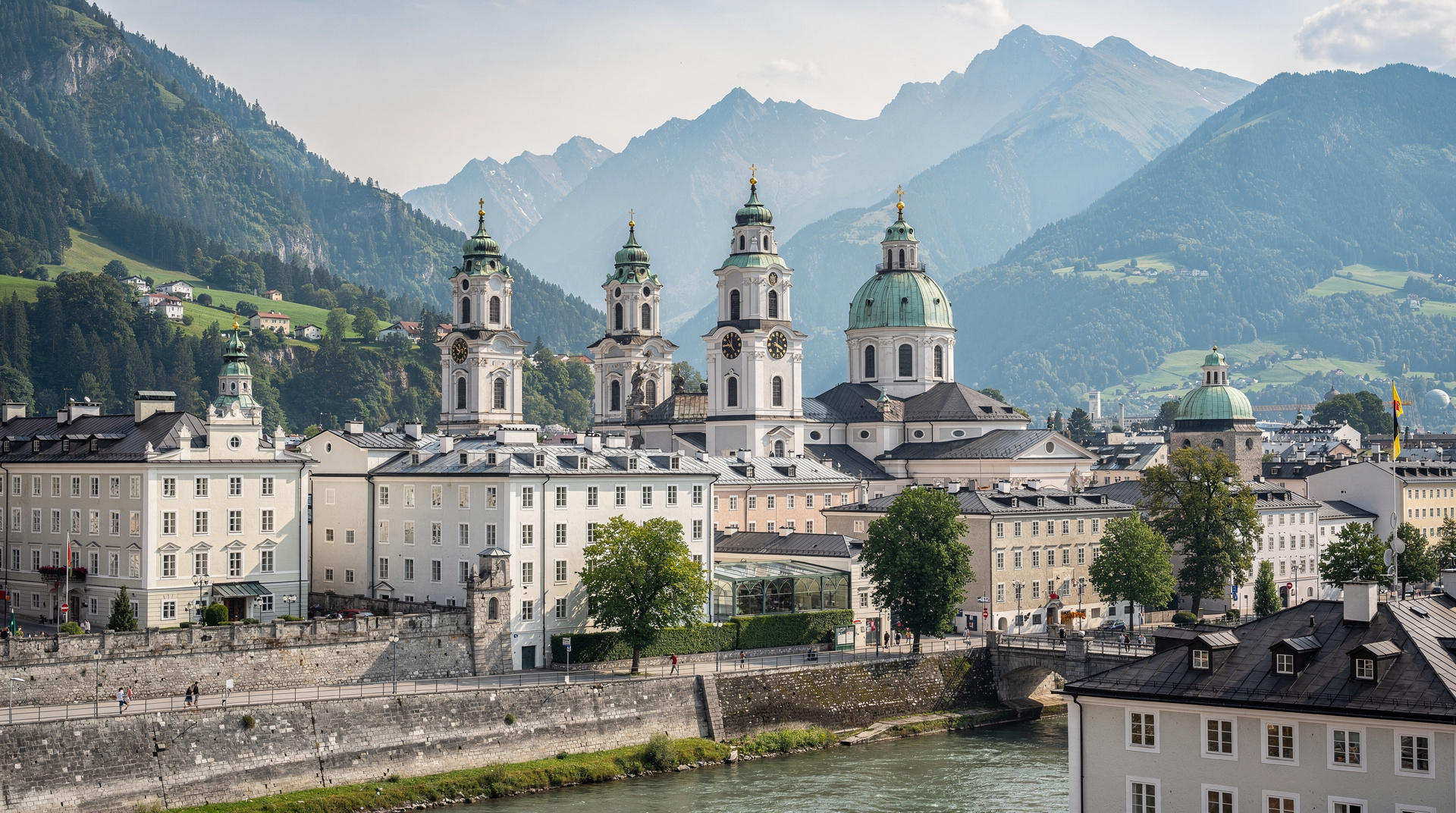
Start gently: walk from your hotel across the Salzach to the right bank and up the Kapuzinerberg hill (free, 45 minutes from the Steingasse path to the summit). The view from the Kapuziner monastery gives the most complete perspective over the Altstadt, the Salzach, and the fortress — the spatial arrangement of the musical city is immediately comprehensible from here. See our Kapuzinerberg walk guide.
Descend and walk to the Stiftskeller St. Peter (the 9th-century monastery restaurant where Mozart gave an early performance and which the family frequented). The church courtyard and the exterior of the monastery complex are accessible freely; the restaurant itself opens at 11:30. This is also where the famous Mozart Dinner Concert is held in the evening.
Walk through the Altstadt toward Nonnberg Abbey (10 minutes south of the fortress): the convent where both the real Maria Kutschera and the Mozart family connections run deep. The small church attached to the convent is open for visits and has exceptional acoustics — quiet, stone, medieval.
Afternoon (13:30–17:30): Mirabell Palace concert programme
After lunch (Triangel on Wiener-Philharmoniker-Gasse serves honest Austrian food 5 minutes from the cathedral), walk to Mirabell Palace and Gardens for the afternoon concert.
Mozart concert at Mirabell Palace (approx. 35–45 €): the Mozart concert at Mirabell Palace is held in the Marble Hall, a gilded 18th-century room with exceptional acoustic properties. The ensemble plays Mozart and Strauss; the programme runs approximately 90 minutes. The hall seats about 180 people — intimate enough to feel like a private concert. Many serious music-goers rate this as their preferred Salzburg concert experience precisely because of the room scale and sound quality.
Book ahead: the concert runs most afternoons and evenings but sells out at weekends in summer.
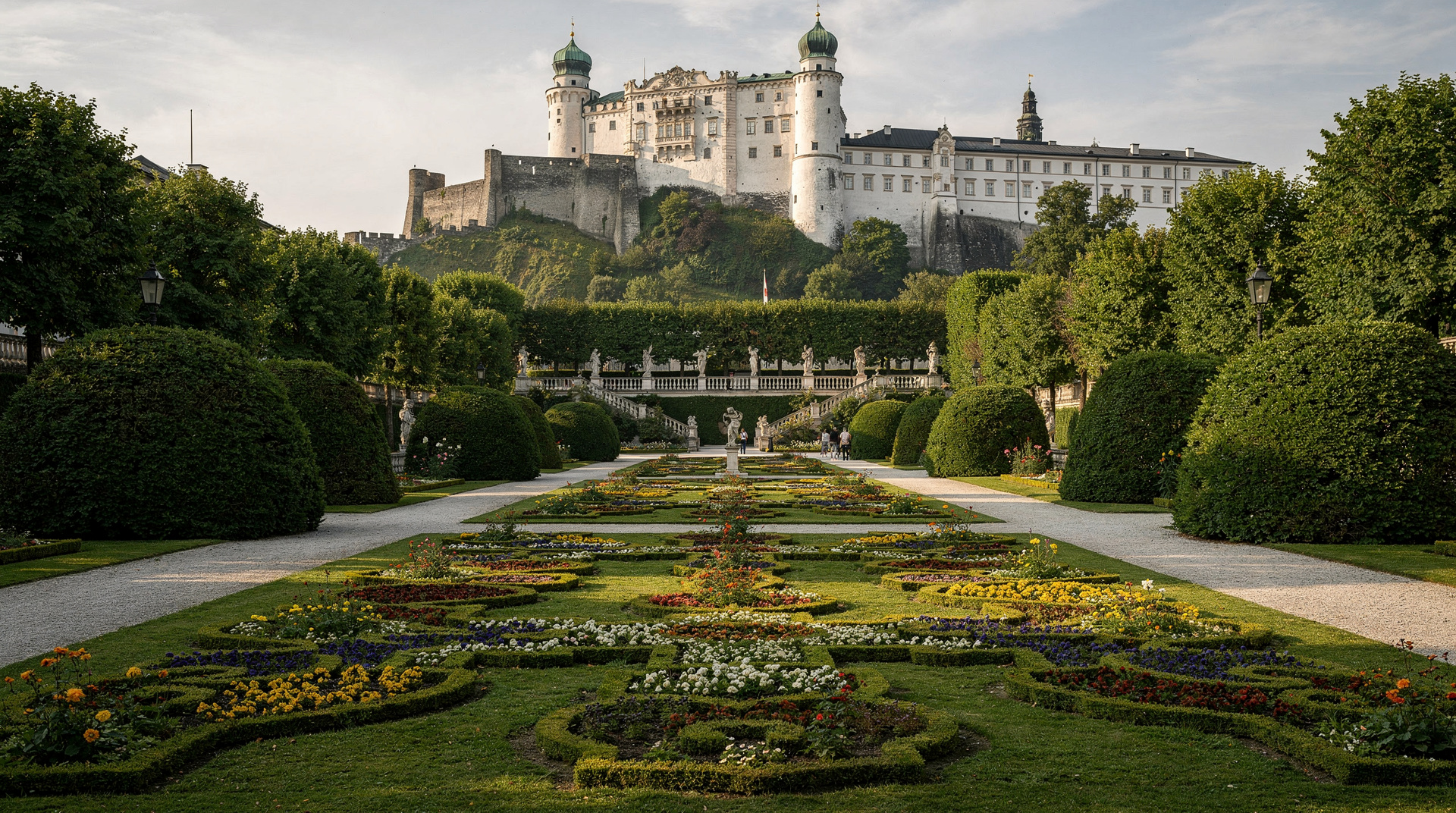
After the concert: spend an hour in the Mirabell Gardens (free), walking the formal hedgerow alleys and the view back toward the fortress. This is the most relaxed part of the itinerary — sitting on a bench in a baroque garden in late afternoon sun.
Evening options
Marionette Theater (35–60 €): The Magic Flute at Marionette Theater (Magic Flute at the Marionette Theater) is a Salzburg cultural institution. The puppets are extraordinarily detailed, the recorded soundtrack is conducted by Karl Böhm for Deutsche Grammophon (genuinely excellent), and the production is staged with full operatic seriousness. Allow 2.5 hours. This is not a tourist gimmick — it is a genuine art form that has operated since 1913. See our honest Marionette Theatre worth it guide.
Stiegl Brewery: if you want a cultural counterpoint to the concerts, the Stiegl Brauwelt (Salzburg’s own brewery, operating since 1492) offers evening brewery tours with tastings. See our Stiegl Brewery guide.
The Salzburg Festival: a separate section for Festival visitors
If you are visiting in late July or August and want to attend the Salzburg Festival, the planning process is entirely different from the year-round concert circuit.
Key facts:
- The Festival runs approximately 5 weeks from late July through August
- Around 200 events across the Grosses Festspielhaus, Felsenreitschule, Haus für Mozart, Kollegienkirche, and other venues
- Vienna Philharmoniker plays every year; major conductors (Currentzis, Dudamel, Barenboim) conduct multiple productions
- Major operas (Don Giovanni, The Magic Flute, La Traviata in the biggest production years) are planned 12–18 months ahead
Ticket booking: For the best seats at flagship productions, book 6–8 months ahead through the official Festspiele website. For general concerts and chamber music events, availability exists 2–3 months out. For same-day standing tickets, queue at the box office from 08:00. See our Salzburg Festival tickets guide.
Price reality: Prices range from approximately 50 € (standing, smaller venues) to 450 €+ (stalls, Grosses Festspielhaus, major productions). Budget 150–300 € per person per event as a realistic mid-range expectation.
Hotels during Festival: Add 50–80% to standard rates. Book well in advance.
Is the Festival worth it? For serious classical music listeners, absolutely — this is the most concentrated week of world-class music performance available anywhere. For casual music tourists, the year-round concert circuit is better value and less logistically complex. See our Salzburg Festival guide for the full picture.
Budget breakdown for a classical music weekend
Budget per person (2 days without Festival):
- Mozart Geburtshaus + Wohnhaus: 18 € (combined)
- DomQuartier: 16 €
- Residenz afternoon concert: 25–35 €
- Fortress dinner concert: 65–90 €
- Mirabell Palace concert: 35–45 €
- Marionette Theater: 35–60 €
- Food (2 × 55–75 €): 110–150 €
- Transport: 10–15 €
- Total: 314–429 €
Budget per person (Festival visit):
- Add 1 Festival opera ticket: 150–350 €
- Higher hotel rate: add 60–120 € per night
- Everything else as above
Choosing between the year-round concert options
With four distinct year-round venues (fortress, Mirabell, DomQuartier/Residenz, Marionette Theater) plus the Marionette Theater as a fifth category, it helps to compare them directly rather than book on setting alone:
| Setting | Programme length | Price | Best for | |
|---|---|---|---|---|
| Fortress dinner concert | Hohensalzburg, at night | 90 min + dinner | 65–90 € | Atmosphere, a complete evening |
| Mirabell Palace concert | Marble Hall | approx. 90 min | 35–45 € | Best acoustics, best value |
| Residenz afternoon concert | State rooms | 60 min | 25–35 € | Historical authenticity, daytime slot |
| Marionette Theater | Purpose-built theatre | approx. 2.5 hrs | 35–60 € | Families, a genuinely different art form |
There is no wrong choice among these four for a first visit; the honest recommendation for a 2-day weekend is one evening concert (fortress or Mirabell, not both — the repertoire overlaps significantly) plus the Marionette Theater on the second evening, since it is a genuinely different experience rather than a second helping of the same repertoire.
Dress code is worth a note since it rarely appears in generic listings: none of these year-round venues enforces formal dress, and smart-casual is entirely acceptable at the fortress, Mirabell, or Residenz concerts. The Salzburg Festival’s main opera evenings are the exception — while not strictly enforced, most attendees dress more formally (suits, cocktail attire), and turning up in hiking clothes at the Grosses Festspielhaus will feel conspicuously out of place even though no one will stop you at the door.
If you’re travelling with a non-music-lover
A classical music weekend built around concerts and museums can feel one-note for a companion who isn’t especially interested in Mozart. The itinerary above still works for mixed groups with small adjustments: the Kapuzinerberg walk (free, scenic, no music content) and the Stiegl Brewery tour (an hour of genuinely different local culture) both slot into the existing schedule without disrupting it, and the Mirabell Gardens itself — separate from any concert — is worth an unhurried hour purely as a garden. The Marionette Theater, notably, tends to win over sceptics faster than a straight concert does, since the visual spectacle carries the evening even for someone who arrives without any particular interest in the music.
Frequently asked questions about Salzburg classical music weekend
Are the fortress concerts worth it compared to the Festival?
They serve different purposes. The fortress concerts are accessible year-round, no booking stress, atmospheric, and perform the core Mozart and Haydn repertoire well. The Festival is a once-in-a-generation level of artistry — world-class conductors and soloists in purpose-designed halls. If you can attend both, they are complementary rather than competing.
What is the best concert venue in Salzburg for acoustics?
The Felsenreitschule (a Festival-only outdoor/rock venue, only open in summer) and the Grosses Festspielhaus (Year-round Philharmoniker programmes) lead for pure acoustic quality. Among year-round accessible options, the Mirabell Palace Marble Hall is remarkable for its room resonance.
Can I get Festival tickets last-minute?
Standing tickets exist and can be purchased at the box office from 08:00 on the day of performance. For any seated performance, same-day availability is rare unless a subscriber cancels. Our Salzburg Festival tickets guide has the resale and waiting-list options.
Is the Marionette Theater suitable for non-opera fans?
Yes, somewhat surprisingly. The visual spectacle — the puppets are operated with extraordinary skill, the staging is theatrical, the recorded score is conducted by major artists — works as an entertainment experience even without opera background. The Magic Flute is the most accessible starting point; the story is comprehensible and the music is the most recognisable in the Mozart canon.
How far in advance should I book concerts?
For the Salzburg Festival: 6–8 months for major productions. For year-round concerts: 1–2 weeks ahead in peak season (July–August), 2–3 days in shoulder season. The fortress dinner concert and Mirabell Palace concert should both be booked at least a week ahead in summer. See our classical music calendar guide for scheduling and booking links.
Extending the classical music weekend to 3 days
If you have a third day, the natural extension for a music-focused visitor is to combine the city programme with either the Hellbrunn Palace experience or a morning at the Salzburg Museum, then an afternoon Mozarteum Foundation concert or a visit to the Stiegl Brewery for cultural counterpoint.
Hellbrunn on day 3: The 17th-century trick-fountain palace was built for an Archbishop who also happened to be a patron of early music. The Sound of Music Gazebo is here. After the fountains, the Schloss Hellbrunn grounds are peaceful for a post-concert morning walk. See our Hellbrunn worth it guide.
Mozarteum Foundation programmes: The Mozarteum Foundation (founded 1870) runs a year-round concert calendar in the Mozarteum building, a purpose-built recital hall on Mirabellplatz. The programming is more scholarly and varied than the tourist-oriented fortress and Mirabell concerts — chamber music, song recitals, early music, and Piano performances. Tickets range from 15 to 50 €. Schedules at mozarteum.at.
Stiegl Brewery: For anyone who wants a musical counterpoint, the Stiegl Brewery tour and tasting provides an afternoon of authentic local culture that has nothing to do with Mozart. Stiegl has brewed in Salzburg since 1492 and remains independently owned. See our Stiegl Brewery guide.
Mozart’s Salzburg: the city he left
A subtlety worth knowing for a music weekend: Mozart’s relationship with Salzburg was not happy. He worked here under Archbishop Colloredo from 1773 to 1781 as a court musician — essentially a servant. He complained constantly in letters about the provincial audiences and the Archbishop’s autocratic management. He left finally in 1781 after a quarrel with Colloredo in Vienna, was literally kicked out of a meeting room by the Archbishop’s steward, and never returned to Salzburg.
The city that celebrates Mozart as its greatest citizen is the same city that drove him out. This context transforms the Mozart museums from hagiography into something more interesting. The Wohnhaus exhibits cover the Colloredo period in detail; the letters in the Geburtshaus hint at the frustration.
Understanding this complexity is what separates a music weekend from a tourist tick-list. Our Mozart birthplace vs. residence comparison and the best Mozart concerts in Salzburg guide both address the historical context alongside the practical recommendations.
Top experiences
Bookable activities with verified prices and instant confirmation on GetYourGuide.