Salzburg in one day: the honest compact itinerary
Salzburg: 2.5-Hour Walking Tour — Mozart, Old Town & More
One day is genuinely enough to see Salzburg’s core — but only if you arrive knowing exactly what to prioritise and what to cut. The city is compact: the historic Altstadt, Hohensalzburg Fortress, and Mirabell Gardens all sit within 20 minutes of each other on foot. What kills single-day visits is indecision: queueing for things that don’t require queuing, eating in the wrong places, and spending an hour on Getreidegasse when 20 minutes is plenty.
This itinerary is built around a 9:00 start and an 20:00 finish. It covers the non-negotiables — the fortress, the Altstadt, Mozart’s birthplace, Mirabell — at a pace that leaves room for lunch and an optional evening concert. Read our guide on how many days to spend in Salzburg if you are deciding between one and two nights; the honest answer is that one full day is satisfying, but two days is noticeably better.
At a glance
| Start / end | 09:00 at Mirabell Gardens → 20:00 (later with a concert) |
| Distance covered | approx. 6–8 km on foot, no car needed |
| Cost per person | 50–90 € (fortress + Mozart museum + lunch + optional concert) |
| Best months | May, June, September, October |
| Avoid | 11:00–15:00 in July–August, when Getreidegasse is barely navigable |
| Book ahead | Fortress ticket in peak season; concert 48–72h ahead |
Morning (08:30–12:30): Mirabell, Mozart, and the Altstadt
08:30 — Mirabell Gardens: start here
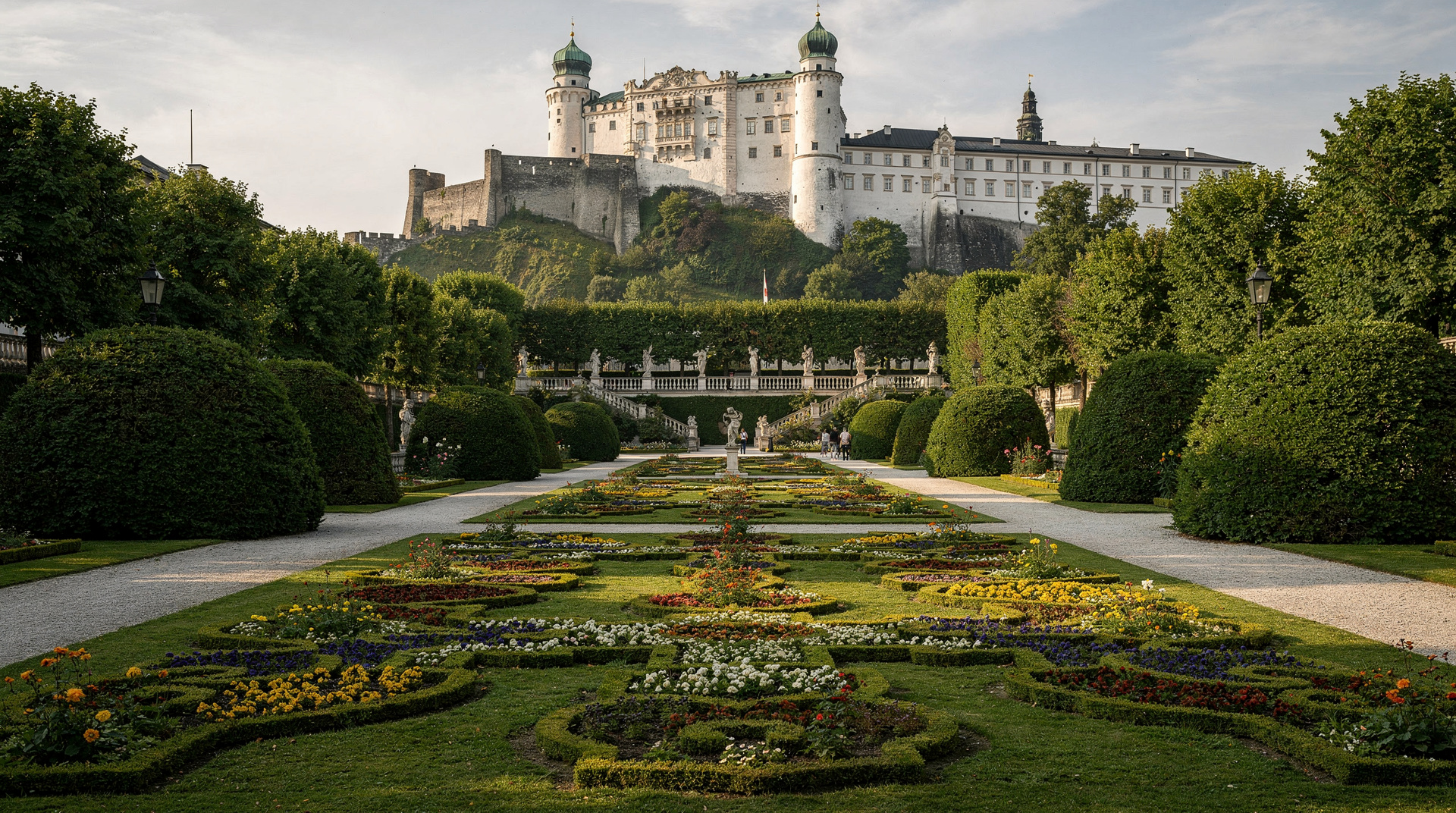
Arrive at Mirabell Palace and Gardens when it opens at 08:00 (the gardens are free and accessible around the clock). The Pegasus fountain, the Dwarf Garden, and the famous staircase where the Von Trapp children danced in the Sound of Music look best in morning light before the tour groups arrive. Allow 30–40 minutes here.
The gardens are free to enter. The palace interior is used as a civic building and is not typically open for tourists. This is not a loss: the exterior and gardens are the main attraction.
Honest note: By 10:30 on summer days, Mirabell Gardens fills with Sound of Music tour groups converging on that staircase simultaneously. Starting at 08:30 is the simple fix. Read our Mirabell Gardens guide for layout and photography tips.
09:15 — Cross the Salzach and enter the Altstadt
Walk south from Mirabell along Schwarzstrasse, then cross the Salzach via Staatsbrücke (the central bridge). You are now entering Salzburg Altstadt, the UNESCO-listed historic core on the left bank of the river.
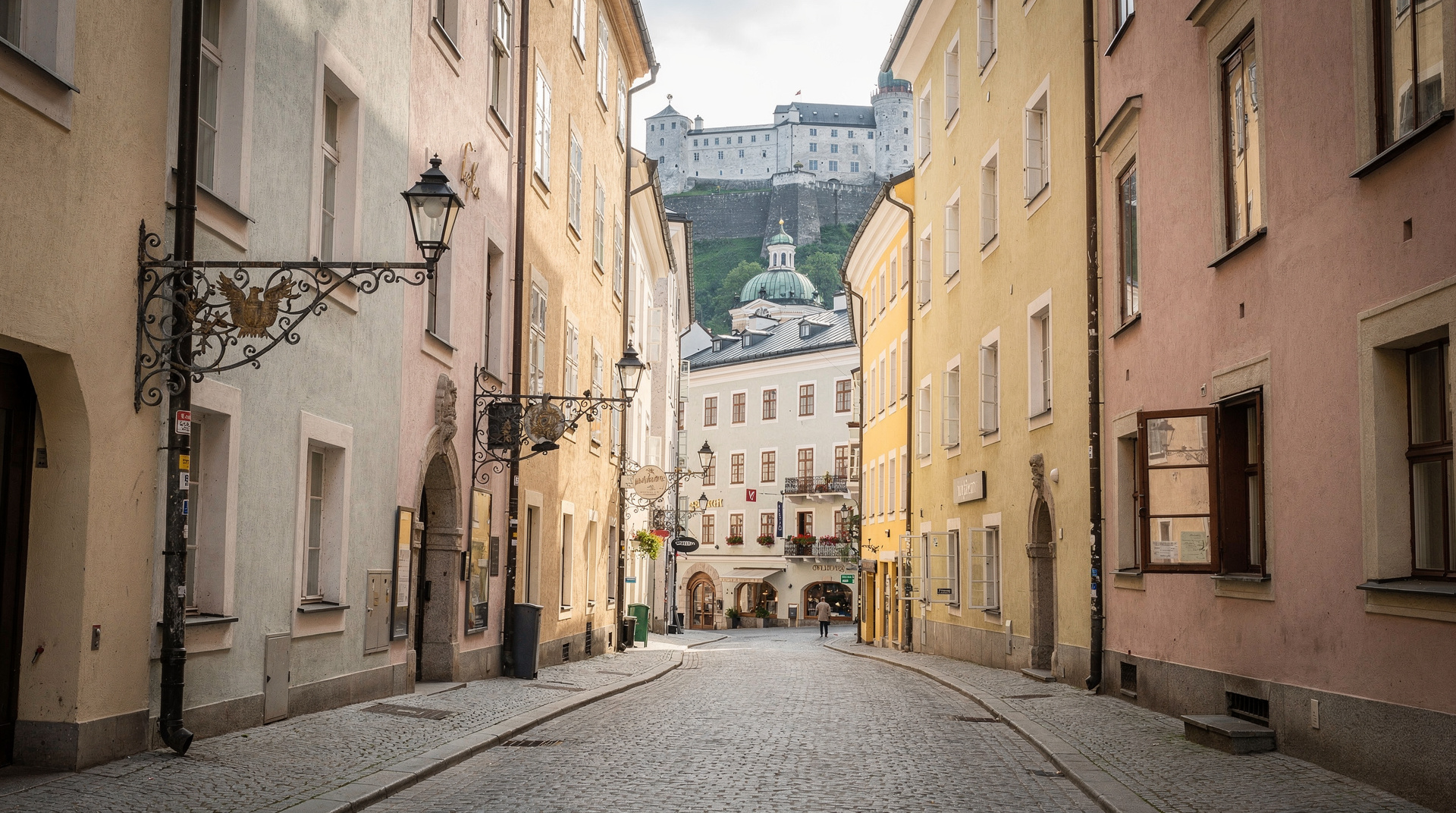
Turn left on Rudolfskai and walk along the riverfront for a few minutes before turning up Getreidegasse. This is Salzburg’s most famous street — narrow, lined with wrought-iron guild signs, and extraordinarily photogenic. It is also genuinely very touristy by 10:00. Take 20 minutes to walk it and don’t feel obliged to eat or shop here: the restaurants on Getreidegasse charge a visible tourist premium for middling food.
09:35 — Mozart’s Geburtshaus (Birthplace)
At Getreidegasse 9, Mozart was born in 1756 in a third-floor apartment that is now the most-visited Mozart museum in the city. The Geburtshaus (birthplace) costs around 12 € and takes 45–60 minutes to explore properly. You’ll see his childhood violin, early compositions, and the apartment itself, which has been preserved in an 18th-century state that feels authentic rather than staged.
Should you go? Yes, on a single day. The Mozarteum’s Wohnhaus (Mozart’s later residence, on the other side of the Salzach) is good but adds time and the Geburtshaus covers the essential story. If you are a serious Mozart devotee, read the Mozart birthplace vs. residence comparison before deciding.
10:30 — Hohensalzburg Fortress: the day’s centrepiece
Head south from Getreidegasse through the old market district toward Kapitelplatz. From there, either take the funicular (cable car up the hill, included in the full fortress ticket) or walk up via Festungsgasse — a 15–20 minute climb that saves the funicular supplement but leaves you warm and without the dramatic lift arrival.
The full fortress ticket including the Prince’s Chambers and Audio Guide runs around 16 €. The Hohensalzburg Fortress admission ticket includes the funicular and all interior sections. Book ahead in peak season to skip the ticket queue at the base station.
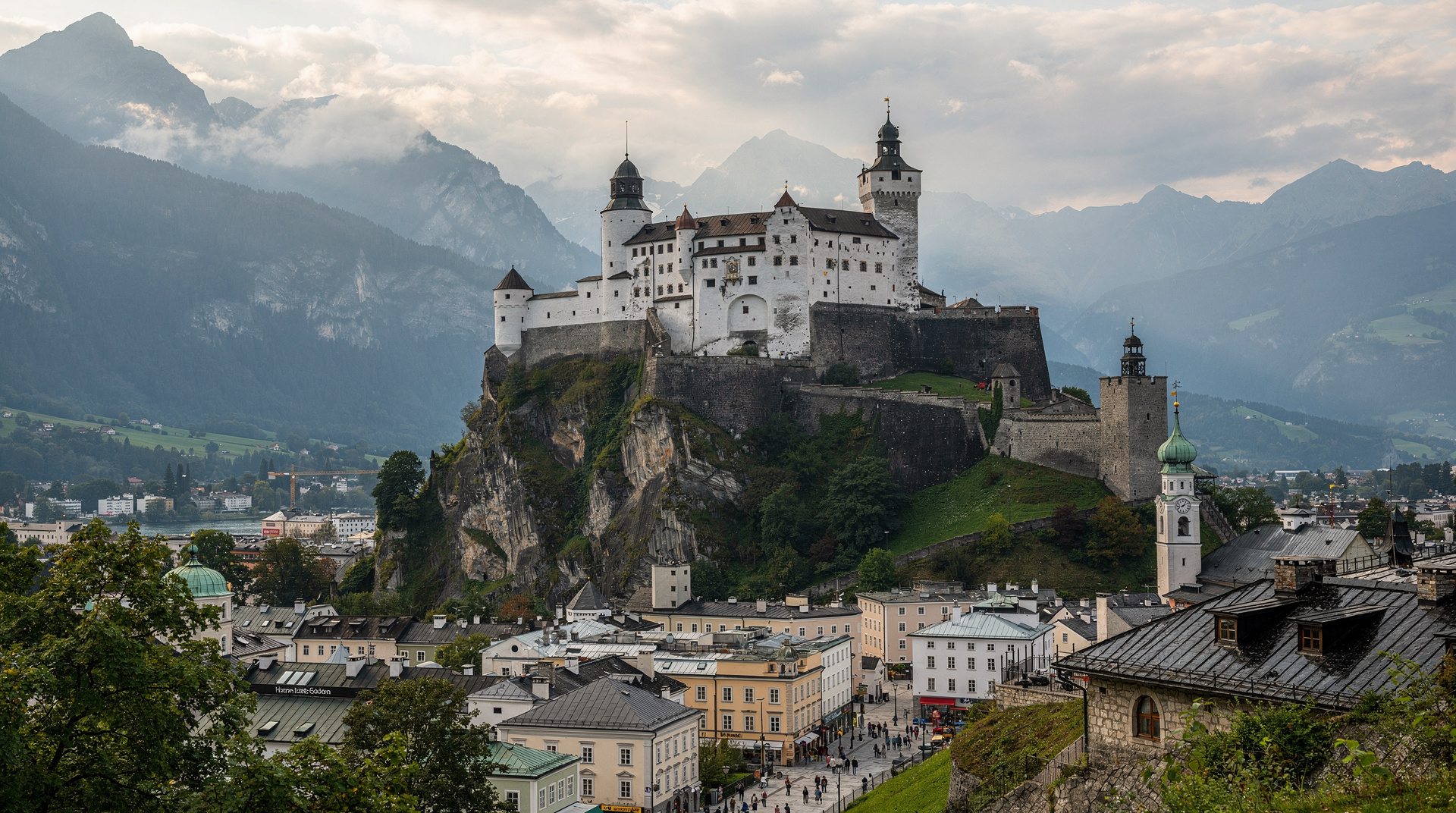
Allow 90 minutes inside: the round towers, the Princes’ Chamber with its Gothic ceramic stove, the marionette collection, and the views over the Salzach valley toward the Untersberg massif. The panorama from the fortress walls is the best urban viewpoint in Salzburg — better than the Mönchsberg elevator, better than the Kapuzinerberg. Do not skip it.
Funicular vs. walk: Our guide on the fortress funicular vs. walking up breaks it down fully. Short answer: the funicular is worth taking at least one way, especially on the descent when legs are tired.
Afternoon (12:30–17:30): the Residenz quarter and lunch
12:30 — Lunch at Triangel or Stiftskeller
Descend from the fortress and eat before the afternoon energy drops. Two honest options:
Triangel on Wiener-Philharmoniker-Gasse (5 minutes from the cathedral) serves traditional Austrian food in a straightforward setting without the tourist pricing of Getreidegasse restaurants. Expect 15–22 € for a main course. It gets busy between 12:30 and 14:00 — arrive promptly or accept a short wait.
Stiftskeller St. Peter is one of Europe’s oldest restaurant-inns, operating since at least the 9th century in the vaults of the St. Peter Monastery. The setting is extraordinary, the food is solid Austrian, and the evening concert option here (Mozart Dinner Concert) is worth knowing about. Lunch runs 18–28 € per main. Booking ahead for dinner is essential; lunch walk-ins are usually manageable.
14:00 — Residenz and the DomQuartier
Walk to the Residenzplatz, the large square at the heart of the Altstadt. The Residenz Palace is where the prince-archbishops lived for centuries and is now home to an art gallery and the state rooms. The DomQuartier ticket (around 16 €) covers the Residenz, the Cathedral Museums, and the walkway between them. The DomQuartier day ticket is the most efficient way to see this complex.
If you are tight on time, the DomQuartier is the one you might cut — but the state rooms with their frescoed ceilings are genuinely impressive, and the view from the walkway over Kapitelplatz is one of those moments that makes Salzburg feel as grand as Vienna.
14:00 (alternatively) — Salzburg Cathedral
Directly adjacent to the Residenz, the Salzburg Cathedral (Dom) is free to enter and takes 20–30 minutes. The Baroque interior — marble, gilt, and frescoed vaults — is among the finest in the German-speaking world. Mozart was baptized here, and the font is still in place. Read our Salzburg Cathedral guide for context on what you’re looking at.
15:30 — The left bank on foot
After the Residenz, walk the Altstadt’s network of smaller squares: Alter Markt (the old market, with Café Tomaselli at its centre — the oldest café in Austria, operating since 1700), Judengasse, and the riverside Imbergstiege staircase. These are the parts of Salzburg that feel lived-in rather than touristified, and they cost nothing.
Café Tomaselli: worth stopping for coffee and Topfenstrudel (curd pastry). It is a tourist destination in its own right, but the ritual of sitting at a marble table with a Melange (Viennese-style coffee) is authentic. Expect to wait 10 minutes for a table at peak hours.
Evening (17:30–20:00): Mirabell in golden hour and optional concert
17:30 — Return to Mirabell for golden hour
Cross back over the Salzach via Makartsteg (the lock bridge) and walk up through the Mirabellgarten as the afternoon light turns. The baroque fountains, the clipped hedgerows, and the view back toward the fortress in late sun is one of Salzburg’s most reproducible great moments. Free, and quiet again by this point.
If time allows, walk 10 minutes north to the Salzach riverbank near Elisabethkai for a riverside view of the old town against the hill.
19:00 — Optional: classical concert
One day in Salzburg earns you one evening. If you want to spend it on a concert, two options suit a tight schedule:
The Mirabell Palace Classical Concert is a 1.5-hour programme of Mozart and Strauss held in the Marble Hall of the palace, roughly 35–45 €. Intimate, well-performed, and the setting is genuinely beautiful. The Mozart concert at Mirabell Palace runs most evenings and can be booked with a day’s notice in shoulder season.
The Fortress Dinner Concert at Hohensalzburg is more expensive (65–90 €) but includes dinner and a later programme. For a single night in Salzburg, the fortress setting — lit up at night with the city below — is hard to beat.
If concerts feel like too much: Dinner at Augustiner Bräustübl is the local alternative. This enormous monastery beer hall on the Mülln hill serves Augustiner draught beer from stone jugs and has a beer garden with hundreds of tables. It is genuinely not a tourist trap — locals come here regularly. Cold food only (grab it from the stalls inside), bring your own food or eat elsewhere first.
What to cut if time is tight
If your day is shorter than expected or energy runs low, this is the hierarchy:
- Keep: Mirabell Gardens (free, fast, unmissable)
- Keep: Getreidegasse walk (20 minutes)
- Keep: Hohensalzburg Fortress (the #1 sight in Salzburg)
- Consider cutting: Mozart Geburtshaus (keep for music lovers, skip if not interested)
- Consider cutting: DomQuartier interior (the cathedral exterior is free and nearly as good)
- Cut entirely: Hellbrunn Palace (needs 2–3 hours and is on the south edge of town — save for a second day)
Do not try to add a Hallstatt or Eagle’s Nest day trip to a single-day visit. The logistics simply don’t work, and you’ll spend your one Salzburg day on a bus. Save those for a longer trip — our 2-day Salzburg itinerary or 3-day itinerary covers those properly.
Costs and logistics
Getting around: Everything in this itinerary is walkable. The city bus network is good if feet tire — single rides are around 2.10 € and a day pass costs about 5.70 €. The fortress funicular is the only transit cost built into the sight.
Airport to city: Bus lines 2 and 10 run from Salzburg Airport to the Altstadt in about 20 minutes for approximately 2–3 €. Taxis cost around 15 €. The airport is only 4 km from the centre — closer than most European airports to their city cores. See our Salzburg airport to city guide for timing.
Salzburg Card: For a single day, the Salzburg Card (24h, approx. 30 €) breaks even if you do the fortress, one museum, and use public transit. If you are doing fortress plus DomQuartier plus Mirabell concert, run the numbers in our Salzburg Card worth it guide.
Estimated total per person (no concert):
- Fortress ticket: 16 €
- Mozart Geburtshaus: 12 €
- DomQuartier: 16 €
- Lunch: 20–28 €
- Coffee at Tomaselli: 6 €
- Transport: 5–10 €
- Total: roughly 75–88 €
With an evening concert: Add 35–90 € per person.
Arriving by train instead of staying overnight
Many one-day visitors are actually day-trippers from Munich, Vienna, or a Salzkammergut base rather than overnight guests, and the logistics differ slightly. Salzburg Hauptbahnhof is a 15-minute walk or a 5-minute bus ride (lines 1, 2, 3, 5, 6, 20, 25) from Mirabellplatz, so this itinerary is fully compatible with a train arrival around 08:30–08:45. Left-luggage lockers are available at the station (approx. 4–6 € for a day, coin or card) if you don’t want to carry bags around the Altstadt and fortress — worth doing, since the fortress funicular and the Getreidegasse crowds are unpleasant with a suitcase.
From Munich: Direct trains run roughly hourly and take 1h30–1h45. Arriving on the 07:00 or 07:30 departure gets you to Mirabell Gardens close to the recommended 08:30 start. From Vienna: the direct train is about 2h30–3h; an early departure (06:30–07:00) is the only realistic way to fit a full Salzburg day and still catch a reasonable return.
Last train back: Check return times before you commit to the 20:00 concert option — the last convenient connections to Munich and Vienna are typically 21:00–22:00, which is workable, but confirm before booking anything that runs late. If your last train is earlier, the concert should be the first thing cut from this itinerary, not the fortress.
What a one-day visit costs at three budget levels
The itinerary above assumes a mid-range day. Here is how the same day flexes at different budgets:
| Budget | Mid-range | Splurge | |
|---|---|---|---|
| Fortress | Walk up, skip audio guide (approx. 13 €) | Full ticket with funicular (16 €) | Same, plus guided tour add-on |
| Mozart Geburtshaus | Skip (save 12 €) | Standard ticket (12 €) | Standard ticket (12 €) |
| Lunch | Bakery or Würstelstand (6–10 €) | Triangel or similar (18–25 €) | Stiftskeller St. Peter (25–35 €) |
| Evening | Augustiner Bräustübl (15–20 €) | Same, or skip | Fortress dinner concert (65–90 €) |
| Total | approx. 35–45 € | approx. 75–90 € | approx. 150–180 € |
The honest takeaway: the budget version loses very little of substance. The fortress view and the Altstadt walk — the two things that actually define the day — cost the same or are free regardless of budget. What money buys on a single day is mainly the Mozart museum and the evening’s polish, not the core experience.
Frequently asked questions about a one-day Salzburg visit
Is one day enough for Salzburg?
One day covers the main sights at a comfortable pace if you start at 09:00 and stay until evening. You will see Mirabell Gardens, the Altstadt, the fortress, and Mozart’s birthplace. What you will miss is the Salzkammergut day trips, Hellbrunn, and the deeper city walking. Two days is noticeably better — see our how many days in Salzburg guide.
Should I book anything in advance?
Book the fortress ticket ahead in July and August to avoid queuing at the funicular. The DomQuartier and Mozart Geburtshaus can typically be entered on the day, though weekend afternoons can be busy. If you want an evening concert at the fortress, book that 48–72 hours ahead minimum.
Is the Salzburg Card worth it for one day?
It depends on what you’re doing. The 24-hour card (approx. 30 €) covers the fortress, Hellbrunn, the Mirabell Palace tour, public transport, and a dozen other sites. If you are doing fortress plus DomQuartier plus a museum plus transport, it is marginal value. If you are running a full programme of 3–4 paid attractions, it saves money. Use our Salzburg Card calculator guide.
What is the best part of Salzburg for a short visit?
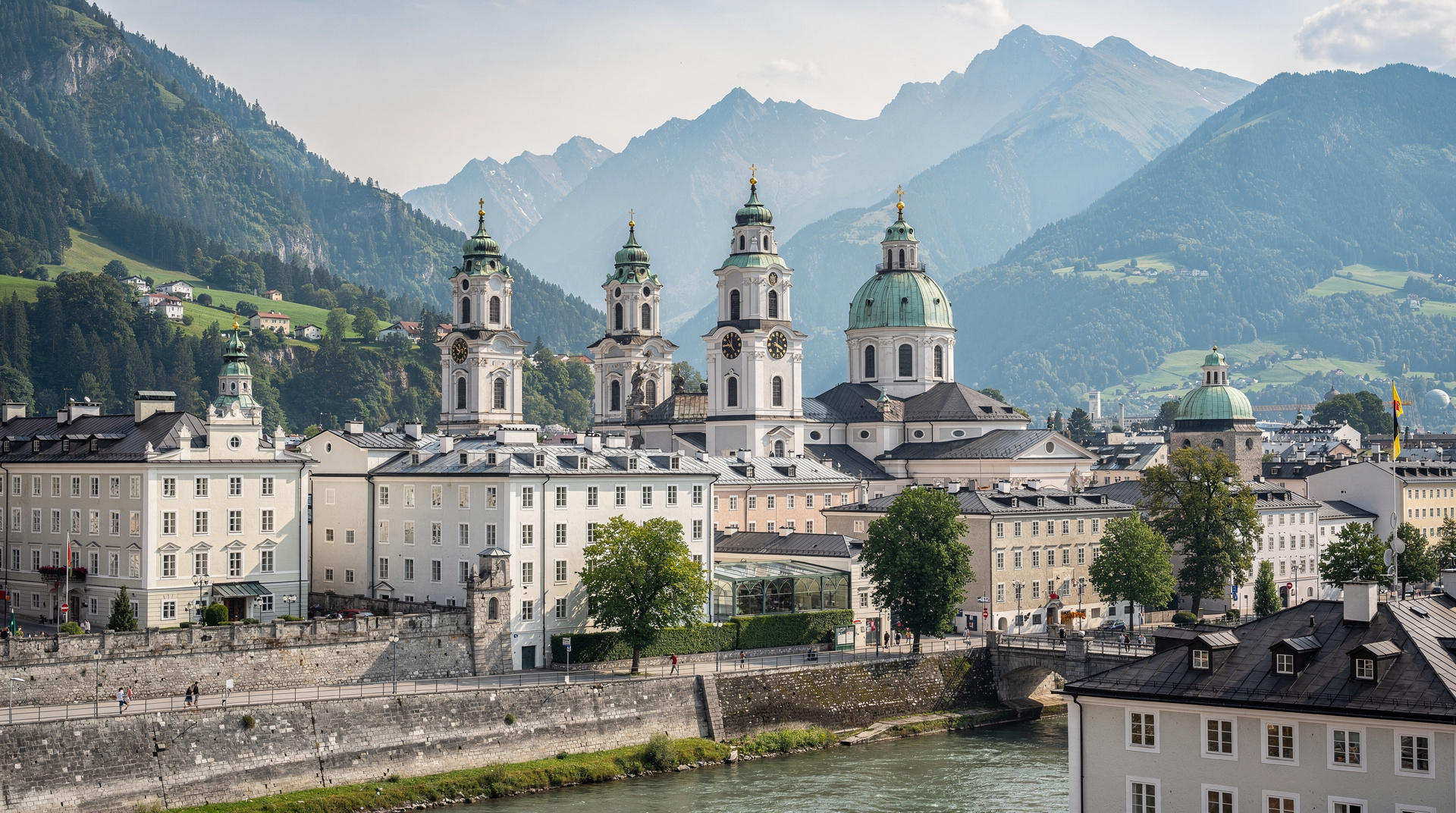
Hohensalzburg Fortress and the view from the walls. Nothing else gives you the spatial understanding of how the city was built — on both banks of the Salzach, squeezed between cliffs and river, with the baroque churches as the dominant landmarks. Everything else builds on top of that view.
Are there any tourist traps to avoid?
Two specific ones worth knowing about. First, the Mozartkugel: the original is made by Fürst confectionery, in silver-and-blue wrapping, and sold only in their shops. The red-wrapped Mirabell and Reber Mozartkugeln are factory-made and sold at every tourist stall. Read our real Mozartkugel guide before buying. Second: restaurants on Getreidegasse itself tend to charge tourist prices. Walk one or two streets away (Judengasse, Chiemseegasse) for better value.
Can I do Hallstatt as a day trip from Salzburg?
Not on a single-day visit if you also want to see Salzburg properly. Hallstatt is 1 hour by car or 2h15 by public transport. If Hallstatt is your priority, you would need to choose between it and the city. Our Salzburg 2-day itinerary pairs one city day with one Hallstatt day, which is the right structure.
Where can I store luggage for the day?
Salzburg Hauptbahnhof has staffed and self-service left-luggage lockers, open early enough for a 08:00 arrival, at approximately 4–6 € for a full day. Some central hotels will also hold bags for a few hours even outside check-in windows if you ask. Doing this before starting the itinerary is worth it — the fortress funicular and Getreidegasse’s narrow crowds are unpleasant with a suitcase in tow.
Is it worth visiting Salzburg for one day if I’ve already seen photos of everything?
Yes, more than most cities. Photos convey the baroque density but not the spatial experience: the way the fortress dominates the skyline from every angle, the sound of the Salzach, and the scale contrast between the intimate Altstadt alleys and the open Mirabell gardens. The fortress ramparts in particular give a three-dimensional understanding of the city’s layout that no photograph replicates.
Maximising a single day: honest advice by visitor type
Different visitors get different things from a single day in Salzburg. Here is the practical differentiation.
If you are a Mozart devotee: Prioritise the Geburtshaus in the morning over the DomQuartier in the afternoon. If time allows, cross back to the Mozarteum (Mirabellplatz) for a look at the Wohnhaus exterior — the building where Mozart composed major works and ultimately left Salzburg. The concert options in the evening (Mirabell, fortress) deliver Mozart in appropriate settings.
If you primarily want the visual experience of the city: Fortress first and longest — the views from the ramparts are the defining visual of Salzburg. Mirabell Gardens at both ends of the day (morning and golden hour) for the botanical and architectural character. The cathedral exterior and Residenzplatz give you the religious-civic axis. Skip the museums.
If you have children with you: Fortress for the funicular and ramparts (universally engaging for children). Mirabell Gardens for the outdoor space. Skip the Mozart museum unless children are interested. An ice cream from Eis Schmidt on Getreidegasse as the reward for good behaviour on cobblestones. See our Salzburg with kids guide for the full family-day guidance.
If you are a food and drink person: The Altstadt tour finds the real Mozartkugeln at Fürst (Alter Markt 13). The Augustiner Bräustübl beer garden in the evening is genuinely the local experience. Café Tomaselli for afternoon coffee is worth 45 minutes. Salzburger Nockerl — the city’s famous cloud-soufflé dessert — requires a restaurant dinner (Bärenwirt or Stiftskeller). See our Salzburg food guide for the complete eating itinerary.
If weather turns bad: Salzburg’s indoor programme is actually excellent for a rain day. The fortress interior (covered rampart sections, interior chambers), the Mozart museums, and the DomQuartier are all entirely indoor. Rain also makes Getreidegasse more photogenic (reflective cobblestones, umbrellas, the guild signs) and less crowded. A concert in the evening is fully weather-proof. Read our Salzburg packing and weather guide for seasonal weather expectations.
Top experiences
Bookable activities with verified prices and instant confirmation on GetYourGuide.