Salzburg in 3 days: the recommended first-timer's itinerary
Salzburg: 2.5-Hour Walking Tour — Mozart, Old Town & More
Three days is the sweet spot for a first visit to Salzburg. It gives you one full day in the city without clock-watching, one day in the Salzkammergut lakes region (Hallstatt), and one day in the Bavarian mountains across the border (Eagle’s Nest and Berchtesgaden). At the end of three days you will have seen the best of what makes this part of Central Europe so consistently compelling — baroque city, glacier lakes, alpine history — without having rushed any of it.
If you are working out whether to extend to four or five days, our how many days in Salzburg guide gives the honest breakdown. Three days covers the essential programme; more time allows the Salzkammergut lakes circuit, Werfen ice cave, or slower pacing.
At a glance
| Structure | Day 1 city, Day 2 Hallstatt, Day 3 Eagle’s Nest |
| Cost per person | approx. 600–900 € for 3 days incl. accommodation (couple) |
| Car needed | No — tours cover both excursion days |
| Best months | May, June, September, October |
| Book ahead | Fortress ticket, both day-trip tours, evening concert |
Before you arrive: a few honest points
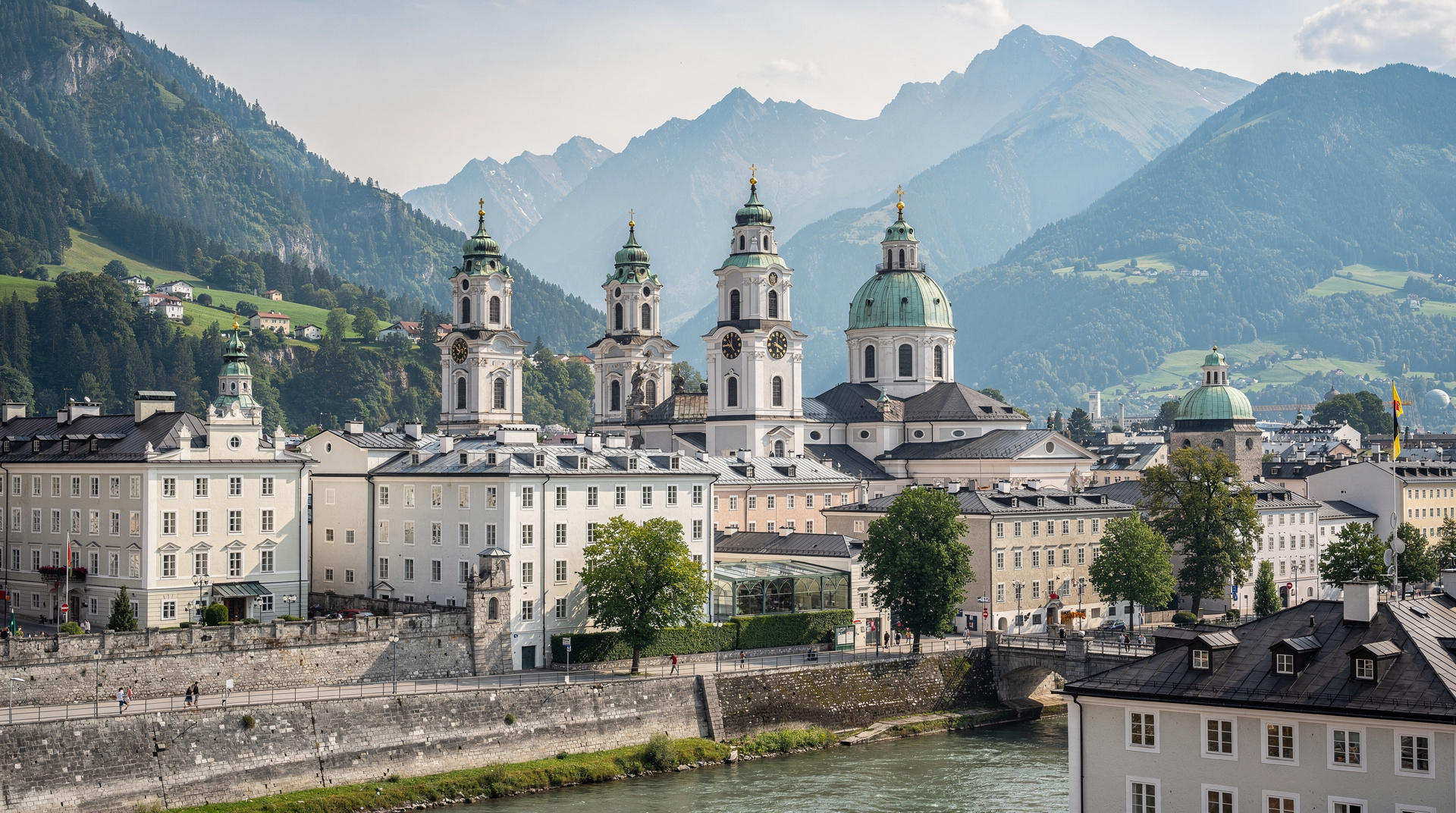
Salzburg is compact. The Altstadt, Hohensalzburg Fortress, and Mirabell Gardens are all within a 15–20 minute walk of each other. You do not need a car for the city itself.
Eagle’s Nest is seasonal. The Kehlsteinhaus bus runs May to October only. If you are visiting in November to April, substitute Day 3 with Werfen ice cave and Hohenwerfen Castle (also see our Salzburg winter itinerary for that season).
Hallstatt crowds are real. In July and August, the village is uncomfortably busy from 11:00 to 16:00. The day trip structure below accounts for this by departing early. If you are visiting during the high-season peak, this timing advice is not optional.
Book ahead: Hohensalzburg fortress tickets (to skip the funicular queue), Hallstatt tour or Eagle’s Nest tour (both fill up days ahead in peak season), and any evening concert.
Day 1: The Altstadt in depth
Morning (08:30–12:30): Mirabell, Mozart, and Getreidegasse
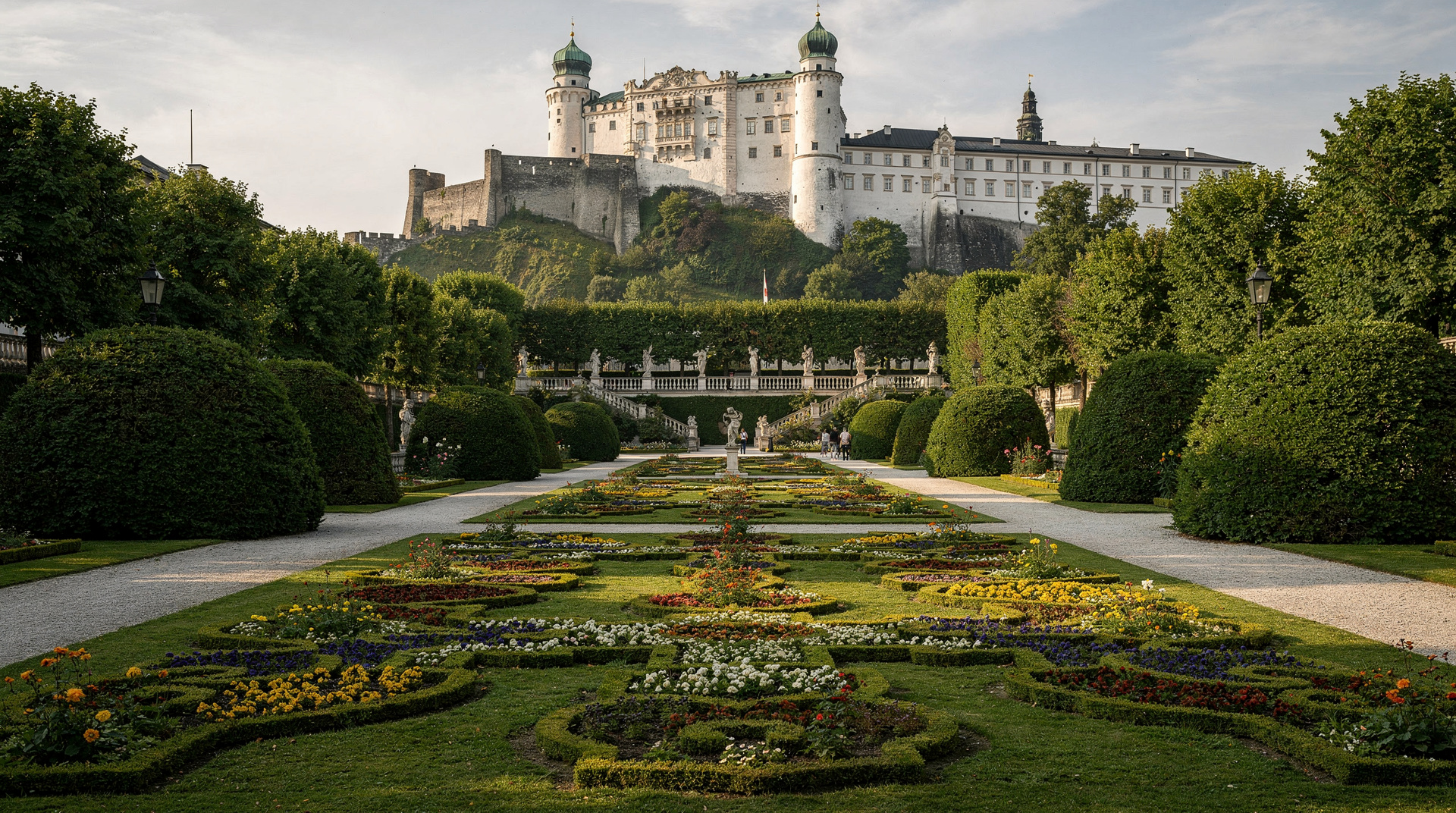
Start at Mirabell Palace and Gardens at 08:30. The gardens are free and at their quietest before the tour groups arrive at 09:30. The baroque fountain gardens, Pegasus statue, and Sound of Music staircase are all here; 30–40 minutes is enough. The palace interior is not generally open to tourists — it functions as a civic building.
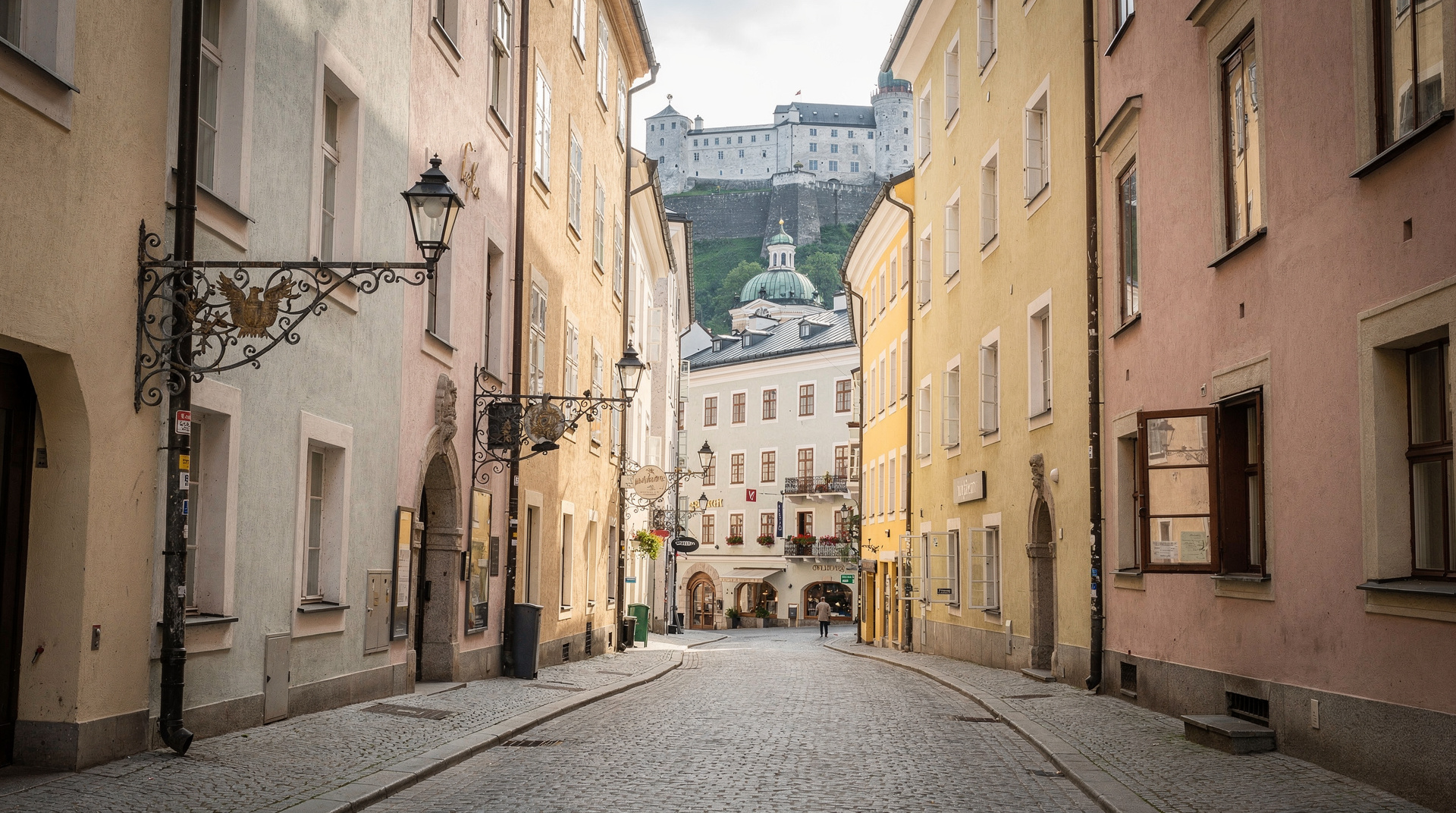
Walk south, cross Staatsbrücke bridge over the Salzach, and enter the Salzburg Altstadt. Head to Getreidegasse, the medieval main street, for a 20-minute walk. The wrought-iron guild signs are authentic and worth photographing; the restaurants are touristified and overpriced. Eat elsewhere.
At Getreidegasse 9, stop for Mozart’s Geburtshaus (birthplace, approx. 12 €). The apartment where Mozart was born in 1756 has been preserved with his childhood instruments, scores, and family portraits. Allow 45–60 minutes. This is genuinely the best Mozart museum in the city for the life-story narrative, though the Wohnhaus (residence) across the river tells the adult story. For a three-day visit, one Mozart museum is sufficient unless you are a devoted Mozart scholar.
By 10:30, head south through the old market alleys to the funicular base at Festungsgasse.
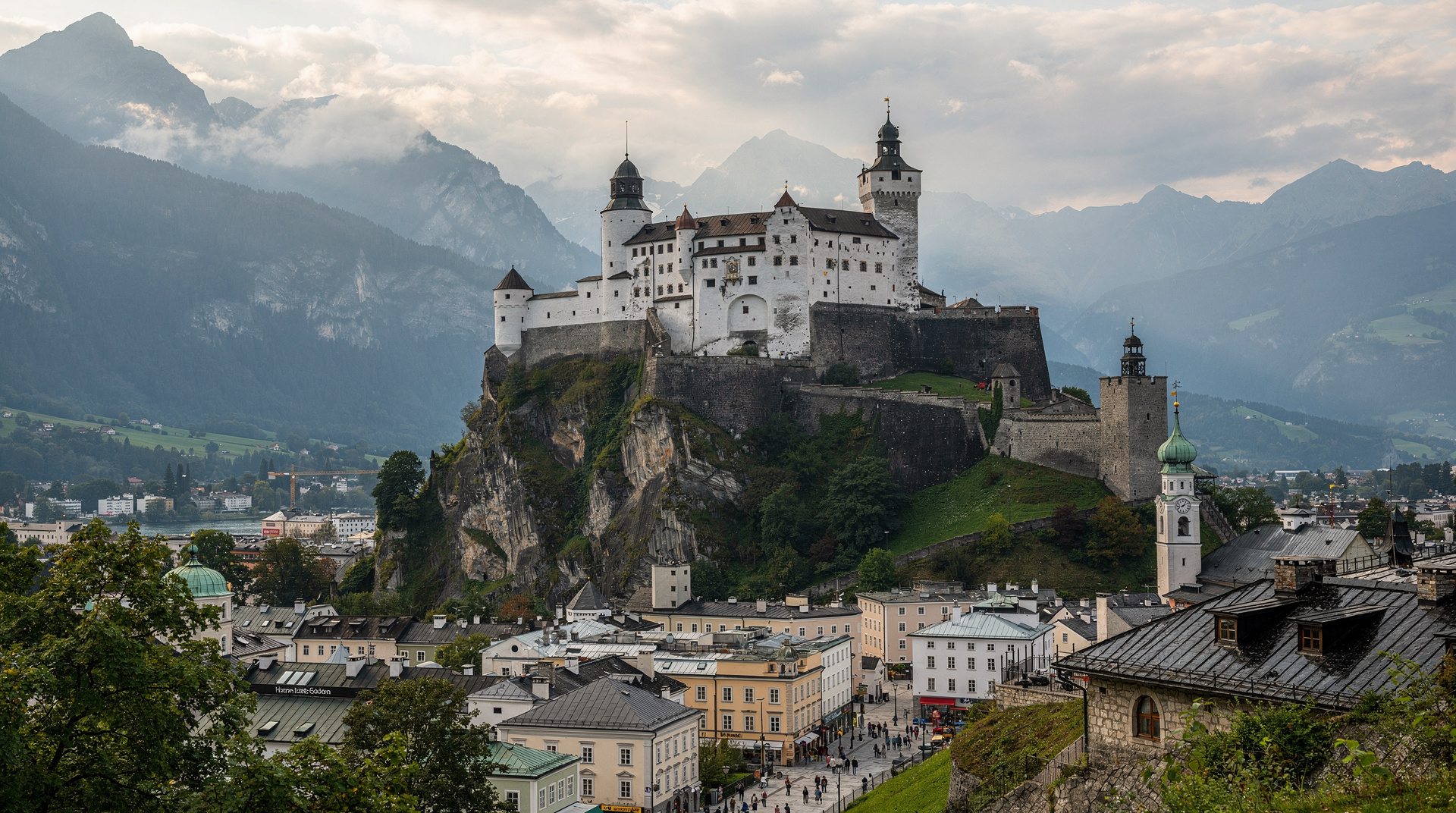
Take the Hohensalzburg Fortress admission ticket — this covers the funicular, audio guide, Princes’ Chambers, and marionette museum. The fortress itself takes 90 minutes to explore properly: the circular rampart walk, the Gothic ceramic stove in the Princes’ Hall, and the views across the Salzach toward the Untersberg massif are the highlights.
Fortress practical note: The ticket includes a funicular descent as well. On a hot summer day, the walk up takes 20 minutes; the funicular is faster but occasionally queued. Our fortress tickets guide explains what each ticket tier covers.
Afternoon (12:30–17:30): DomQuartier, the cathedral, and the right bank
Descend from the fortress by 12:30 and have lunch in the Altstadt. Triangel on Wiener-Philharmoniker-Gasse (an honest Austrian restaurant, 15–22 € mains) or Café Tomaselli on Alter Markt (for coffee and pastry in a beautiful old café setting) are both good. Avoid eating on Getreidegasse itself.
After lunch, visit the DomQuartier (approx. 16 €). The ticket covers the Residenz palace state rooms, the walkway over the cathedral rooftops, and the Cathedral Museum. The frescoed apartments of the prince-archbishops are genuinely impressive; the walkway view is one of the city’s great visual moments. See our Residenz and DomQuartier guide for what not to miss inside.
The Salzburg Cathedral (free) is immediately adjacent. Mozart was baptised here in 1756; the baroque interior — vaulted in white and gold, frescoed by Rottmayr — is one of the finest in the German-speaking world. Spend 20 minutes here regardless of the DomQuartier visit.
By 15:30, cross back to the right bank via Mozartsteg and walk up the Kapuzinerberg hill for a free 45-minute city panorama. The path starts from Steingasse on the right bank; the summit gives the best view of the fortress and Altstadt roofline. Our Kapuzinerberg walk guide has the exact route.
Evening (18:00–21:00): concert or beer garden
Tonight is the night for a classical concert if you want one. The best options are:
Hohensalzburg Fortress concert (approx. 40–60 €): a 90-minute Mozart and Haydn programme in the fortress itself, with the city lit below. The most atmospheric option. The Best of Mozart Fortress Concert runs most evenings year-round; book at least 48 hours ahead in summer.
Mirabell Palace concert (approx. 35–45 €): smaller scale, intimate Marble Hall setting, Mozart and Strauss. Very good value and easier to book. See our best Mozart concerts in Salzburg guide for honest comparisons.
If not a concert night: Augustiner Bräustübl, the enormous monastery beer garden north of the Altstadt (15-minute walk, no booking needed, 15–20 € on food and beer).
Day 2: Hallstatt day trip — leave early and stay for lunch
The essential departure timing
Leave your hotel by 07:45–08:00. This is not exaggerating. In summer (June–August), Hallstatt is legitimately unpleasant by 11:30 — narrow streets filled with tour groups, every viewpoint crowded. Arriving before 09:30 means you see the village as it is supposed to be seen.
Getting to Hallstatt
Organised bus tour (recommended): The half-day Hallstatt tour from Salzburg handles all logistics and departs early. You get 3–4 hours in the village with return transport. For more time and the option to include St. Gilgen, the private day-trip versions are worth the premium.
By public transport: Train from Salzburg Hauptbahnhof to Attnang-Puchheim (40 min), change to Hallstatt station (60 min), then the ferry across the lake (10 min). Total: approx. 2h15 each way. Return trip approx. 28–32 €. The ferry runs every 30 minutes when trains arrive. This is the cheapest independent option. See our Salzburg to Hallstatt by train guide for the exact connections.
By car: 1 hour from Salzburg via the A10 motorway and then the B145. Park at one of the satellite car parks above the village (free buses run down). Important: the village has almost no parking and the satellite lots fill by 09:00 in high season.
What to do in Hallstatt
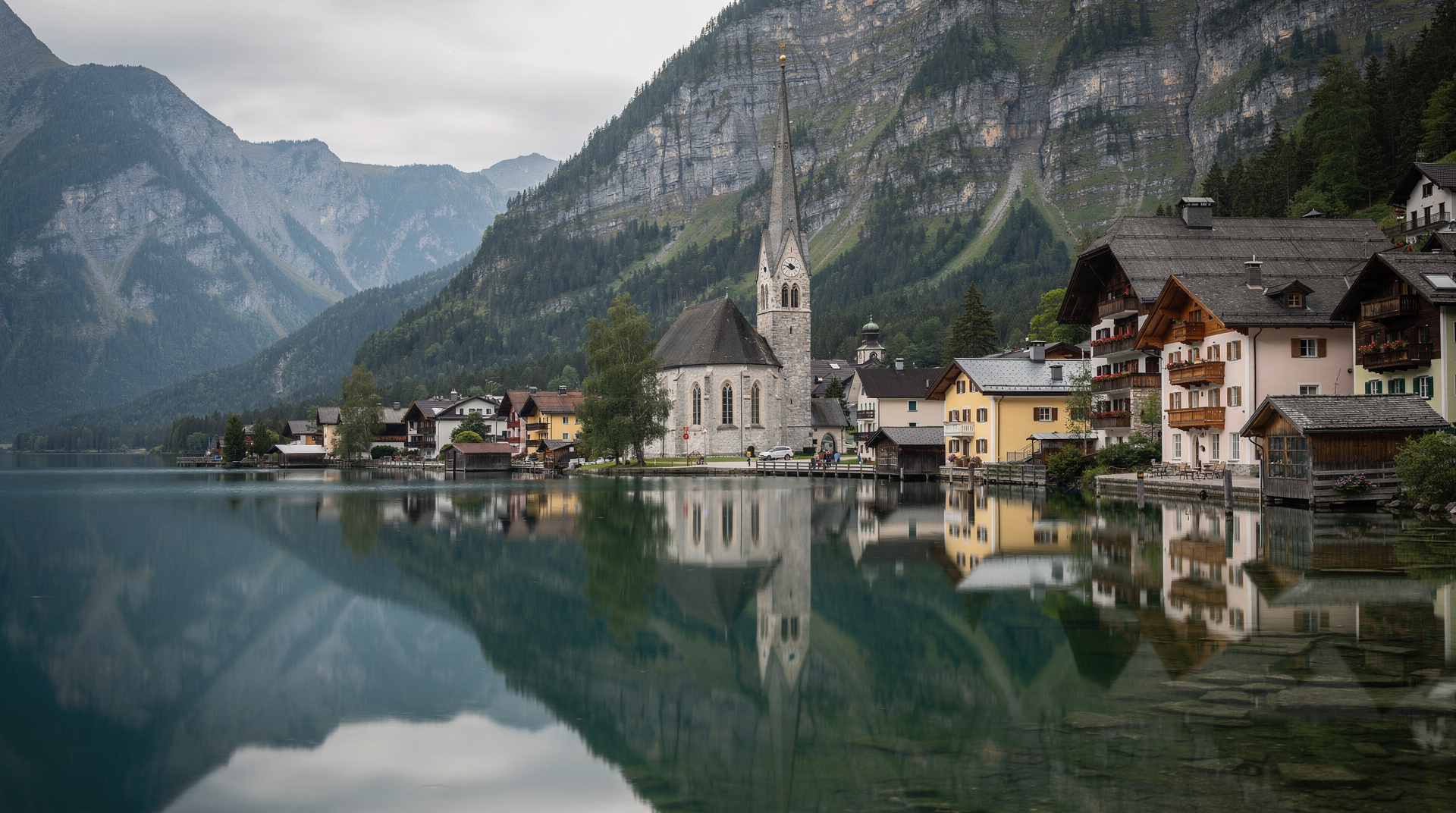
Hallstatt sits on a narrow ledge between the Dachstein mountains and the Hallstätter See. The village itself is genuinely beautiful and not over-restored; the main street, the market square, and the lakeside walking path take about 45 minutes to walk unhurriedly.
Bone Chapel (3 €): The small ossuary behind the Catholic church contains decorated skulls from the 18th–19th centuries — a practice that arose because the cemetery was too small for full burials. Unusual, sobering, and genuinely historically significant.
Hallstatt Salt Mine (approx. 38 € with funicular): The mine is interesting — ancient mining history, underground salt lake, metal slides through tunnels — and takes about 1.5 hours. If you want to add the mine, read our Hallstatt salt mine and skywalk guide to decide whether it fits your schedule.
Lunch in Hallstatt: Restaurants in Hallstatt are tourist-priced but the lakeside setting justifies it once. Expect 18–28 € per main. Leave by 14:00 to avoid the worst afternoon gridlock.
Honest assessment of Hallstatt: It is genuinely one of the most beautiful places in Austria. It is also very famous and very crowded in summer. The solution is simple: arrive early and leave before the crowds peak. Our Hallstatt overcrowding guide gives month-by-month guidance.
Return to Salzburg
Return by 16:30–17:00. Rest, dinner, and an early night before the mountain day.
Day 3: Eagle’s Nest and Berchtesgaden
Morning (07:30–12:00): Königssee boat trip
Depart Salzburg by 07:30. The drive to Berchtesgaden is 45 minutes through the Bavarian Alps — a border crossing that feels immediate rather than bureaucratic. Park in Berchtesgaden town and take the bus to Königssee.
The Königssee electric boat (no motor noise, no fumes) glides along a narrow fjord-like lake toward St. Bartholomä church — a red-domed pilgrimage chapel on a curved peninsula surrounded by sheer cliff walls. The boat captain performs a trumpet echo off the cliff walls about halfway along. Allow 1.5–2 hours for the return trip including the stop at St. Bartholomä. Adult return ticket: approximately 20–22 €. See our Königssee boat guide for practical details.
Afternoon (12:00–17:00): Eagle’s Nest
Return to Berchtesgaden bus station for the Kehlstein bus to Eagle’s Nest. This is the only way up — no private cars are permitted on the summit road. The bus (approx. 18 € return) deposits you at a tunnel leading into the mountain, where a brass-lined elevator takes you the final 124 m to the summit. The Eagle’s Nest and Berchtesgaden tour from Salzburg includes guide commentary that makes the WWII history intelligible in context.
The Eagle’s Nest (Kehlsteinhaus) was built as a gift for Hitler’s 50th birthday and used only 14 times before the war ended. It is now a restaurant and memorial site at 1834 m. The views — over Berchtesgaden, the Königssee below, and the Austrian Alps beyond — are spectacular on a clear day. The historical weight is tangible in a way that a museum cannot replicate.
Important: Eagle’s Nest is open mid-May to October only. The Kehlstein bus runs during the same period and books out weeks ahead in July–August. If you are visiting outside this period, substitute the Obersalzberg Documentation Center (open year-round) and Berchtesgaden town. Our Eagle’s Nest best time to visit guide has seasonal detail.
Allow 2 hours at the summit — the views, the building itself, and a coffee or lunch in the restaurant.
Return
Drive or take transport back to Salzburg by 17:30–18:00. Dinner in Salzburg — by now you know the city well enough to avoid the tourist-trap options.
How to adapt this itinerary
Music focus: Replace Day 3 Eagles Nest excursion with a slower second day in Salzburg: Mozart Wohnhaus in the morning, DomQuartier afternoon Mozart concert, Salzburg Festival performance in the evening (book far ahead). See our Salzburg classical music weekend.
Family with young children: Replace Day 3 with Hellbrunn trick fountains (morning) and Hallein salt mine (afternoon). See our Salzburg with kids 3-day itinerary.
Winter visit: Eagle’s Nest is closed. Replace with Hohenwerfen Castle (year-round) and the Eisriesenwelt ice cave closes in winter too — Werfen and Hallstatt in winter snow is the alternative.
No car: All three days work without a car using guided tours for Days 2 and 3. See our Salzburg with or without a car guide.
Costs and logistics
Day 1 per person:
- Fortress (with funicular): 16 €
- Mozart Geburtshaus: 12 €
- DomQuartier: 16 €
- Lunch + coffee: 20–30 €
- Evening concert: 35–60 € (optional)
- Total: 65–134 €
Day 2 per person (Hallstatt):
- Bus tour: 35–65 € OR train+ferry: 30 €
- Bone chapel: 3 €
- Salt mine (optional): 38 €
- Lunch: 18–28 €
- Total: 60–134 €
Day 3 per person (Eagle’s Nest):
- Guided tour from Salzburg: 45–85 € OR independent (car + Kehlstein bus approx. 40 €)
- Königssee boat: 22 €
- Lunch: 18–25 €
- Total: 80–132 €
Salzburg Card: The 48-hour card (approx. 44 €) covers city transport, fortress, DomQuartier, and a dozen other sites. Worth it for Day 1 if you are doing multiple paid attractions. See our Salzburg Card worth it guide.
Day-by-day summary
| Day | Focus | Key booking |
|---|---|---|
| 1 | Altstadt, fortress, Mozart, evening concert | Fortress ticket (peak season) |
| 2 | Hallstatt — village, Bone Chapel, optional salt mine | Bus tour or train, 1 week ahead in summer |
| 3 | Königssee boat, Eagle’s Nest | Kehlstein bus / tour, 1 week ahead in summer |
Packing and what to bring on each day
A 3-day itinerary that mixes city walking, an early-morning lake trip, and a mountain-summit visit needs slightly more planning than a pure city break. Day 1 needs nothing unusual — comfortable walking shoes for cobblestones and a layer for the fortress ramparts, which are windier than the sheltered Altstadt streets below.
Day 2 (Hallstatt) rewards a light rain layer even in summer — lake-district weather changes fast, and the Skywalk viewpoint is fully exposed. Day 3 (Eagle’s Nest) is the one day where the temperature difference matters most: the summit at 1834 m runs 8–12°C cooler than Salzburg at street level, and even in July a jacket is worth carrying, since the elevator and tunnel approach is fully enclosed but the summit terrace is not.
Bring a printed or downloaded copy of any pre-booked tickets — signal at the Kehlstein bus station and in parts of Hallstatt is unreliable enough that relying on a phone alone is a minor risk.
Footwear deserves a specific note: the fortress ramparts, the Hallstatt village lanes, and the Eagle’s Nest tunnel-and-elevator approach all involve uneven surfaces or a genuine walk (15–20 minutes uphill if you skip the Hohensalzburg funicular). Trainers or light hikers are more useful across all three days than anything more formal, and nobody in Salzburg will judge you for it — this is a city built on hills, not flat boulevards.
Frequently asked questions about 3 days in Salzburg
Is 3 days the right amount of time for Salzburg?
For a first visit that covers the city, the Salzkammergut, and the Bavarian Alps, yes. Three days gives you enough time to do each well without rushing. If you want a slower pace or want to add the Hohe Tauern / Grossglockner road, five days is more suitable.
Should I do Hallstatt or Eagle’s Nest first?
It depends on your priorities. Hallstatt is the more iconic Austrian image and suits morning arrival (getting there early is critical). Eagle’s Nest requires some historical orientation to appreciate fully. Most visitors find Hallstatt the more immediately rewarding experience; Eagle’s Nest is more intellectually significant. Both are worth doing.
What if it rains on the Hallstatt day?
Rain genuinely diminishes Hallstatt — the lake and mountain views are the point. If rain is forecast, swap the day order: do Hallstatt when weather is better and move Eagle’s Nest (which can work in overcast conditions, though the summit view disappears in cloud) to the rain day. Both sites have indoor components.
How far in advance should I book?
For July–August: fortress tickets and both day trips should be booked at least a week ahead. Eagle’s Nest Kehlstein bus can be booked via the tour operators. For shoulder season (May–June, September–October): 2–3 days ahead is generally fine. In winter: only fortress and concerts need advance booking.
Is Salzburg expensive?
Mid-range couple budget for 3 days: roughly 600–900 € total including accommodation (80–160 € per night), sights (60–90 € per person per day), and food (50–80 € per person per day). Salzburg is notably cheaper than Vienna for accommodation and food outside the Festival season. See our detailed Salzburg trip cost guide.
Can I swap the order of the three days?
Yes, and weather is the main reason to. Hallstatt and Eagle’s Nest both lose value in heavy rain (the lake views and the summit panorama are the point), while the Altstadt and its museums work fine indoors. If the forecast shows one clear day and one wet day among days 2–3, put the excursion on the clear day and treat the wet day as a second, more relaxed city day — Mozart’s Wohnhaus, the Salzburg Museum, or a longer DomQuartier visit all work well in poor weather.
Is 3 days too much if I’m not interested in Mozart or classical music?
Not at all. The itinerary’s core — the fortress, the Altstadt, Hallstatt, Eagle’s Nest — has essentially nothing to do with Mozart. The only Mozart-specific stop is the Geburtshaus on day 1, which is easily skipped in favour of extra time in the DomQuartier or a Kapuzinerberg walk without changing the itinerary’s structure.
Practical information for 3 days
Getting around
The city is walkable for all sights on Day 1. For Day 2 (Hallstatt) and Day 3 (Eagle’s Nest), you need either guided tours or your own transport.
Public transport within Salzburg: Single bus tickets are 2.10 €, day pass 5.70 €. Bus 25 goes to Hellbrunn (useful if you add it). All city attractions are within walking distance or one short bus ride.
Car rental: If you prefer independent transport for the excursions, a rental car (40–70 €/day) gives flexibility on both Day 2 and Day 3 — driving to Hallstatt in 1 hour vs. 2h15 by train, and reaching Berchtesgaden independently for the Eagle’s Nest. See our Salzburg with or without a car guide for the full comparison.
Where to stay
For a 3-day visit, staying central (Altstadt or the Neustadt north of the Salzach) is the right call. You save time on both city days and have easy morning departure for the day trips.
Avoid: Hotels marketed as “Salzburg” but located in the suburbs or at the airport (Wals-Siezenheim area) — they save 20–30 € per night but add 25–30 minutes transit to everything. For three nights in the city, the time cost outweighs the saving. See our where to stay in Salzburg guide.
The honest guide to Salzburg’s tourist trap zone
The main pressure zone is Getreidegasse — specifically the section between Mozart’s birthplace and Alter Markt. Every shop here knows exactly who you are and what you are willing to pay. The restaurants charge 2–4 € more per dish than equivalent restaurants two streets away. The souvenir shops sell the same goods as the airport.
What is genuinely worth buying on Getreidegasse: the guild-sign photographs (free), a look inside the McDonald’s at number 3 with its heritage fascia (free and surreal), and the small independent shops at the eastern end that sell genuine Salzburg crafts.
What to avoid: any restaurant with laminated menus in four languages displayed outside, any souvenir shop with a basket of Mozartkugeln in red wrapping at the front (buy from Fürst on Alter Markt for the original). See our Salzburg tourist traps guide for the full rundown.
Top experiences
Bookable activities with verified prices and instant confirmation on GetYourGuide.