Salzburg in 5 days: the complete region itinerary
Salzburg: Hohensalzburg Fortress Admission Ticket
Five days is the ideal length for the full Salzburg experience: the baroque city in depth, the Salzkammergut lakes, the Bavarian Alps, the Hohe Tauern foothills, and a day in the mountains without ever feeling rushed. This itinerary covers the city sights properly, adds Hallstatt and Eagle’s Nest as the two essential excursions, and fills days 4 and 5 with the Werfen ice caves and Zell am See — two sites that most Salzburg visitors never reach despite being less than 90 minutes away.
A car is strongly recommended. The excursions on days 3–5 involve drives of 45 minutes to 1h15. Without a car, guided tours cover all the same ground; they are listed at the end. See our Salzburg with or without a car guide for the full trade-off analysis.
At a glance
| Structure | Day 1–2 city, Day 3 Hallstatt, Day 4 Eagle’s Nest, Day 5 Werfen or Zell am See |
| Cost per person | approx. 500–615 € sights+food, plus accommodation and car |
| Car | Strongly recommended |
| Best months | June or September |
| Book ahead | Fortress ticket, both day-trip tours, Eisriesenwelt or Kitzsteinhorn |
Seasonal constraints
All day trips in this itinerary run May through October:
- Eagle’s Nest: mid-May to October only (Kehlstein bus required)
- Eisriesenwelt, Werfen: May to October (ice cave closes in winter)
- Zell am See / Kaprun: year-round, but Kitzsteinhorn glacier access is weather-dependent in winter
If you are visiting in November–April, substitute Day 4 and 5 with Hohenwerfen Castle (year-round), a winter Hallstatt visit, and the city’s Christmas markets or Advent programme. See our Salzburg winter itinerary.
Day 1: Settling into Salzburg
Arrive and resist the impulse to sprint. Day one is for orientation, the fortress, and the Altstadt’s essentials.
Afternoon arrival (13:00–18:00)
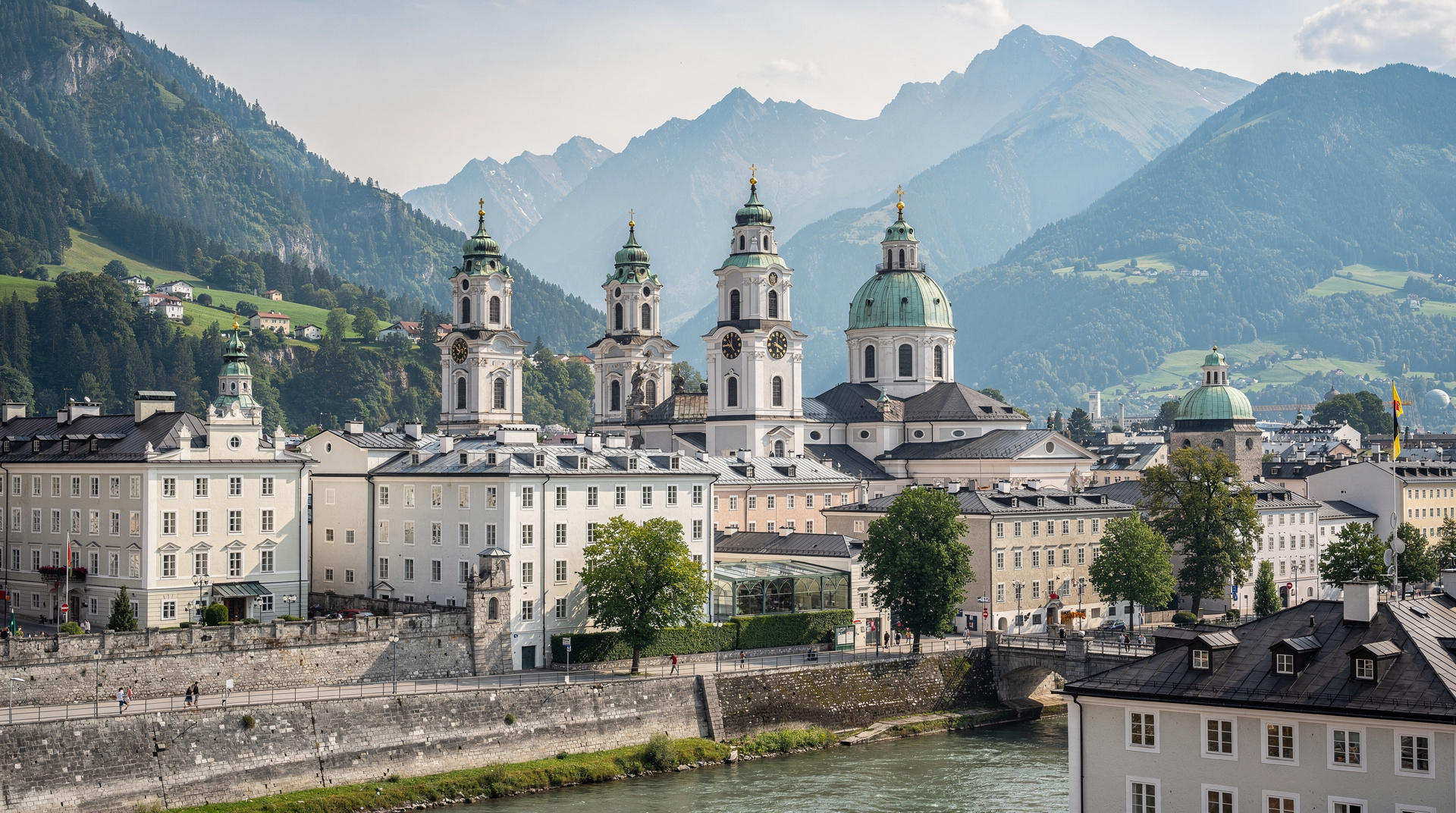
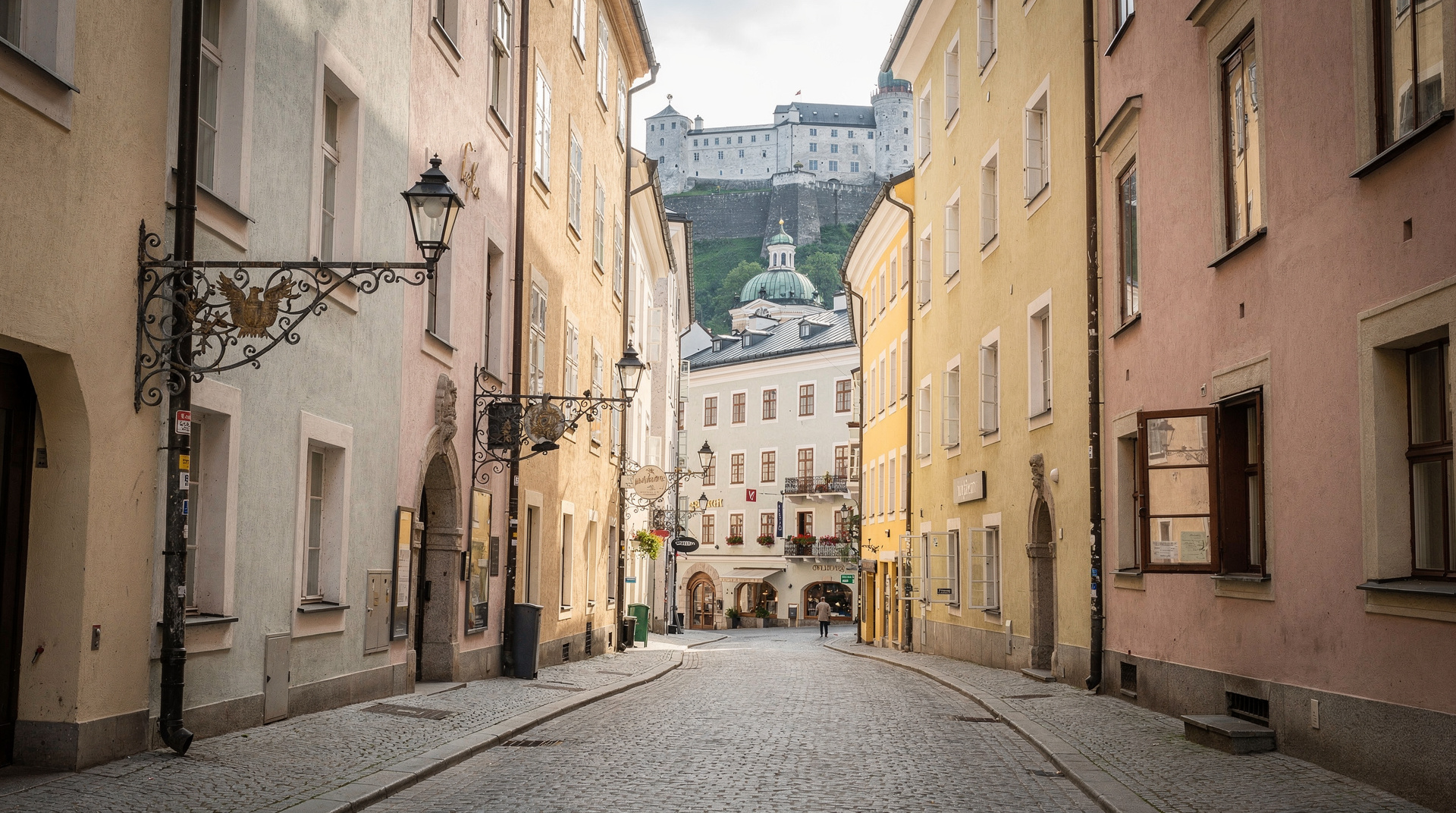
After checking in, start at Mirabell Palace and Gardens. The baroque fountain gardens are free and take 30–40 minutes. Cross the Salzach via Staatsbrücke into Salzburg Altstadt: walk Getreidegasse (20 minutes), note Mozart’s Geburtshaus at number 9 for tomorrow, continue south to Kapitelplatz.
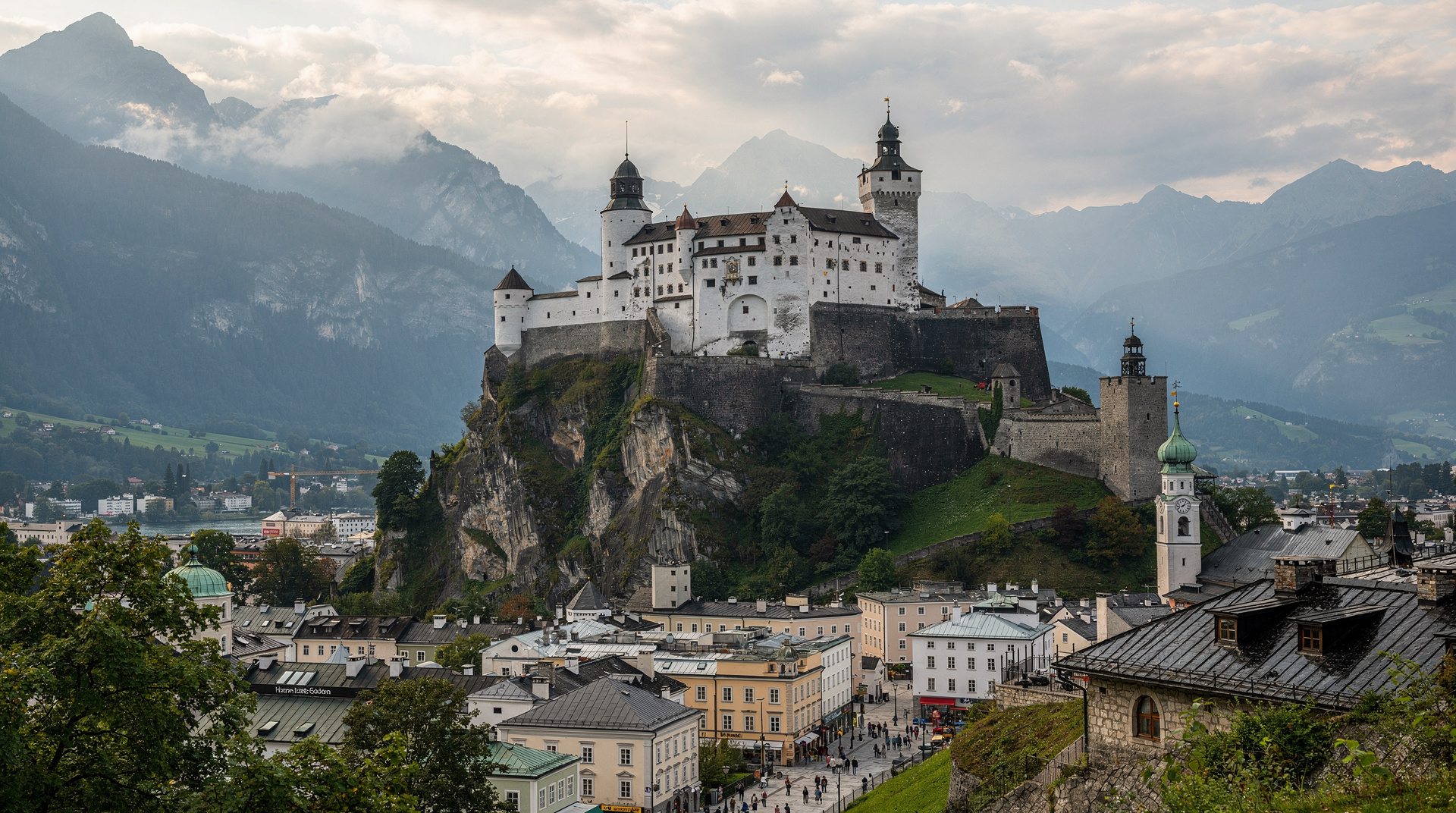
Take the funicular up to Hohensalzburg Fortress. The Hohensalzburg Fortress admission ticket covers the funicular and all interior sections (approx. 16 €). The fortress closes at 18:00 or later depending on season, so a 15:00 arrival is fine. Allow 90 minutes for the ramparts, Princes’ Chamber, and the view.
Descend via the funicular by 17:30 and walk the Salzach riverbank before dinner.
Evening (19:00–21:30)
Bärenwirt restaurant on the right bank (Müllner Hauptstrasse) serves honest Austrian food — Wiener Schnitzel, Tafelspitz, Salzburger Nockerl — without the tourist premium. Worth booking ahead on weekends.
If you want to see the fortress illuminated at night, walk back to Kapitelplatz after dinner for the view: Hohensalzburg at night against the dark mountain is one of Salzburg’s great visual impressions.
Day 2: Deep dive into the city
Day two covers what day one left out: Mozart’s birthplace, the DomQuartier, Hellbrunn, and an evening concert.
Morning (09:00–12:30): Mozart and the Residenz
Mozart Geburtshaus on Getreidegasse 9 (approx. 12 €, 45–60 min). The childhood instruments, early manuscripts, and preserved apartment give the best biographical narrative in the city. See our Mozart birthplace vs. residence comparison — one is enough for most visitors; the Geburtshaus is the better first choice.
At 10:30, walk to the DomQuartier (approx. 16 €). The Residenz state rooms, the cathedral walkway, and the Cathedral Museum take about 2 hours unhurriedly. Our Residenz and DomQuartier guide identifies the highlights. The rooftop walkway view over Kapitelplatz and the Altstadt is not to be rushed.
Spend 20 minutes in the Salzburg Cathedral (free, adjacent to DomQuartier): Mozart’s baptismal font, Baroque vault frescoes, and the largest pipe organ in Austria.
Afternoon (13:30–17:30): Hellbrunn and the south of the city
After lunch — Café Tomaselli on Alter Markt for a proper Melange and Strudel — take bus 25 (15 minutes) to Hellbrunn Palace south of the city.
Hellbrunn is famous for its 17th-century trick fountains: hidden water jets in garden seats and stone tables designed to drench unsuspecting guests. They are still working and still get people. The skip-the-line Hellbrunn trick fountains tour is worth booking in peak season. Allow 2 hours for the full palace grounds. The Sound of Music Gazebo (the original one from the filming, relocated here from Leopoldskron) is also in the garden.
Evening (19:00–22:00): classical concert
With 5 days you can afford to plan the concert properly. Tonight, choose one of the following:
Best of Mozart Fortress Concert (approx. 40–60 €) — the Best of Mozart Fortress Concert runs most evenings; a 90-minute programme of Mozart and Haydn in the fortress itself. Atmospheric and well-performed. See our fortress dinner concert guide.
Mozart Concert at Mirabell Palace — intimate Marble Hall concert, approx. 35–45 €. More accessible pricing, beautiful setting, shorter programme.
Day 3: Hallstatt — the early start is everything
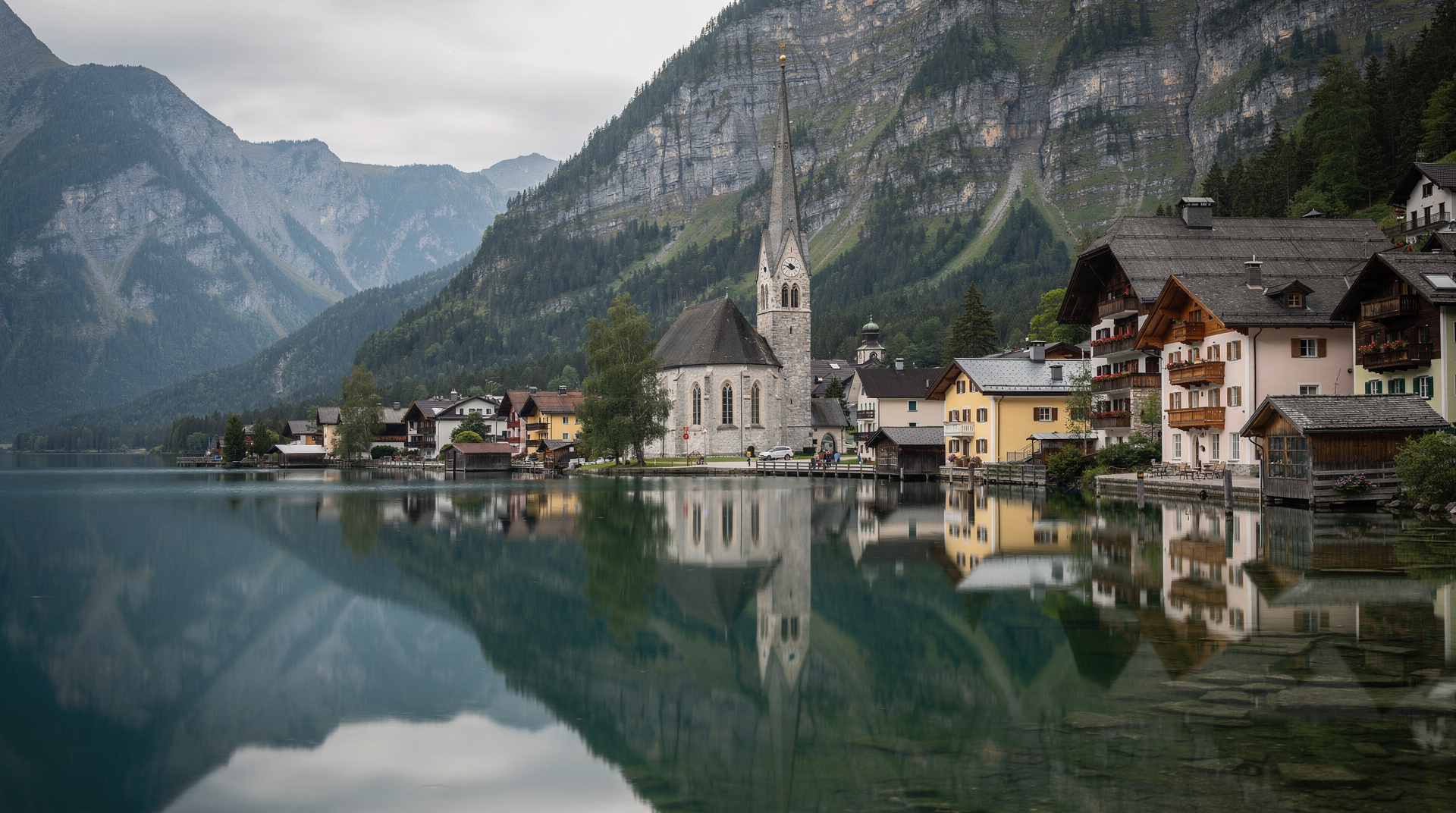
Leave your hotel by 07:45. This is the most important logistical instruction in this entire itinerary. Hallstatt at 09:00 is one of Europe’s most beautiful lake villages. Hallstatt at noon in July is a gridlocked tourist scrum.
Getting there
By car (recommended): 1 hour via A10 motorway and B145. Satellite car parks above the village fill by 09:00 in summer; arrive before then. Buses connect the car parks to the village every 10 minutes.
Without a car: The half-day Hallstatt tour from Salzburg departs early and handles all logistics. Or take the train from Salzburg Hauptbahnhof to Attnang-Puchheim, change to Hallstatt station, then the ferry (total: approx. 2h15, see our Hallstatt train guide).
In Hallstatt (09:00–14:00)
Hallstatt requires 4–5 hours:
- Village walk: the market square, the old houses with their steep lake-facing facades, the boat landing
- Bone Chapel (3 €): painted skulls, historically extraordinary
- Hallstatt Skywalk via funicular (approx. 16 €): worth it in clear weather for the aerial village view
- Salt mine (38 € combo) if you want to add 1.5 hours: underground boat, metal slides, ancient mining history
Our Hallstatt day trip guide gives the full picture of what to prioritise.
Lunch in Hallstatt (18–25 €) and leave by 14:00. The afternoon crowd peak begins around 11:30 and the village becomes uncomfortable. Our Hallstatt overcrowding guide has the month-by-month breakdown.
Return to Salzburg by 16:00. Rest.
Day 4: Eagle’s Nest, Königssee, and Berchtesgaden
Morning (07:30–12:00): Königssee
Leave by 07:30. The drive to Berchtesgaden takes 45 minutes. Park in Berchtesgaden town and take the bus to Königssee.
The Königssee electric boat (no exhaust, no noise) travels along a narrow fjord-like lake flanked by 1800 m cliffs to St. Bartholomä — a red-domed pilgrimage church on a curved peninsula. The boat captain performs a trumpet fanfare echo off the cliff face. Return trip approx. 22 € per adult; allow 1.5–2 hours. See our Königssee boat guide.
Afternoon (12:00–17:00): Eagle’s Nest
Return to Berchtesgaden bus station for the Kehlstein bus to Eagle’s Nest. The bus is the only way up — no private vehicles on the summit road. Bus approx. 18 € return; the summit itself has no entry charge.
Eagle’s Nest (Kehlsteinhaus) was built in 1938 as a present for Hitler, used 14 times, and now serves as a restaurant and memorial site at 1834 m. The views — Berchtesgaden below, Königssee as a dark sliver, Austrian Alps beyond — are exceptional on clear days. The Eagle’s Nest and Berchtesgaden tour from Salzburg includes guide commentary that contextualises the WWII history significantly.
Allow 2 hours at the summit. The building itself is worth 30 minutes; the rest is views and coffee.
Important: Eagle’s Nest is open mid-May to October only. The Kehlstein bus books out weeks ahead in July–August. Our Eagle’s Nest visit guide covers booking and seasonal considerations.
Return to Salzburg by 18:00.
Day 5: Werfen ice cave or Zell am See / Kaprun
Two options depending on what energises you more: underground ice formations or alpine lakes and mountains.
Option A: Werfen — Eisriesenwelt ice cave and Hohenwerfen Castle
Werfen is 45 minutes south of Salzburg by car (or train). The Eisriesenwelt is one of the world’s largest accessible ice cave systems: 40 km of passages, with the first kilometre open for guided tours. The ice formations — frozen waterfalls, ice cathedrals, carved by centuries of meltwater — are extraordinary, and the cave temperature stays at -2°C to +2°C regardless of outside temperature.
The approach: cable car from the valley (approx. 14 € return) then a 15-minute walk to the cave entrance. The guided tour inside takes 75 minutes. Add 30 minutes each way for the cable car and walk. Total time from Werfen: about 3 hours.
Book ahead: visitor numbers are limited and summer slots sell out. Our Eisriesenwelt ice cave guide covers booking, clothing (bring a warm jacket — it is genuinely cold inside), and whether the walk is manageable for all fitness levels.
Hohenwerfen Castle is directly visible from the village, on a cliff above the Salzach valley. It is open year-round and has a working falconry programme (flight displays at set times). The Hohenwerfen Castle guide covers what’s inside and whether to combine with the ice cave (yes, if you start before 09:00).
The Werfen private tour from Salzburg handles transport and scheduling for both sites.
Option B: Zell am See and Kaprun / Kitzsteinhorn glacier
Zell am See is 1h15 from Salzburg on the A10 motorway. The town sits on a peninsula jutting into the Zeller See, surrounded by Alpine peaks. It is a year-round resort destination: skiing in winter, hiking and water sports in summer.
Morning: take the Schmittenhöhe gondola (from Zell am See town) to 2000 m for views over 30 mountains including the Grossglockner massif (Austria’s highest peak). The gondola runs spring through autumn.
Afternoon: drive 8 km to Kaprun for the Kitzsteinhorn glacier (open most of the year). The cable car system ascends to 3029 m on the glacier — ski area in winter, viewing platform and hiking in summer. Views of the Grossglockner from the Kitzsteinhorn top station are remarkable. Allow 2.5–3 hours including the cable car ride.
See our Salzburg to Zell am See day trip guide for logistics.
Return to Salzburg by 18:30 for a final dinner.
How to reorder the days
The order above is optimised for weather (Hallstatt and Eagle’s Nest work best on good weather days; Werfen’s ice cave is fine in any weather). If your forecast differs:
- Rain day: Use day 4 (Eagle’s Nest can be rewarding in cloud, and the historical indoor context is the main point) or day 5 Option A (ice cave is completely unaffected by rain)
- Best weather day: Zell am See / Kitzsteinhorn (glacier views) or Hallstatt lake photography
Budget breakdown over 5 days (per person)
| Estimate | |
|---|---|
| Fortress + DomQuartier + Mozart + Hellbrunn | 65 € |
| Evening concert | 35–60 € |
| Hallstatt (tour or transport + mine) | 55–90 € |
| Eagle’s Nest + Königssee | 50–80 € |
| Werfen OR Zell am See | 45–70 € |
| Food (5 days × 50 €) | 250 € |
| Total sights + food | 500–615 € |
Plus accommodation (5 nights × 80–200 € = 400–1000 €) and car rental if applicable.
How 5 days compares to 3 or 4
| 3 days | 4 days | 5 days | |
|---|---|---|---|
| City coverage | Full | Full, more relaxed | Full, most relaxed |
| Excursions | Hallstatt + Eagle’s Nest | + Werfen or Wolfgangsee | + Werfen or Zell am See (both possible with 6) |
| Pace | Brisk | Comfortable | Genuinely unhurried |
| Best for | First-timers on a standard trip | Couples wanting depth | Thorough explorers, photographers |
The honest difference between 4 and 5 days is less about seeing more sights and more about not having a single day where you’re watching the clock. Day 5’s Werfen-or-Zell-am-See choice is the itinerary’s one true optional day — if you’re deciding between 4 and 5 days, this is the day to cut first, and nothing else in the itinerary needs to change.
Six days, if you have them, is where the region genuinely opens up further: both Werfen and Zell am See become possible rather than a choice, and the Grossglockner High Alpine Road (a full day on its own) fits without displacing anything else. Our lakes and mountains 5-day itinerary covers a car-focused variant that leans further into the Hohe Tauern side of the region if that appeals more than the city-plus-excursions structure here.
What to do if the weather turns
Five days in the Alps means you will likely get at least one poor-weather day. The itinerary already accounts for this partially (Werfen’s cave is weather-proof), but here is the fuller contingency plan: swap Hallstatt or Zell am See (both scenery-dependent) to the clearest forecast day, and push Werfen or the DomQuartier/Mozart museums (both indoor-heavy) to the wettest day. Eagle’s Nest sits in between — the historical content works regardless of weather, but the summit panorama is lost in cloud, so treat it as a medium-priority swap candidate.
Frequently asked questions about 5 days in Salzburg
Is 5 days a lot for Salzburg?
Not if you are using the surrounding region. The city itself can be covered in 2 days; days 3–5 explore the alpine and lake landscape that makes this corner of Austria so distinctive. Five days gives a properly rounded experience of the region.
Do I really need a car for 5 days?
For the best version of this itinerary, yes. Without a car, use guided tours for days 3, 4, and 5 — they work but reduce the flexibility to linger. City days 1 and 2 need no car.
Can I add the Grossglockner road?
Yes — substitute day 5 Option B (Zell am See) with the Grossglockner High Alpine Road. It adds a full day; plan to drive the road from the Salzburg side via Bruck an der Glocknerstrasse. Toll is approximately 38 € per car. See our Salzburg to Grossglockner guide.
What is the best month for this itinerary?
June or September. Both have good weather, manageable crowds, all attractions open, and reasonable hotel prices. July–August is busier and significantly more expensive; October is beautiful but the days shorten.
Should I stay in the city or near one of the day-trip locations?
Stay in Salzburg city for all 5 nights. The excursion distances (45 min–1h15) don’t justify moving accommodation. Keeping the city as a base gives you evenings in the Altstadt, access to concerts, and consistent logistics.
Is 5 days too much if I’ve already done a 2- or 3-day Salzburg trip before?
Not necessarily — a return visitor with the city already covered can compress days 1–2 into a single refresher day and use the freed-up time for a second alpine excursion (Grossglockner, or a Wolfgangsee/Zell am See combination). The excursions, not the city, are what justify five days on a repeat trip.
How physically demanding is this itinerary?
Moderate overall. The city days involve a lot of walking on cobblestones and one uphill fortress approach if you skip the funicular. Hallstatt and Eagle’s Nest are low-effort (village streets, cable car/elevator access). Werfen’s ice cave involves a 45-minute uphill walk before the cave tour itself; Zell am See’s gondola requires no real exertion. None of the five days requires technical fitness, but comfortable walking shoes matter every day.
Extending the 5-day itinerary
If you find yourself with an extra day or a different pace, here are the most natural extensions.
Innsbruck: A full day trip west from Salzburg (1h45 by car or direct ÖBB train). The Tyrolean capital has its own Old Town, the Nordkette cable car ascending to 2256 m, and the Hofburg Palace (smaller than Vienna’s but authentic). Worth a full day; see our Salzburg to Innsbruck guide.
Grossglockner (instead of Zell am See): The Grossglockner High Alpine Road is one of the great mountain drives in Europe. From Salzburg, drive south via Bruck an der Glocknerstrasse (the north entry) and ascend to the Franz-Josephs-Höhe above the Pasterze glacier. Toll is approximately 38 € per car. Plan a full day — the road is 48 km with many stops, and the Franz-Josephs-Höhe alone warrants 1.5–2 hours. See our Salzburg to Grossglockner guide.
Bad Ischl and the Kaiservilla: The Habsburg Emperor Franz Joseph spent every summer in Bad Ischl (1h from Salzburg). The Kaiservilla is open for tours and shows a man who was above all a hunter who happened to rule an empire. Combine with a Wolfgangsee stop at St. Gilgen on the return.
The Salzburg festival — if timing overlaps
If your 5-day visit falls in late July or August, the Salzburg Festival is running simultaneously. The city is busier and more expensive, but the opportunity to attend a Festival programme — opera at the Grosses Festspielhaus, or a Philharmoniker concert at the Mozarteum — is one of the defining classical music experiences anywhere in the world. Book months ahead for the main productions. See our Salzburg Festival guide for ticket strategy and what to realistically expect.
Even if you do not attend a Festival performance, the city during the Festival has a particular energy: outdoor programmes, late evening performances, the world’s music critics and musicians visibly present. A single Festival ticket (50–400 € depending on event and seat) is worth factoring in if the timing works.
Top experiences
Bookable activities with verified prices and instant confirmation on GetYourGuide.