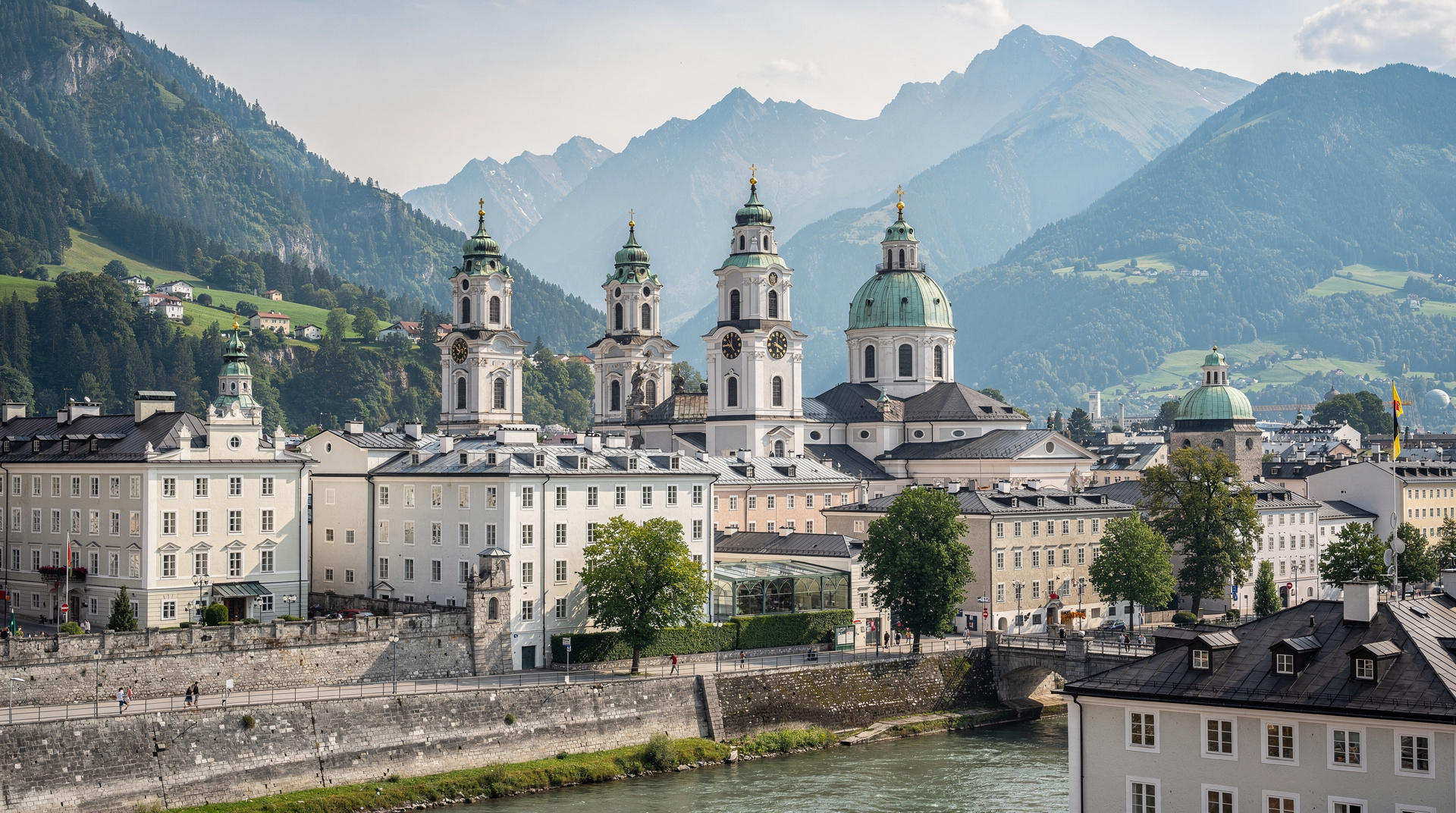
Salzburg and Salzkammergut in 4 days: a lake district deep-dive
From Salzburg: Half-Day Tour to Hallstatt
Duration: 5.5 hours
The Salzkammergut is 76 lakes squeezed between the Dachstein massif and the Austrian Alps — a landscape that Brahms and the Habsburg emperors kept returning to, and that today sits at the intersection of UNESCO World Heritage status and Instagram overcrowding. Done properly — with a car, early starts, and realistic expectations about which lakes are worth the journey — it rewards exactly the kind of slow travel that rushing through on a single day trip cannot provide.
This itinerary uses Salzburg as a base for days 1 and 2 and then moves into the lake district for days 3 and 4. A car is essential — the lakes are connected by roads, not good public transport. Our Salzkammergut by car guide covers the roads, distances, and the one-way system around Hallstatt’s village entrance.
At a glance
| Structure | Day 1 Fuschl/St. Gilgen, Day 2 Hallstatt/Gosau, Day 3 Wolfgangsee/Bad Ischl, Day 4 Mondsee/Gmunden |
| Cost per person | approx. 279–319 € excl. accommodation |
| Car | Essential |
| Best months | June or September |
| Book ahead | Schafberg railway (weeks ahead in July–August) |
Why slow travel matters here
Most visitors do Hallstatt in one rushed day and leave thinking they saw the Salzkammergut. They saw one lake at its most crowded. The region’s real character reveals itself when you arrive early enough to see Gosausee before the day-walkers, when you eat lunch in Bad Ischl rather than driving through it, and when you sit at a Wolfgangsee café as the boats dock. Four days allows that rhythm.
Day 1: Salzburg base and the near lakes — Fuschl and St. Gilgen
This first day covers the western Salzkammergut lakes closest to Salzburg — often overlooked because they lack Hallstatt’s fame, but genuinely beautiful and uncrowded.
Afternoon (13:00–18:00)
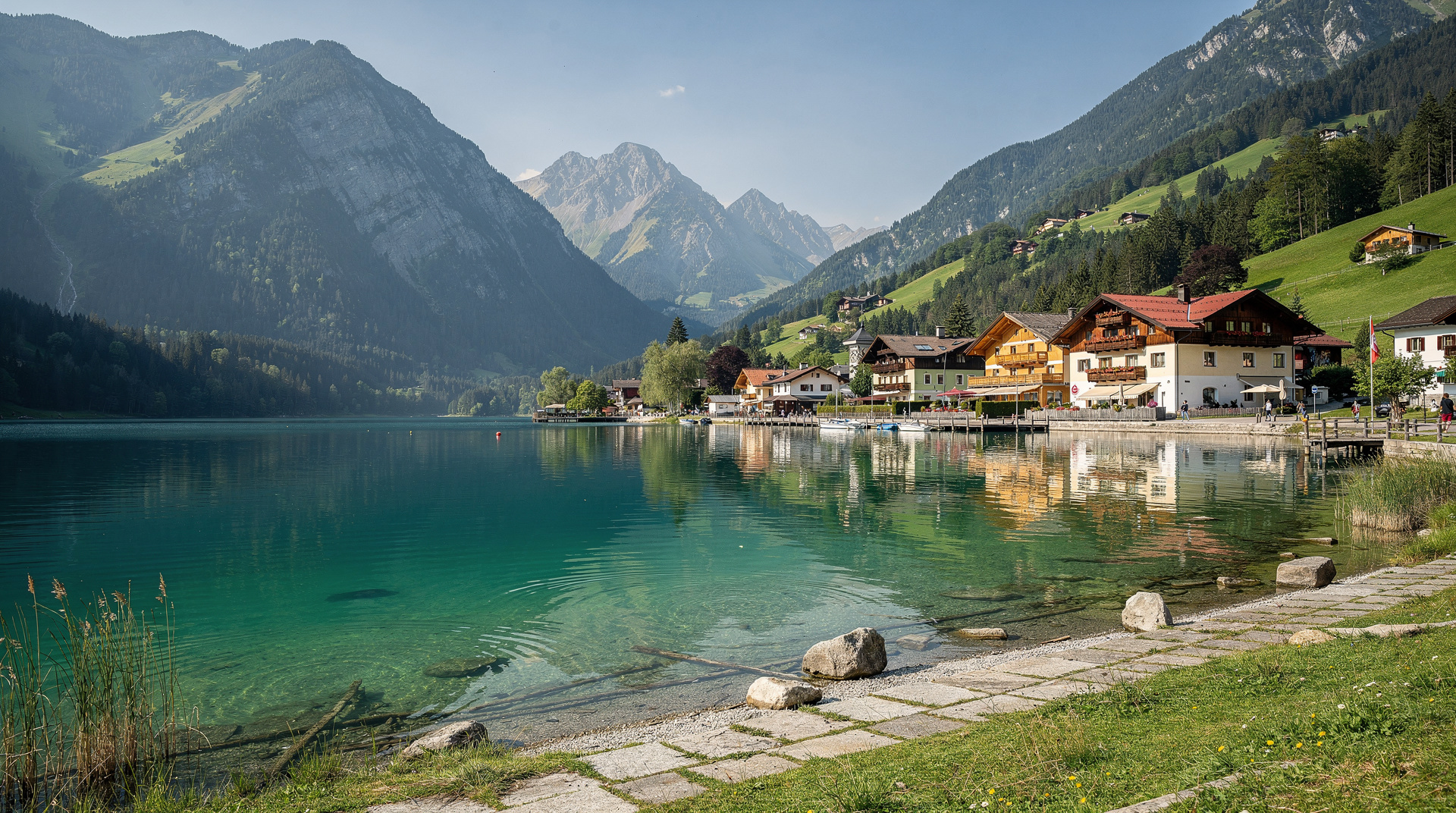
From Salzburg, drive east on the B158 toward St. Gilgen. The first lake you reach is Fuschlsee — Fuschl am See is a small resort village on its eastern bank, best known for the Hotel Schloss Fuschl (used as a filming location in several European films and currently a Luxury Collection hotel). The lake itself is clean and swimmable with clear water; the shoreline has a public beach area east of the village. Stop for 30–40 minutes.
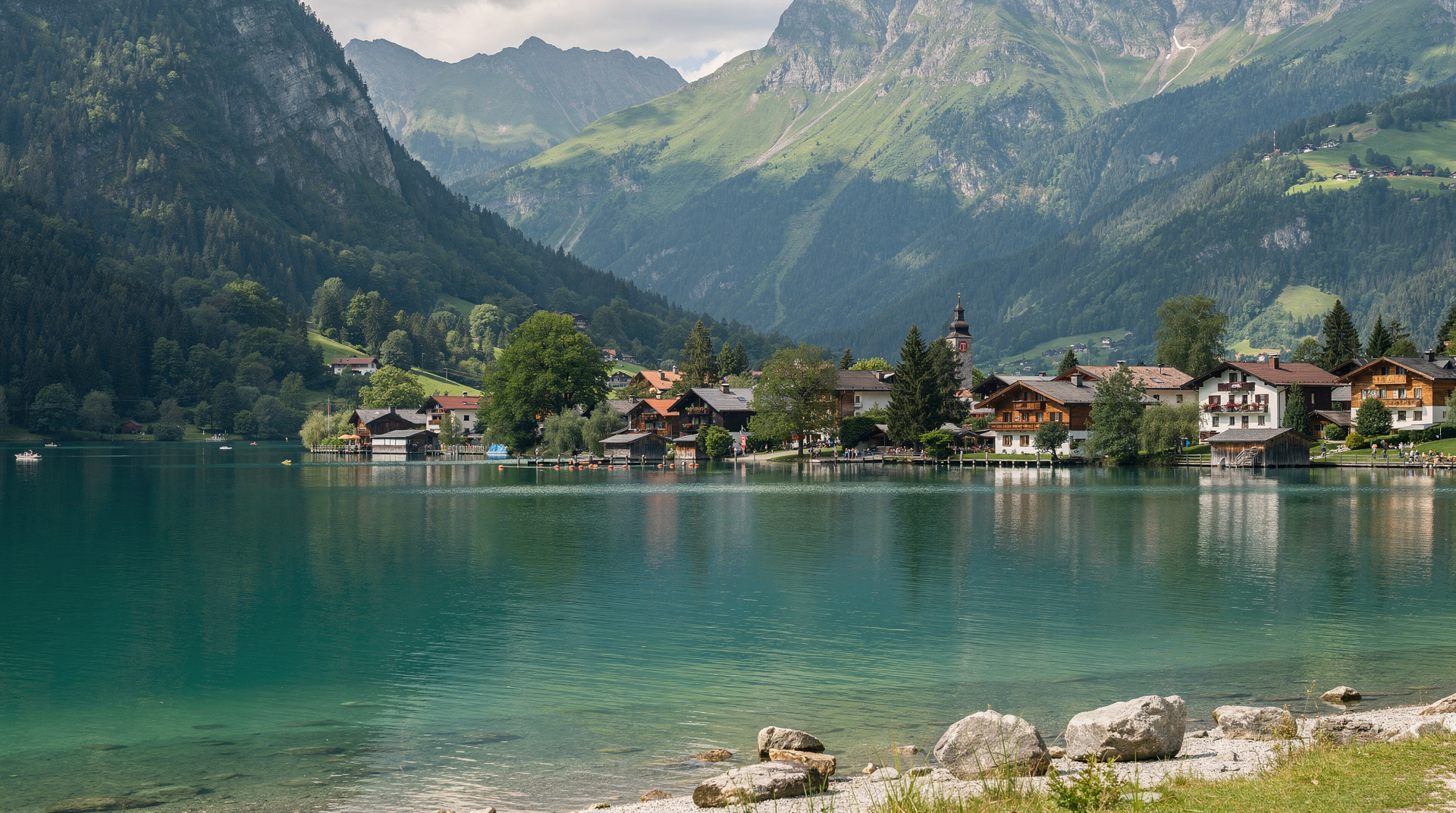
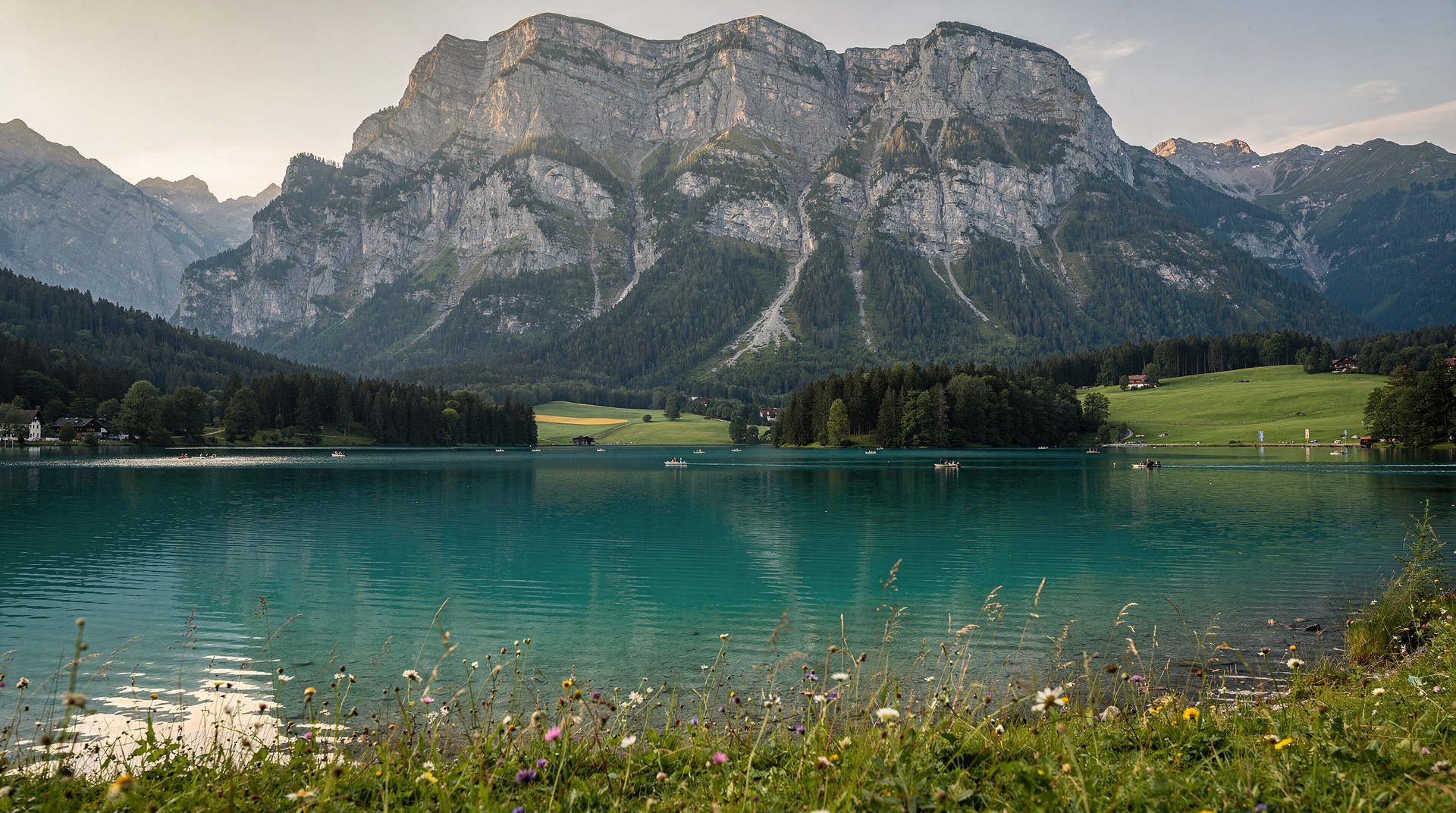
Continue east to St. Gilgen on the Wolfgangsee. St. Gilgen was the birthplace of Mozart’s mother, Anna Maria Pertl, and has a small Mozart museum in the old courthouse (approx. 4 €). More significantly, it is the western end of the Wolfgangsee, one of the most scenic lakes in the region — deep blue water, the Schafberg mountain reflected on still mornings, and a shoreline that is mostly undeveloped. Walk the lakeside promenade for 30–40 minutes.
Practical note: St. Wolfgang is at the opposite (eastern) end of the Wolfgangsee, about 30 minutes by road or by the regular lake ferry (seasonal, approximately 45 min one way). The ferry schedule is in our Wolfgangsee guide. If time allows, consider staying in St. Gilgen overnight for the next morning’s Hallstatt early start.
Evening
Either return to Salzburg (35 minutes from St. Gilgen) for dinner, or stay in St. Gilgen — there are good lakeside restaurants and smaller hotels that avoid Salzburg’s summer price premium. Gasthof Zur Post in St. Gilgen is a reliable traditional option, approx. 18–25 € per main.
Day 2: Hallstatt — the critical early start
Leave wherever you are sleeping by 07:45. This is not negotiable in May through September. Hallstatt at 09:00 is extraordinary. Hallstatt at noon is the most overcrowded spot in Austria. Our Hallstatt overcrowding guide has the hour-by-hour crowd data; the advice there is consistent: the only way to see Hallstatt as it should be seen is to arrive when most tour buses are still boarding.
Getting to Hallstatt
From St. Gilgen, it is about 40 minutes by car via the B158 and then along the lake road south. From Salzburg, the drive is just under 1 hour.
Car parking: The village of Hallstatt has almost no parking. Satellite car parks are on the hill above — Park and Ride lots 1 and 2 — with free shuttle buses running to the village. In July and August, these fill before 09:00. The lot on the opposite lake shore (Hallstatt Lahn) connects by a short ferry.
Without a car: The Hallstatt salt mine, funicular and skywalk trip from Salzburg is a well-organised tour that handles all logistics and includes the main paid attractions. Alternatively, take the train from Salzburg Hauptbahnhof (approx. 2h15 including ferry from Hallstatt station across the lake). See our Salzburg to Hallstatt guide for all options.
In Hallstatt (09:00–14:30)
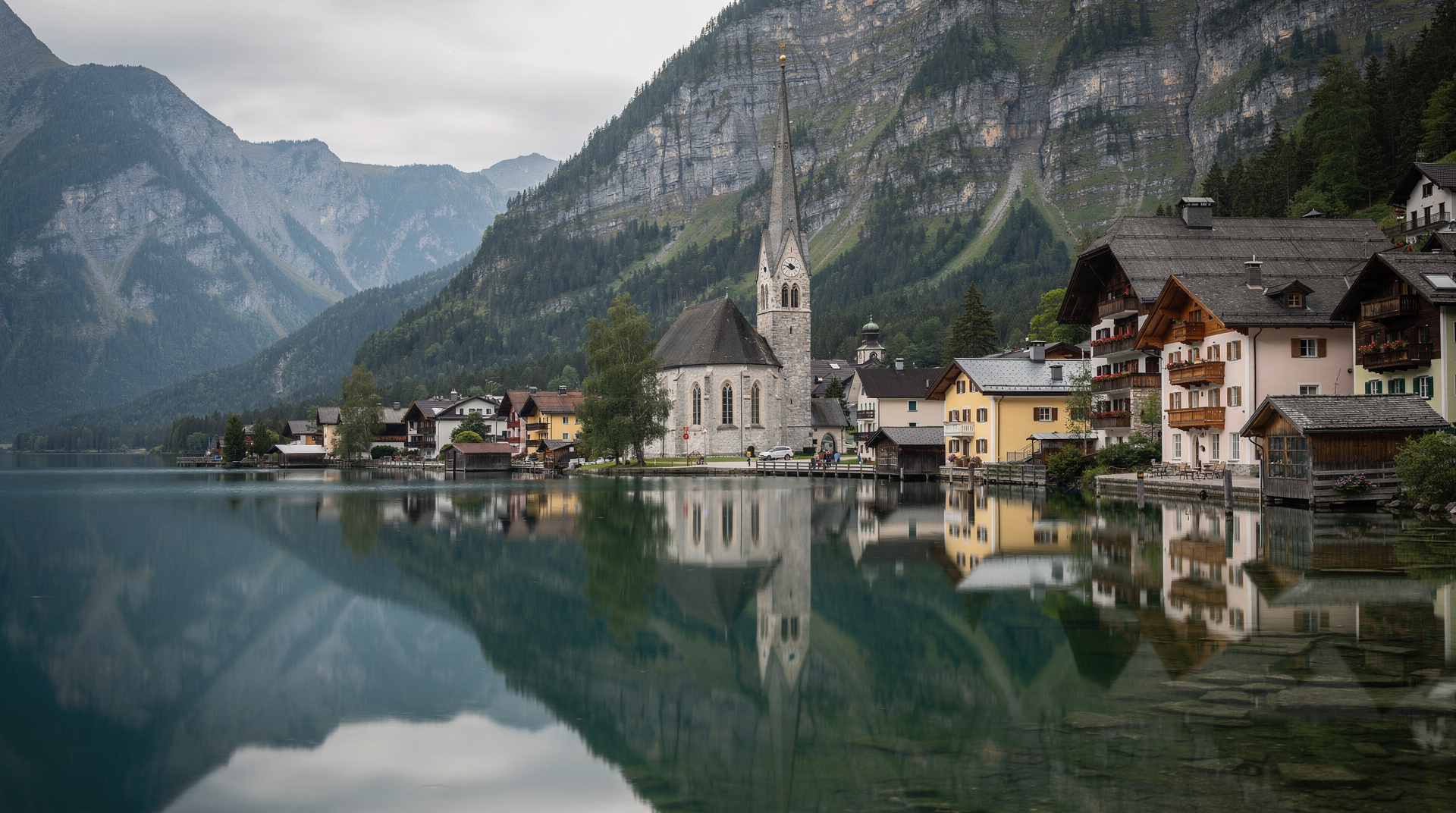
Hallstatt is a UNESCO World Heritage Site — a medieval salt-mining village pressed between the Dachstein mountains and the dark Hallstätter See, with barely enough flat land for 800 residents. What makes it remarkable is the vertical density: houses stacked up the cliff, the church at the top, the boat landing at the bottom.
Walk the village (45 minutes): the market square, the lakeside promenade north of the ferry landing, and the narrow alley behind the church. These can be walked alone before 09:30 with almost no other tourists present.
Bone Chapel (Beinhaus, 3 €): behind the Catholic church, a small ossuary containing 1200 painted skulls — a practice that arose because the graveyard was too small for full burials. Most visitors find it more compelling than they expected.
Hallstatt Skywalk (approx. 16 € including funicular): the funicular rises above the village to a viewpoint called the Skywalk with a transparent platform over the cliff edge. The views over the lake and village are the best from any accessible vantage point. Best done before 11:00 before cloud builds.
Salt mine (38 € combo if adding): the ancient salt mine above Hallstatt is the oldest in the world, with Celtic artefacts from 7000 BCE on display. The tour includes metal slides down salt shafts and an underground boat ride. Allow 1.5 hours. Read our Hallstatt skywalk and salt mine guide to decide if the extra time and cost are worth it for your group.
Lunch (12:30–14:00): eat in Hallstatt but expect tourist pricing. Bräugasthof am Hallstättersee and Restaurant Grüner Baum are reliable options at 20–28 € per main.
Leave by 14:00–14:30 before the afternoon crowd peaks.
Afternoon: drive to Gosau for a sunset lake walk
From Hallstatt, drive west 15 minutes to Gosau. The Gosausee is one of Austria’s most dramatic mountain lakes: an emerald-green lake at 933 m with the Dachstein glacier directly behind it. The walking path around the lower lake (Vorderer Gosausee) is about 5 km and takes 1.5 hours at a slow pace — flat, well-marked, no technical difficulty.
This is one of the Salzkammergut’s most undervisited beautiful spots. In late afternoon, the light on the Dachstein is exceptional. The car park at Gosausee charges a small fee; the walk is free. Our Gosau and Dachstein Krippenstein guide covers what else is possible in the area.
Return to accommodation (St. Gilgen or Salzburg) for the evening.
Day 3: Wolfgangsee — St. Wolfgang and the Schafberg railway
Morning (08:00–12:30): Schafberg cogwheel railway
This is the day’s centrepiece: book the Schafberg railway well ahead (weeks ahead in July–August — the steam locomotive has limited seats). The railway departs from St. Wolfgang and takes 40 minutes to ascend 1200 m of altitude to the 1783 m Schafberg summit, pulled by a 19th-century steam cogwheel locomotive. It is genuinely spectacular: the views from the top encompass 14 lakes of the Salzkammergut in clear conditions.
See our St. Wolfgang and Schafberg railway guide for booking, schedules, and what the view is like in different weather. The railway runs May to October only. The return journey takes the same 40 minutes; allow 2.5 hours total for the trip.
After descending, spend time in St. Wolfgang itself. The village is famous for the Pilgrimage Church of St. Wolfgang (free), which contains the famous Pacher Altarpiece — a 15th-century painted wing altar of exceptional quality. The village is also the setting for the operetta “The White Horse Inn” (Weisses Rössl), and the actual Weisses Rössl hotel is directly on the lakeshore.
Lunch in St. Wolfgang: the lakeside restaurants are good and reasonably priced compared to Hallstatt. Weisses Rössl itself does lunch (25–35 € per main, more expensive) or walk back from the waterfront to Gasthof Zimmerbräu for an honest Austrian Mittagessen (13–18 €).
Afternoon (13:30–18:00): Bad Ischl and Kaiser Franz Joseph
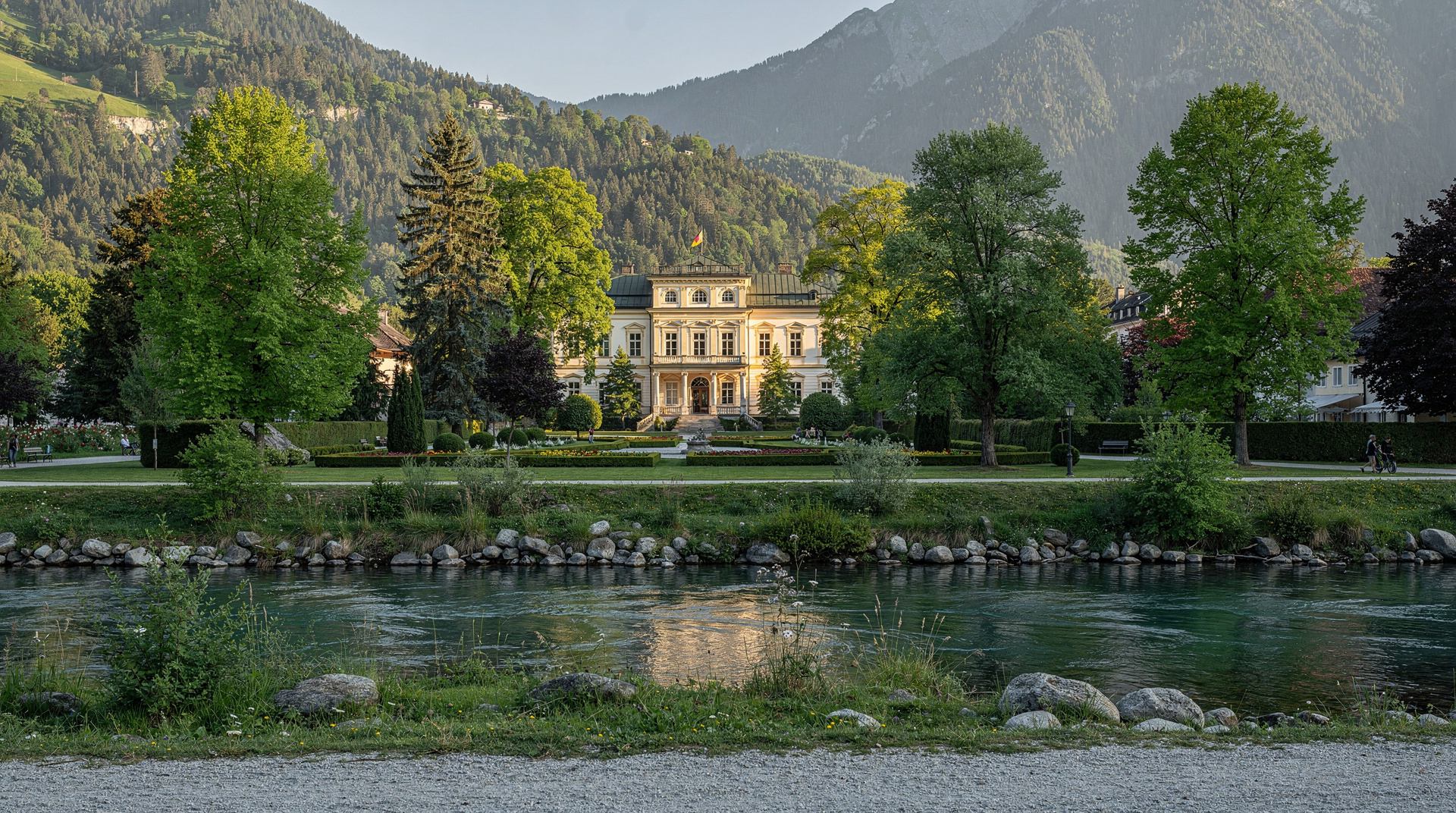
Drive 30 minutes east along the Wolfgangsee to Bad Ischl. This small spa town was the summer residence of the Habsburg imperial family for 60 years; Emperor Franz Joseph spent his summers here, signed Austria’s declaration of war in 1914 here, and died here in 1916.
Kaiservilla (approx. 17 €): the Imperial Villa where Franz Joseph spent every summer is still owned by the Habsburg family and open for tours. The interior — hunting trophies, hunting rifles, Imperial furniture — reveals a man who was above all an outdoorsman who happened to rule an empire. Guided tours run every 30–40 minutes; allow 1.5 hours. See our Bad Ischl Kaiservilla guide.
Café Zauner: the famous pastry café in Bad Ischl, established in 1832, serving the Zaunerstollen (a layered marzipan cake). Have coffee and cake here before the drive back (approx. 8–12 €).
Return to Salzburg via the B158 — about 1h15.
Day 4: Mondsee and the Salzkammergut northern shore
The final day covers the northern lakes — less visited, more local in character.
Morning (09:30–12:30): Mondsee
Mondsee (Mondsee village, on the lake of the same name) is 40 minutes east of Salzburg. It is primarily known outside Austria for one reason: the wedding scene in the Sound of Music was filmed in the Basilica of St. Michael here, not in Salzburg as many visitors assume. The basilica is free to enter, and the interior — yellow baroque columns, gold altars — is genuinely striking apart from the film connection.
The lake is one of the warmest in the Salzkammergut (water temperatures up to 27°C in summer) and has a good public swimming area. If the weather is warm, a morning swim here is one of the region’s simple pleasures. See our Mondsee guide.
The town itself has a pleasant market square, a Pfahlbautenmuseum (lakeside pile-dwelling museum on UNESCO-listed prehistoric lake dwellings, approx. 9 €), and several good cafés.
Afternoon (13:00–17:30): Gmunden and Traunsee
Drive an hour northeast to Gmunden on the Traunsee — the deepest lake in Austria, at 191 m. Gmunden is known for its Schloss Ort, a small castle on an island connected to the shore by a wooden bridge; the castle and its lakeside setting are among the most photographed in Austria.
The town of Gmunden is an attractive market town with ceramics shops (Gmundner Keramik, a distinctive green-on-cream pottery, has been made here since 1492), a lakeside promenade, and a funicular up the Grünberg for views. Allow 2–3 hours.
See our Gmunden and Traunsee guide.
Alternative: Swap Gmunden for a second look at the Wolfgangsee or for the Dachstein cable car above Gosau (the Dachstein 5 Fingers viewing platform, approx. 35 €) — extraordinary views but weather-dependent. Our Gosau guide covers the Dachstein options.
Return to Salzburg by 18:30.
Logistics: car is essential
The Salzkammergut is not a public-transport destination. Buses connect the main towns but run infrequently and make multi-lake days extremely slow. A car is the only way to do this itinerary properly.
Route planning: The A1 motorway (Westautobahn) passes north of the Salzkammergut; use it only for longer legs. The B158 is the main lake road and is scenic but slow in summer. Expect 40–60 min per leg between major lakes.
Parking at Hallstatt: The hardest parking in Austria. Arrive before 09:00 or use the car parks and shuttle. Mondsee and St. Gilgen have free or cheap parking. Bad Ischl has paid parking near the Kaiservilla.
For the no-car alternative, the Hallstatt, St. Gilgen and St. Wolfgang day trip from Salzburg covers days 2–3 in one organised tour.
When to do this trip
Best months: June and September. June: lakes warm up, wildflowers on the Dachstein approaches, Schafberg railway running, manageable crowds. September: autumn colour starts, light is extraordinary, temperatures still allow swimming in the warmest lakes.
Avoid July–August for Hallstatt specifically: the village quota system has been discussed but not yet implemented; overcrowding is currently at its worst in these two months. See our Hallstatt overcrowding guide for the detailed seasonal breakdown.
November–April: Schafberg railway closes; Eisriesenwelt closes; most lake boat services end. The lakes in winter are beautiful but offer a different experience — Hallstatt in snow is genuinely quieter and photogenic, but the boats don’t run.
Cost estimate for 4 days (per person)
| Estimate | |
|---|---|
| Schafberg railway (return) | 34 € |
| Kaiservilla Bad Ischl | 17 € |
| Hallstatt Skywalk | 16 € |
| Hallstatt Bone Chapel | 3 € |
| Mondsee Museum (optional) | 9 € |
| Food (4 days × 50–60 €) | 200–240 € |
| Total excl. accommodation | 279–319 € |
Which lake fits which traveller
Not every visitor wants the same thing from the Salzkammergut, and four days gives enough range to match the lake to the interest:
| Lake | Best for | Crowd level | Signature activity |
|---|---|---|---|
| Hallstätter See (Hallstatt) | Photography, UNESCO history | Severe in summer | Village walk, Skywalk, salt mine |
| Wolfgangsee (St. Wolfgang) | Scenery + a genuine attraction | Moderate | Schafberg cogwheel railway |
| Fuschlsee | A quiet stop, swimming | Low | Lakeside walk, beach |
| Mondsee | Sound of Music fans, swimming | Low–moderate | Basilica, warm-water swim |
| Traunsee (Gmunden) | History, ceramics, depth (191 m) | Low | Schloss Ort, funicular |
If you only remember one thing from this table: Hallstatt is the famous one and worth the crowds if you time it right (before 09:30), but the other four lakes deliver a genuinely different, calmer Salzkammergut experience that most single-day visitors never see.
Extending or compressing this itinerary
If you only have 2–3 days rather than 4, cut Day 4 (Mondsee and Gmunden) first — it covers the least-essential ground of the four days, and Mondsee alone can be added to a Sound of Music-themed day elsewhere. If you have an extra fifth day, the most natural addition is the Dachstein 5 Fingers viewpoint near Gosau (a half-day on its own, covered in our Gosau and Dachstein guide) or a full Grossglockner day if you’re willing to drive further south — see our lakes and mountains 5-day itinerary for that variant.
Frequently asked questions about Salzburg and Salzkammergut in 4 days
Is a car essential for the Salzkammergut?
Yes, for this itinerary. The lakes are too spread out and the bus services too infrequent for day-to-day travel without one. If you don’t have a car, structured tours from Salzburg can cover Hallstatt, St. Gilgen, and St. Wolfgang in combination.
Is it better to stay in Salzburg or move into the lake district?
For 4 days, staying in Salzburg is practical — all the day trips are 40–75 minutes by car. If you want a more immersive lake experience, staying in St. Gilgen or St. Wolfgang one night is atmospheric and not expensive.
Which Salzkammergut lake is most worth visiting besides Hallstatt?
Wolfgangsee (for the Schafberg railway and the setting) and Gosausee (for the Dachstein views and the crowd-free atmosphere). Traunsee (Gmunden) is the deepest and most historic. Our best Salzkammergut lakes guide gives the honest comparison.
How crowded is the Salzkammergut in summer?
Hallstatt is extremely crowded. The other lakes — Mondsee, Wolfgangsee, Fuschlsee, Gosausee — are much less visited and feel entirely manageable even in July. The itinerary above allocates the early slot to Hallstatt precisely because of this.
Is the Salzkammergut expensive?
Austrian prices broadly: restaurants 18–28 € per main, hotels 70–150 € per night for mid-range, attractions 10–40 €. No more expensive than Salzburg, and generally cheaper than the Tyrol or Vorarlberg.
Can I swim in the Salzkammergut lakes?
Yes, and it’s one of the region’s underrated pleasures. Mondsee is the warmest (up to 27°C in summer) and has organised public swimming areas; Fuschlsee is also clean and swimmable with a public beach. Hallstätter See and Wolfgangsee are colder and less set up for casual swimming, though both have designated bathing spots. Bring a swimsuit if visiting June through August — the water quality across the region is excellent.
What’s the single best-value day of this itinerary?
Day 1 (Fuschlsee and St. Gilgen) — both stops are low-cost or free, genuinely beautiful, and see a fraction of Hallstatt’s tourist traffic. It sets a useful expectation-calibration for the rest of the trip: the famous lake isn’t necessarily the best one, just the most photographed.
Top experiences
Bookable activities with verified prices and instant confirmation on GetYourGuide.