Salzburg Sound of Music in 2 days: filming locations itinerary
Salzburg: Original Sound of Music Tour
Duration: 4 hours
The Sound of Music was filmed in and around Salzburg in 1964, and the city has been defining itself by that fact ever since. The film tourism industry is large, well-organised, and occasionally inaccurate — some “Sound of Music filming locations” in the city are associated with the film because they look like they could be, not because they actually were. This itinerary separates what is real from what is attributed, and gives you two full days to trace the genuine filming locations at your own pace.
The honest overview first: The 1965 film was largely shot in the Salzburg area but with significant manipulation — scenes filmed in two different locations are edited to appear continuous. The Von Trapp family house in the film is a composite of two buildings: Schloss Leopoldskron (exterior lake scenes) and Schloss Frohnburg (front gates, driveway scenes). The wedding church was Mondsee Basilica, not a Salzburg church. The mountain escape at the end was filmed in Bavaria, not Austria. Our Sound of Music filming locations guide has the full breakdown with film stills.
At a glance
| Structure | Day 1 city locations + bus tour, Day 2 countryside (Mondsee, Wolfgangsee) |
| Cost per person | 115–195 € (Day 1) + 55–130 € (Day 2) |
| Car | Not needed Day 1; recommended for Day 2 |
| Best months | May, June, September, October |
| Book ahead | Marionette Theater and Schafberg railway in summer |
Day 1: The city filming locations
Morning (08:00–10:00): Mirabell Gardens alone
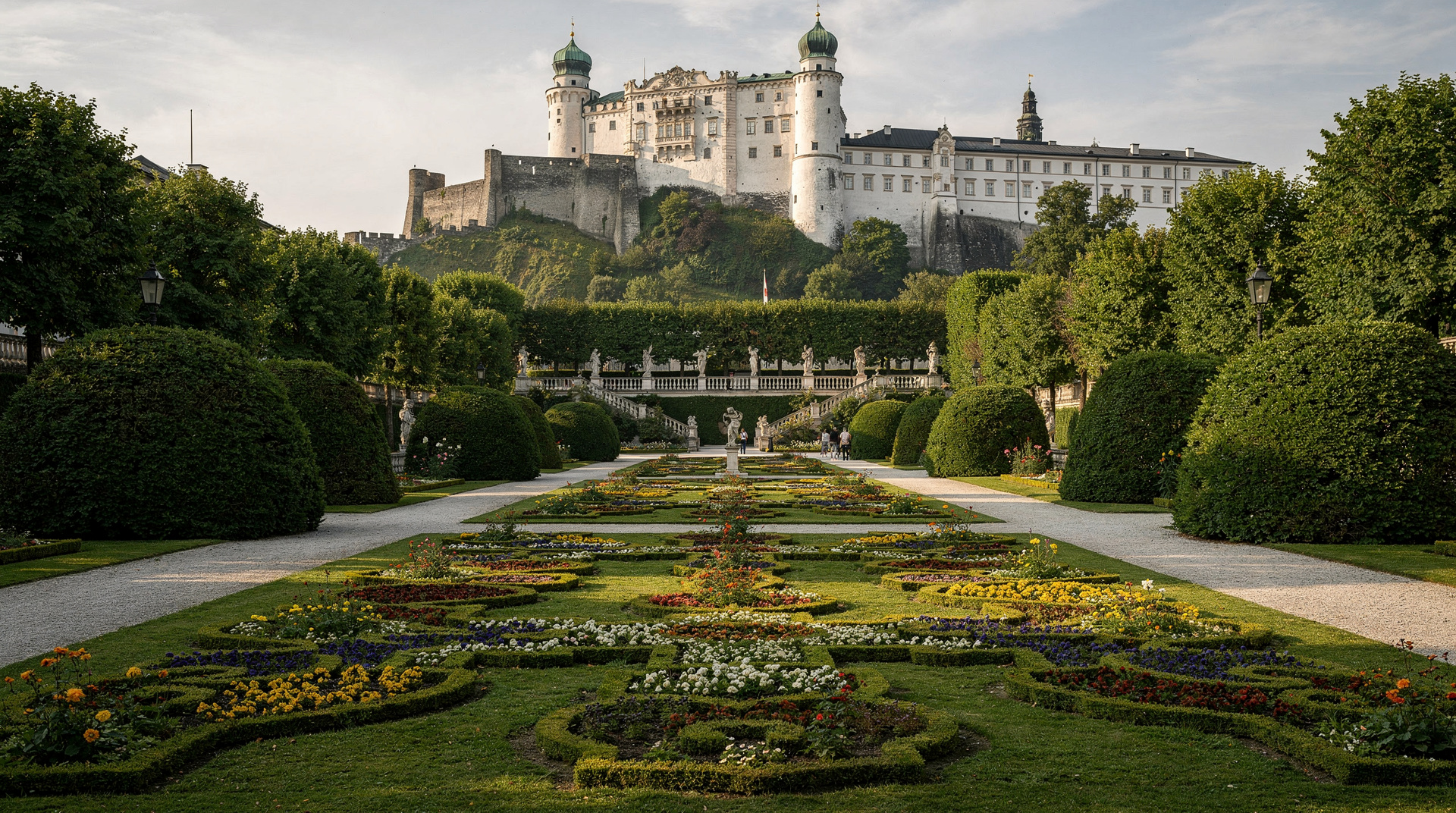
Start at Mirabell Palace and Gardens at 08:00, before the Sound of Music tour buses arrive (typically from 09:00). The gardens contain the single most recognisable location from the film: the staircase with the Pegasus fountain, where Maria and the children sing “Do-Re-Mi.” The staircase is a genuine Baroque garden feature; the scene was filmed here.
Walk the Do-Re-Mi sequence yourself at the same pace as the film: starting at the fountain at the Pegasus statue, up the staircase, and through the terraced hedgerow garden. The Dwarf Garden (a separate walled garden within the grounds) was also used for brief scene transitions. 45–60 minutes here in peace before the crowds.
What is not accurate: The Mirabell Palace interior is often cited as a filming location, but it is primarily used as a civic building and was not significantly featured in the film. The exterior gates were used briefly.
Morning (10:00–12:30): the Sound of Music bus tour
For the city section of the Sound of Music locations, the organised bus tour is the most efficient option. The Original Sound of Music Tour from Salzburg departs at 09:30 from Mirabellplatz and covers city locations plus the countryside (Mondsee, St. Gilgen, Wolfgangsee) in approximately 4 hours.
The bus tour’s city stops include:
- Mirabell Gardens (Do-Re-Mi staircase, Pegasus fountain)
- Nonnberg Abbey: the real convent where the real Maria Augusta Kutschera was a novice. You can see the exterior from outside the walls; the interior is not publicly accessible. This is one of the genuinely authentic locations — the real woman who inspired the story lived here.
- Leopoldskron Palace (exterior, viewed from the road): the lakeside view used for the Von Trapp family home exterior. Currently the Hotel Schloss Leopoldskron; the terrace where Maria dances and tips into the lake is visible from the public side. Not accessible without booking the hotel.
The private tour alternative — the Sound of Music Locations Private Driver-Guided Tour — allows more time at each location and skips the group pace, worth it for serious fans.
Our Sound of Music tour comparison guide gives the detailed analysis of which tour is best value for different types of visitors.
Afternoon (13:30–17:30): the DIY city locations on foot
After the tour, explore the city filming locations on foot. Our DIY Sound of Music tour guide maps the route precisely. Key stops:
Nonnberg Abbey (Nonnberggasse, up the hill from Kajetanerplatz): approach from below the fortress walls. The convent gate and exterior church tower are exactly as in the film. The church is open for brief visits. The real Maria Kutschera-von-Trapp was a postulant here from 1927 before becoming governess to the von Trapp children. Allow 20 minutes.
Residenzplatz and Domplatz: the large square in front of the cathedral is featured briefly in the film in the market scene. The fountain and the cathedral facade are unchanged.
Leopoldskron: walk 15 minutes south of the Altstadt to Leopoldskronstrasse. The palace lake view can be partially seen through the hedge; the terrace and formal garden are on the hotel side. Do not trespass. The view that the bus shows from the road takes 5 minutes.
Frohnburg Palace (Hellbrunner Allee, 10 minutes south of the Altstadt): the palace used for the Von Trapp family front gates and driveway scenes in the film. It is now a music conservatory; the exterior gates are visible from the road and are precisely as filmed.
Sound of Music at Marionette Theater: the evening is ideal for the Sound of Music at Marionette Theater. The Salzburg Marionette Theater has been performing operettas since 1913, and their Sound of Music production is their most popular. The puppetry is genuinely sophisticated, not a fairground attraction, and the production values are excellent. Approx. 35–55 €. Book ahead.
Day 2: The countryside filming locations
Many of the outdoor scenes in the Sound of Music were filmed in the Austrian lakes and mountains east of Salzburg — and day 2 is about getting there.
Morning (08:00–11:00): Mondsee and the wedding church
Drive 40 minutes east from Salzburg to Mondsee. The Basilica of St. Michael in Mondsee was the church used for the Von Trapp wedding scene — not a Salzburg church, despite what many tour brochures imply. The yellow baroque exterior and the interior (gold altars, painted vaulted ceiling) are precisely as filmed.
The church is free to enter and is still a working Catholic basilica. A small display near the entrance acknowledges the filming. Allow 30 minutes. The village of Mondsee itself is pleasant — lakeside promenade, morning coffee at one of the cafés on the market square.
What is often claimed but inaccurate: Various Salzburg churches are sometimes described as the filming location. The Nonnberg convent church and the Salzburg Cathedral are genuine Sound of Music locations (convent scenes; opening credits backdrop), but the wedding was definitively Mondsee.
Midmorning (11:00–13:00): drive the lake road toward Wolfgangsee
After Mondsee, drive south along the B154 toward St. Gilgen on the Wolfgangsee. The countryside driving on this section is what the Von Trapp family escape scenes feel like (though those were shot in Bavaria).
The Sound of Music Gazebo — the white octagonal gazebo where “Sixteen Going on Seventeen” and “Something Good” were filmed — is a significant location. It was originally at Schloss Leopoldskron but was moved to avoid damage. It is currently located in the Hellbrunn Palace gardens, which you can visit on a side trip. The gazebo is accessible during regular Hellbrunn opening hours; it sits in the grounds alongside the trick fountains.
St. Gilgen is worth a stop: the lakeside promenade, Wolfgangsee views, and the small Mozart museum (Mozart’s mother was born here). Allow 45 minutes.
Afternoon (13:00–17:00): Wolfgangsee and the broader landscape
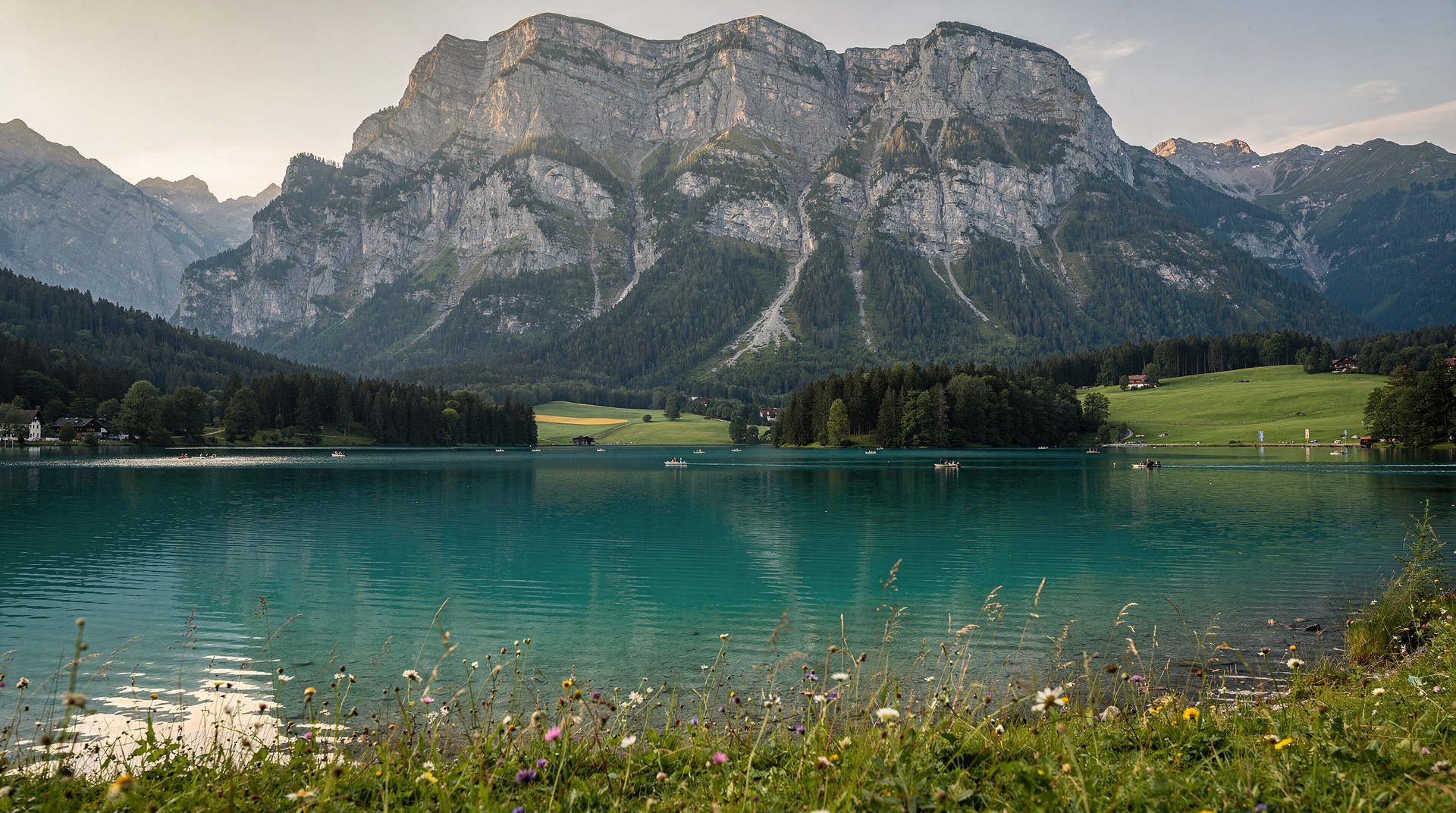
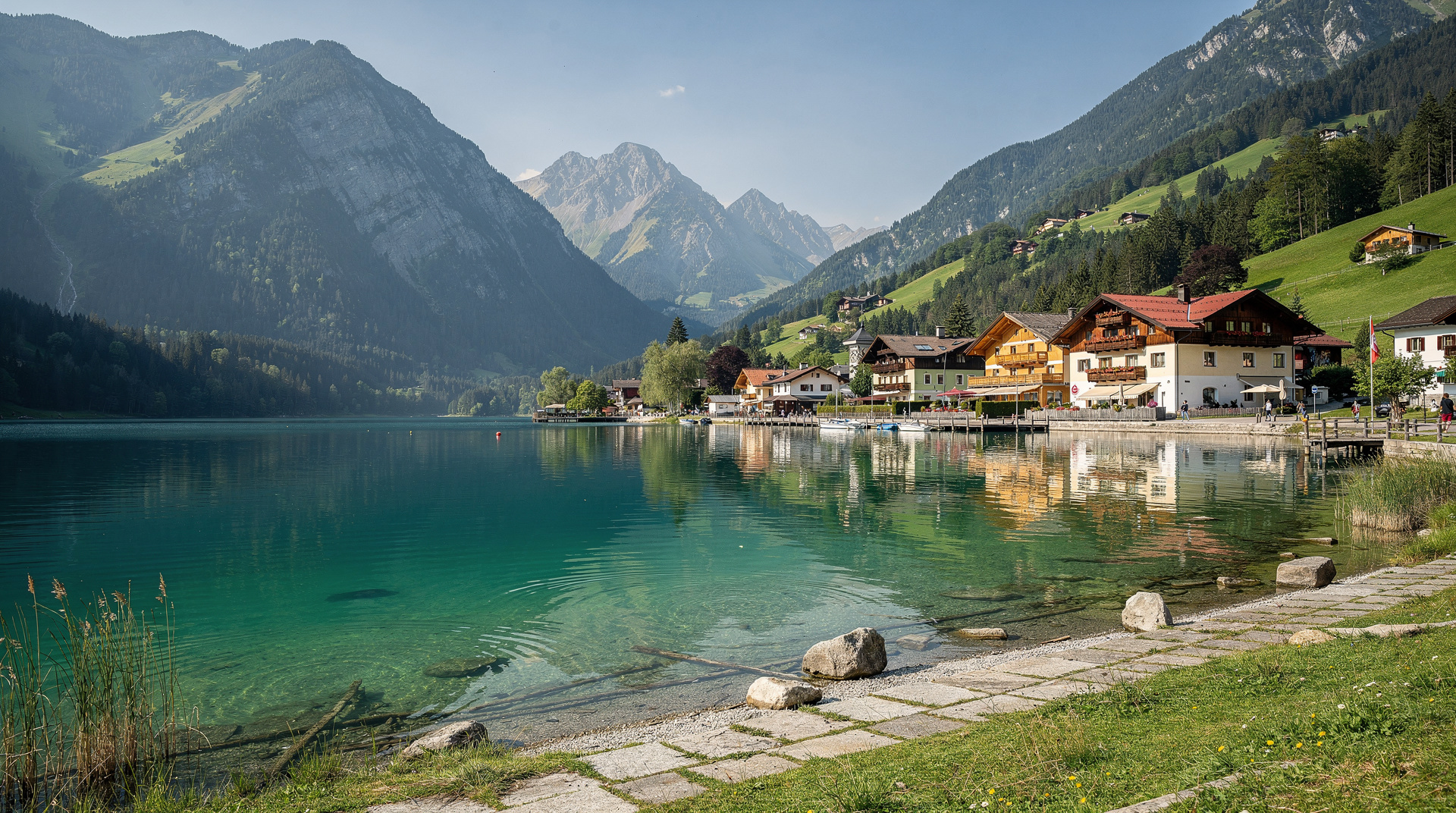
Drive east along the Wolfgangsee to St. Wolfgang. The lake and its mountain backdrop — the Schafberg railway visible on the cliff above — is the Salzkammergut as it appears in the film’s establishing countryside shots. The exact relationship between specific scenes and specific locations here is debated, but the visual character is unmistakeable.
The Schafberg cogwheel railway was featured in the film (the mountain train the Von Trapps use). It runs from St. Wolfgang to the summit (book ahead in summer). If you have time and the railway schedule works, a return trip takes about 2.5 hours and gives the high-altitude landscape that frames several film sequences. See our St. Wolfgang Schafberg railway guide.
If not taking the railway, walk the St. Wolfgang lakeside path (free, 1 hour), visit the pilgrimage church (the Pacher Altarpiece inside is genuinely extraordinary), and return toward Salzburg by 15:30.
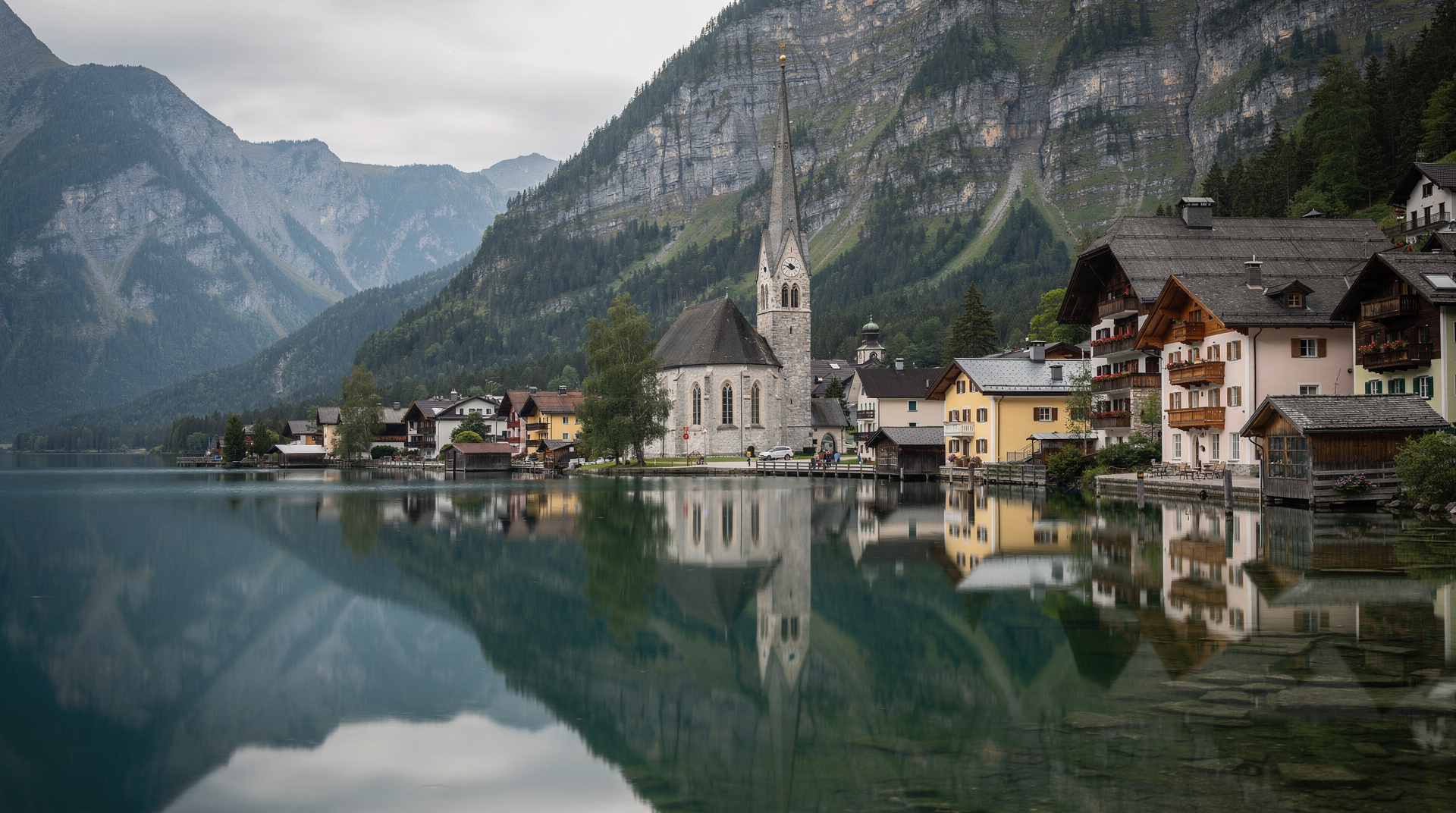
Hallstatt alternative: The lake and mountain landscape at Hallstatt is sometimes associated with Sound of Music scenery in general marketing, though Hallstatt itself was not used as a filming location. If you have not seen Hallstatt and want to add it to day 2, it is 40 minutes south of St. Wolfgang, and our Hallstatt day trip guide covers timing and logistics.
Tour vs. DIY comparison
Organised bus tour (recommended for first-timers): Covers all major locations in 4 hours, no navigation required, guide explains the film context throughout. The downside: fixed stops, limited time at each, group pace. See our full Sound of Music tour comparison.
DIY: Better for those who want to linger at specific locations, prefer not to travel by bus, or want to combine Sound of Music with other interests. Requires a car for day 2. Our DIY Sound of Music tour guide provides the walking map and driving directions.
Private tour: Best of both — guide expertise and flexible timing. The private driver tours (3–5 hours, 150–250 € per car for 2 people) allow you to spend more time at locations that matter to you. Worth it for serious fans.
What is worth it and what is overblown
Genuinely worthwhile:
- Mirabell Gardens staircase (beautiful, authentic filming location, free)
- Nonnberg Abbey exterior (authentic, free)
- Mondsee wedding church (authentic, free to enter)
- Sound of Music at Marionette Theater (genuinely excellent, 35–55 €)
Nice but not essential:
- Leopoldskron exterior (you see it from outside; the hotel is where it gets interesting)
- Schafberg railway (spectacular, but the Sound of Music connection is background to the main attraction)
Worth skipping:
- Restaurants that specifically market “Sound of Music themes” — these are tourist operations with no authentic connection.
- Any tour that claims to show you “the house where the Von Trapps lived” — the real family home is private and not associated with tourism.
Read our is the Sound of Music tour worth it guide before booking for an honest assessment.
Costs and transport
Without a car (day 1): All city locations are walkable or reachable by public bus (bus 25 for Hellbrunn). The bus tour handles Mondsee and the lakes.
With a car (day 2): Significantly better for day 2 — the lake-to-lake route is too slow on public transport.
Day 1 estimated cost per person:
- Sound of Music bus tour: 45–85 €
- Marionette Theater: 35–55 €
- Meals: 35–55 €
- Total: 115–195 €
Day 2 estimated cost per person:
- Car fuel/transport: 20–40 €
- Schafberg railway (optional): 34 € return
- Meals: 35–55 €
- Total: 55–130 €
Fact vs. fiction: a quick-reference table
Since the film’s geography is genuinely confusing (locations combined, relocated, or entirely invented), here is the honest breakdown in one place:
| Film element | The truth |
|---|---|
| Von Trapp house exterior | Composite of Schloss Leopoldskron (lake side) and Schloss Frohnburg (gates) |
| Wedding church | Mondsee Basilica, 40 km from Salzburg — not a Salzburg church |
| Do-Re-Mi staircase | Genuinely Mirabell Gardens — accurate |
| Nonnberg Abbey | Genuinely the real convent — accurate |
| Mountain escape at the end | Filmed in Bavaria, Germany, not Austria |
| Real family’s actual escape | Walked openly into Switzerland with valid papers in 1938 — not a dramatic Alpine crossing |
| Sound of Music Gazebo | Originally at Leopoldskron, now relocated to Hellbrunn Palace gardens |
Planning this trip around families with young children
The Sound of Music theme is one of the most family-friendly itineraries on this site, and a few adjustments help with younger children specifically. The Mirabell Gardens staircase and fountain sequence is an easy, engaging 45 minutes for most ages. The Marionette Theater’s Sound of Music production runs close to two hours, which can be long for children under 6 — check the specific runtime and consider the shorter matinee slots where available.
For Day 2, the Mondsee Basilica visit is brief (30 minutes) and works well for all ages, but the Schafberg railway, while visually spectacular, involves a full afternoon commitment; if time or patience is limited, the St. Wolfgang lakeside walk alone is a lower-effort substitute that still delivers the Wolfgangsee scenery.
Frequently asked questions about Sound of Music locations
Was the Sound of Music filmed entirely in Salzburg?
No. The city scenes were largely filmed in and around Salzburg. The mountain escape scene at the end was filmed in Bavaria, Germany (the Obersalzberg area). The wedding was filmed at Mondsee Basilica, 40 km from Salzburg. Some countryside scenes use generic Austrian Alps locations. Our Sound of Music filming locations guide gives the location-by-location breakdown.
Where is the Do-Re-Mi staircase?
In the Mirabell Palace Gardens, on the southwest side of the fountain garden. The staircase leading from the Pegasus fountain up through the terraced hedgerows is precisely as filmed. It is in the public gardens (free, open all day).
Is the Von Trapp family house accessible?
Schloss Leopoldskron (the exterior lake view) is now a hotel (Salzburg Global Seminar hotel and Hotel Schloss Leopoldskron); the facade can be partially seen from outside the grounds. Schloss Frohnburg (the gate and driveway scenes) is a conservatory; the exterior gates are visible from the road. Neither is open for general tourism access.
Is the Sound of Music bus tour worth it?
For first-time visitors who want to cover all the major locations efficiently with context: yes. For visitors who want to go at their own pace, know the film well, and prefer flexibility: the private tour or DIY is better. Our Sound of Music tour worth it guide gives the honest verdict.
Where was the wedding scene filmed?
Mondsee Basilica of St. Michael, 40 km east of Salzburg. The church is free to visit and clearly acknowledges the filming. It is worth the 40-minute drive specifically for Sound of Music fans.
Can I do this itinerary in one day instead of two?
It’s tight but possible if you prioritise ruthlessly: the Mirabell Gardens staircase plus a single bus tour covering both city and countryside highlights (some operators run a combined full-day version) fits into one long day. You lose the DIY exploring time and the Marionette Theater evening, and the pace is noticeably rushed. If a single day is all you have, the 1-day Salzburg itinerary with a Sound of Music-focused tour substituted for the fortress afternoon is a reasonable compromise, though it means skipping the fortress — a real trade-off for film fans on a tight schedule.
Is it worth visiting if I haven’t seen the film recently?
Yes — the locations themselves (a baroque garden, a functioning convent, a lakeside basilica) are worthwhile sights independent of the film, and the tour guides provide enough context that prior familiarity isn’t strictly necessary. That said, watching or rewatching the film before the trip meaningfully increases the payoff, since several moments (the staircase choreography, the wedding procession) land differently when you recognise them rather than take the guide’s word for it.
Background on the real Von Trapp family
Understanding the gap between the film and the historical record improves the touring experience considerably.
The real Georg von Trapp was a World War I submarine commander decorated by the Austro-Hungarian Navy — a genuinely heroic figure who lost his wife to illness in 1922 and employed Maria Kutschera as a tutor for his children. Maria was not a free-spirited postulant straight from Nonnberg Abbey; she was a novice, sent to the von Trapp household to help care for a sick child, and she and Georg eventually married in 1927 (the film compresses the timeline considerably).
The real escape was not a dramatic mountain crossing with the Nazis in pursuit. The von Trapp family walked across the border into Switzerland from Salzburg in September 1938 — openly, with valid travel documents, after Georg had declined a position in the German Navy. They were not fugitives; they were a prominent family leaving after the Anschluss. The mountain escape in the film is dramatically invented.
The real Nonnberg Abbey: Maria Augusta Kutschera was a postulant at Nonnberg, which is correct. The convent is still active; Benedictine nuns still live and pray there. It is not a tourist attraction and should be treated with respect — it is a working religious institution that graciously allows visitors to see the exterior and church.
The children: Maria and Georg had seven children together (adding to Georg’s seven from his first marriage — fourteen in total, not seven). The film simplifies this to a manageable cast. The real family toured extensively and settled in Vermont, USA, running a ski lodge.
For the most comprehensive historical account of who was real and what was invented, our Sound of Music filming locations guide has the location-by-location comparison with film stills.
Combining Sound of Music with other Salzburg interests
The 2-day Sound of Music itinerary is specifically themed, but it pairs naturally with several broader Salzburg interests:
Music: Day 1 evening is ideal for the Sound of Music at the Marionette Theater. More broadly, the Sound of Music experience fits alongside any of the Mozart and classical music programming — Salzburg’s music culture predates the 1965 film by two centuries and continues parallel to it. Our Salzburg classical music weekend covers the concert and festival side.
Hallstatt: Not a filming location, but easily combined on a third day. If you extend to 3 days, add Hallstatt. The Salzburg first-timer’s 3-day itinerary builds Hallstatt in as the natural day-3 addition.
Cycling: The Sound of Music by bike guide covers the DIY cycling route connecting the city filming locations — a pleasant half-day for fit cyclists who want to see the city without joining a bus tour. The bike path from Mirabell to Nonnberg to Leopoldskron is flat and well-surfaced.
Top experiences
Bookable activities with verified prices and instant confirmation on GetYourGuide.